Förhandsvisa Förhandsgranska i AR Beställ handmålad reproduktion Byt till digital bild Skicka
Visa detaljer Guide Lägg till i favoriter Ladda ner Liknande objekt Röntgen Bildspel Q&A Statistik

Cocktail Party- Three

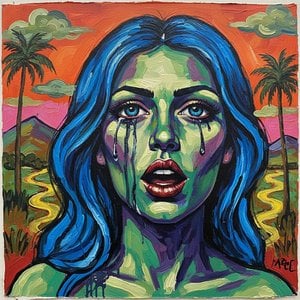
Explore Maxwell Bates’ ‘Cocktail Party-Three’! A vibrant 1967 oil painting showcasing prairie life & modernism. Bold colors, dynamic figures & unique perspective – a captivating piece.

An influential Canadian expressionist painter known for works like Cocktail Party- Three, Maxwell Bennett Bates blended modernist energy with bold textures that invite you to discover his vibrant visual legacy.

Konstverket som visas på denna sida skyddas av upphovsrättslagen, vilket innebär att vi inte lagligt kan skapa eller sälja en identisk reproduktion. Detta skydd upprätthålls genom internationella avtal såsom den Bernkonventionen och genom nationella lagar, inklusive de som fastställs av Amerikansk upphovsrättslag – Titel 17. Alla rättigheter förbehållna. Återgivning av konstverk är förbjuden utan skriftligt tillstånd från WahooArt.

Denna metod följer fullt ut upphovsrättsliga regler eftersom den inte innebär kopiering eller duplicering av det skyddade konstverket. Istället är det en kreativ nytolkning – en ny målning som är influerad av originalet men inte identisk med det.

Giclée / Konsttryck

Giclée- eller canvasprint av museumskvalitet med snabb produktion och flexibla ytbehandlingsalternativ. ( Beställ handmålad reproduktion Byt till digital bild)

Corner sample of the P118B picture frame: formgjuten polystyren, 5 cm wide and 3 cm thick
P118B Skr10
Corner sample of the P118H picture frame: formgjuten polystyren, 5 cm wide and 3 cm thick
P118H Skr10
Corner sample of the P118W picture frame: formgjuten polystyren, 5 cm wide and 3 cm thick
P118W Skr10
Corner sample of the P438Z picture frame: formgjuten polystyren, 5.5 cm wide and 3.5 cm thick
P438Z Skr10
Corner sample of the P508JH picture frame: formgjuten polystyren, 7 cm wide and 3.5 cm thick
P508JH Skr12
Corner sample of the P508YH picture frame: formgjuten polystyren, 7 cm wide and 3.5 cm thick
P508YH Skr12
Corner sample of the P805H picture frame: formgjuten polystyren, 5 cm wide and 3.5 cm thick
P805H Skr10
Corner sample of the P805Z picture frame: formgjuten polystyren, 5 cm wide and 3.5 cm thick
P805Z Skr10
Corner sample of the P919BZ picture frame: formgjuten polystyren, 7 cm wide and 3.5 cm thick
P919BZ Skr10
Corner sample of the P919G picture frame: formgjuten polystyren, 7 cm wide and 3.5 cm thick
P919G Skr10
Corner sample of the P919XJ picture frame: formgjuten polystyren, 7 cm wide and 3.5 cm thick
P919XJ Skr10
Corner sample of the P959ZH picture frame: formgjuten polystyren, 5 cm wide and 3 cm thick
P959ZH Skr10
Corner sample of the P968JZ picture frame: formgjuten polystyren, 6 cm wide and 4 cm thick
P968JZ Skr12
Corner sample of the W106C picture frame: massivt trä, 5 cm wide and 3 cm thick
W106C Skr8
Corner sample of the W218G picture frame: massivt trä, 5 cm wide and 3 cm thick
W218G Skr10
Corner sample of the W218JH picture frame: massivt trä, 5 cm wide and 3 cm thick
W218JH Skr8
Corner sample of the W218Y picture frame: massivt trä, 5 cm wide and 3 cm thick
W218Y Skr10
Corner sample of the W307PJ picture frame: massivt trä, 6 cm wide and 3 cm thick
W307PJ Skr10
Corner sample of the W316G picture frame: massivt trä, 6 cm wide and 3 cm thick
W316G Skr10
Corner sample of the W316PJ picture frame: massivt trä, 6 cm wide and 3 cm thick
W316PJ Skr8
Corner sample of the W316Y picture frame: massivt trä, 6 cm wide and 3 cm thick
W316Y Skr10
Corner sample of the W398PJ picture frame: massivt trä, 5 cm wide and 3 cm thick
W398PJ Skr8
Corner sample of the W4111J picture frame: massivt trä, 6.5 cm wide and 3.5 cm thick
W4111J Skr10
Corner sample of the W500HY picture frame: massivt trä, 7 cm wide and 5 cm thick
W500HY Skr15
Corner sample of the W500JH picture frame: massivt trä, 7 cm wide and 5 cm thick
W500JH Skr15
Corner sample of the W692G picture frame: massivt trä, 8 cm wide and 4 cm thick
W692G Skr12
Corner sample of the W849H picture frame: massivt trä, 5 cm wide and 3 cm thick
W849H Skr8
Corner sample of the W940BG picture frame: massivt trä, 7.5 cm wide and 4.5 cm thick
W940BG Skr15
Corner sample of the W953PJ picture frame: massivt trä, 6 cm wide and 3.5 cm thick
W953PJ Skr8

Standardstorlek
skräddarsydd
CM
INCH

Välj bland våra förinställda storlekar som motsvarar konstverkets ursprungliga proportioner.

bredd
höjd

Ange den bredd och höjd du behöver för att passa din ram eller vägg. Ett tryck kan endast beskäras, aldrig göras större än originalbilden, vilket innebär att ett format med en annan proportion leder till att en del av bilden går förlorad. Vi skickar en digital mockup för godkännande innan vi påbörjar tryckningen. Bilden som visas på denna sida visar inte den faktiska beskärningen — det är endast mockuppen som gör det.

Leverans över hela världen () på 2 veckor istället för standard 4/5 veckor. (30 oktober)

Fri expressfrakt över hela världen
Högkvalitativ linnecanvas
Fullständig fraktförsäkring
Garantier för återbetalning av tullavgifter
Garantier för exakt färgåtergivning
100 dagars returrätt (endast vid fel)
100% pengarna tillbaka-garanti
Mängdrabatt erbjuds

Totalt pris

Skr 683

Cocktail Party- Three

Giclée / Konsttryck

Storlek på reproduktion

-

Slutgiltigt pris

Skr 683

Kortfakta

  • Medium: Oil on canvas
  • Notable elements or techniques: Flattened perspective, thick brushstrokes
  • Title: Cocktail Party- Three
  • Artistic style: Fauvism, Figurative Expressionism
  • Influences: Max Beckmann, Art Nouveau

Konstquiz

Det finns endast ett korrekt svar på varje fråga.

Fråga 1:
What artistic style is most evident in the painting 'Cocktail Party- Three'?
Fråga 2:
Which characteristic describes the use of color in this artwork?
Fråga 3:
How does the artist approach perspective in this piece?
Fråga 4:
What medium was used to create 'Cocktail Party- Three'?
Fråga 5:
What is the primary subject matter of the painting?

A Symphony of Modernist Chaos: Exploring Cocktail Party- Three

In the vibrant, swirling energy of Cocktail Party- Three, created in 1967, we encounter the masterful hand of Maxwell Bennett Bates at the height of his expressive powers. This oil on canvas is not merely a depiction of a social gathering; it is a profound exploration of human interaction through the lens of Canadian modernism. The scene unfolds as a crowded, dynamic assembly where figures overlap and intertwine, creating a sense of movement that feels almost breathless. As one gazes upon the composition, there is an immediate sensation of being swept into the thick of a social event—an art gallery opening or a lively soirée where the air is heavy with conversation, observation, and the subtle tension of shared space.

Bates, a pivotal figure who brought European modernist sensibilities to the Canadian prairies, utilizes a style that leans heavily toward figurative expressionism. The painting eschews the polite boundaries of realism in favor of a bold, Fauvist-inspired palette. Intense, saturated colors collide across the canvas, driving the viewer's eye through a labyrinth of simplified forms and flattened perspectives. There is no singular light source to guide us; instead, a generalized, atmospheric glow illuminates the subjects, casting shadows that serve more to define emotional weight than physical depth. This deliberate distortion of space creates an immersive, almost dreamlike quality, where the boundaries between individuals and their environment begin to blur.

The Texture of Human Connection

Technically, the work is a triumph of texture and tactile energy. Bates employs thick, visible brushstrokes that build up layers of pigment, lending a sculptural quality to the figures. This impasto-like application does more than just create depth; it mirrors the psychological complexity of the subject matter. The heavy application of paint captures the "broken up" forms and shifting planes that became Bates's signature, allowing the viewer to feel the physical presence of the crowd. Every stroke contributes to a sense of dynamism, suggesting that the figures are caught in a fleeting moment of transition—a snapshot of life that is simultaneously chaotic and deeply structured.

Beyond the surface beauty lies a deeper layer of symbolic resonance. Within this crowded social landscape, one can detect themes of alienation and the complexities of human relationships. While the characters are physically close, many appear lost in their own private thoughts, observing others or retreating into internal monologues. This creates a poignant contrast between the outward vibrancy of the "cocktail party" and the inward solitude of the individual. For the collector or interior designer, this piece offers more than just a splash of color; it provides a sophisticated narrative anchor for a room, inviting contemplation on the nature of community and the beautiful, messy reality of social existence.

Whether displayed in a contemporary gallery setting or as a centerpiece in a curated residential collection, Cocktail Party- Three serves as a testament to Bates's ability to distill the essence of an era. It is a work that demands attention, rewarding the observer with every subsequent viewing through its intricate interplay of color, form, and emotion.

Frågor och svar

Vilken tryckstorlek rekommenderas för "Cocktail Party- Three" av Maxwell Bennett Bates?

Rekommenderad tryckstorlek för "Cocktail Party- Three" av Maxwell Bennett Bates är Large.

Hur intensiva är färgerna i "Cocktail Party- Three" av Maxwell Bennett Bates?

Färgerna i "Cocktail Party- Three" av Maxwell Bennett Bates har en Balanced intensitet.

Vilken storlek bör jag välja för tryck av "Cocktail Party- Three" till mitt rum?

För ett Restaurant rekommenderas "Cocktail Party- Three" i tryckstorleken Large.


Konstnärsbiografi

A Life of Form and Expression

Maxwell Bennett Bates was a man of dual disciplines, navigating the structured world of architecture and the emotive, swirling realms of expressionist painting with equal mastery. Born in Calgary, Alberta, his artistic journey began much earlier than his professional architectural career, with works like In the Kitchen emerging when he was only fifteen years and a few months old. As the son of William Stanley Bates, a prominent architect responsible for landmarks such as the Burns Building, Maxwell was immersed in the principles of design from a young age. He eventually followed this path, working within his father's architectural firm and contributing to significant structures like St. Mary's Cathedral.

However, it was through the canvas that Bates truly found his voice, bringing a profound European modernist sensibility to the Canadian prairies. His education at the Provincial Institute of Technology and Art in Calgary provided a foundational technical skill, but his spirit sought broader horizons. In 1931, he moved to England, a period of immense personal and artistic growth where he lived a life of struggle and discovery, even supporting himself as a vacuum salesman while exhibiting his work at the Wertheim Gallery. During this time, he associated with influential figures such as Barbara Hepworth and Victor Pasmore, absorbing the burgeoning modernist currents that would later define his painterly language.

The Language of Modernist Chaos

Bates's artistic evolution was marked by a departure from the polite boundaries of realism. His work is often characterized by a vibrant, swirling energy that explores human interaction through the lens of Canadian modernism and figurative expressionism. In masterpieces such as Cocktail Party- Three, one can witness the height of his expressive power. The composition does not merely depict a social gathering; it creates a symphony of movement where figures overlap and intertwine in a breathless dance. Drawing inspiration from Fauvist-inspired palettes, he utilized intense, saturated colors that collide across the canvas to drive the viewer's eye through a labyrinth of simplified forms.

The technique employed by Bates was deeply tactile. He favored thick, visible brushstrokes and an impasto-like application of pigment that lent a sculptural quality to his subjects. This heavy texture served as a mirror to the psychological complexity of his themes, where flattened perspectives and a lack of a singular light source created an immersive, dreamlike atmosphere. In his hands, the boundaries between individuals and their environment began to blur, capturing the very essence of human connection and the subtle tensions of shared space.

Legacy and Recognition

Throughout his life, Bates's work resonated far beyond the borders of Alberta. His experiences as a prisoner of war in Thuringia during World War II added a layer of profound depth to his perspective, a period he later captured in his writing. As his career progressed, his art found homes in prestigious institutions across Canada and beyond, including:

  • The Mackenzie Art Gallery
  • The Winnipeg Art Gallery
  • The Vancouver Art Gallery
  • The Art Gallery of Greater Victoria

His contributions to the Canadian art landscape were formally recognized through honors such as the Order of Canada and his membership in the Royal Canadian Academy of Arts. Whether through the architectural precision of a cathedral or the emotive, broken-up forms of an expressionist oil painting, Maxwell Bennett Bates remains a pivotal figure who bridged the gap between structural discipline and the raw, unbridled energy of modern art.

Maxwell Bennett Bates

Maxwell Bennett Bates

1906 - 1980 , Canada

Kortfakta

  • Artistic Movement Or Style: Expressionist painter
  • Artists Who Influenced This Artist:
    • Max Beckmann
    • Lars Jonson Haukaness
    • Abraham Rattner
  • Full Name: Maxwell Bennett Bates
  • Nationality: Canadian
  • Notable Artworks:
    • Cocktail Party- Three
    • In the Kitchen
    • Cock and Hen
    • Autumn in Saanich
    • Garden Party
  • Place Of Birth: Calgary, Canada
  • Date Of Birth: 1906
  • Date Of Death: 1980