KOSTNADSFRI KONSTRÅDGIVNING

x
Köp tryck Köp tryckBeställ målning Beställ målning SkickaSkicka
DetaljerDetaljer Lägg till i favoriter Lägg till i favoriter Ladda nerLadda ner Liknande objektLiknande objekt RöntgenRöntgen BildspelBildspel

Untitled

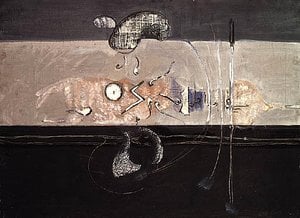
Delve into Mark Rothko's 'Untitled' (1945). This evocative abstract expressionist piece, rich with muted grays and subtle pinks, embodies existential themes through layered forms and a melancholic mood. Explore its Rothko-esque depth at WahooArt.

Utforska Mark Rothko (1903-1970) ikoniska Color Field målningar & Abstrakta Expressionismen! Upptäck känslornas djup och konstnärns betydelsefulla arv inom modern konst.

Köp en högupplöst, förbättrad digital bild som är vida överlägsen förhandsvisningen online.

Varje fil är noggrant förberedd av våra interna specialister med hjälp av avancerade verktyg och professionell manuell retuschering. Vi säkerställer att varje bild har exceptionell skärpa, exakt färgåtergivning och fina detaljer.

Den slutgiltiga filen levereras via e-post inom 72 timmar, optimerad för omedelbar användning i professionella sammanhang, redaktionellt bruk och tryckmiljöer. Detta är samma kvalitet som används med förtroende av ledande designstudior, förlag och gallerier.

Digital bild

Ladda ner en högupplöst fil för personlig visning, utskrift och kreativa projekt.

Totalpris

$9.99

Ingår i varje beställning av digital bild

Professionell digital leverans, garanterad

När du väljer WahooArt.com får du inte bara en bild – du får ett professionellt förädlat digitalt konstverk, skapat med precision och med en garanterad tillfredsställelse. Här är allt som ingår i din beställning, automatiskt:

shipping_icon
Snabb leverans via e-post

Din högupplösta digitala bildfil skickas till dig via e-post inom 72 timmar efter beställning – redo för omedelbar användning.

canvas_icon
AI-förbättrad digital bild

Ditt konstverk optimeras professionellt med hjälp av avancerade AI-verktyg och manuell redigering, vilket garanterar maximal detaljrikedom, skärpa och färgnoggrannhet.

insurance_icon
Gratis livstidsåterutskick

Har du råkat radera eller tappa bort din fil? Ingen oro – vi skickar den kostnadsfritt till dig när som helst.

tax_icon
Inga importavgifter – någonsin

Njut av ditt konstverk omedelbart utan tull, importavgifter eller leveranskostnader – digitala nedladdningar är alltid skattefria.

color_icon
Garanterad färgåtergivning

Vi säkerställer att din digitala bild återger de ursprungliga färgerna så exakt som möjligt med hjälp av professionella verktyg och färghantering.

return_icon
60 dagars nöjdhetsgaranti

Om du inte är nöjd med din digitala bild kommer vi att revidera den eller återbetala 100% inom 60 dagar – utan frågor.

guarantee_icon
100% pengarna-tillbaka-garanti

Inte nöjd? Få full återbetalning inom 60 dagar efter att du har tagit emot din digitala fil – inga frågor åsett.

discount_icon
Rabatt vid storköp

Köp 3 bilder, spara 10% - Köp 5, spara 15% - Köp 10+, spara 20%. Perfekt för kreativa projekt, gallerier och byråer.

Kortfakta

  • Medium: Oil on Canvas
  • Movement: Abstract Expressionism
  • Title: Untitled
  • Influences:
    • Rothko
    • Surrealism
  • Notable elements: Layered paint, Impasto
  • Dimensions: 57 x 77 cm
  • Location: Private Collection

Konstquiz

Det finns endast ett korrekt svar på varje fråga.

Fråga 1:
Based on the image description, what is a dominant characteristic of the painting’s color palette?
Fråga 2:
The description suggests the painting’s style aligns with which movement?
Fråga 3:
What technique is most evident in the painting’s surface, according to the description?
Fråga 4:
The description indicates the painting evokes what kind of mood?
Fråga 5:
Considering Mark Rothko’s biography, what likely influenced his exploration of existential themes?

Beskrivning av samlarobjektet

Untitled – A Meditation on Anxiety by Mark Rothko (1945)

This untitled work by Mark Rothko, painted in 1945, presents a profoundly evocative experience of color and form, firmly rooted within the burgeoning Abstract Expressionist movement. More than simply an image, it’s a carefully constructed space designed to elicit contemplation – a testament to Rothko's mastery of layering, texture, and the potent emotional resonance of simple elements. The canvas immediately draws the viewer into a world of muted grays and browns, punctuated by subtle washes of peach that seem to pulse with an inner light. This restrained palette contributes significantly to the work’s melancholic mood, inviting introspection and perhaps even a recognition of underlying anxieties.

Rothko's technique is characterized by meticulous layering – a process he termed “allagazzation.” Thick impasto areas build upon thinner layers, creating a palpable sense of depth and movement. The sparse use of dark strokes isn’t merely decorative; they function as nervous markings, almost like the hesitant lines of a troubled mind. These shapes, amorphous and organic, aren't representational in any conventional sense. Instead, they exist to evoke feeling – a deliberate departure from traditional artistic goals, reflecting the post-war desire for art that addressed existential questions rather than depicting external reality.

Composition and Perspective: A Deceptive Space

The composition of “Untitled” deliberately avoids a clear focal point. Rothko eschews traditional perspective techniques, opting instead to create depth through overlapping planes and layered forms. This creates an ambiguous space – one that feels both expansive and claustrophobic simultaneously. The lack of defined foreground or background further enhances this effect, blurring the boundaries between observation and experience. It’s a deliberate strategy designed to disorient and challenge the viewer's expectations, forcing them to engage with the work on a purely emotional level.

The arrangement of the shapes isn’t random; it’s carefully orchestrated to generate a sense of unease and tension. The forms seem to float within the background, creating an illusion of movement and instability. This contributes to the overall feeling of anxiety that permeates the piece – a reflection perhaps of the turbulent times in which it was created.

Symbolic Resonance & Rothko’s Vision

Born in Latvia amidst a landscape of political unrest and personal displacement, Mark Rothko's early life profoundly shaped his artistic vision. His experiences instilled within him a deep sensitivity to human suffering, a theme that would become a recurring motif in his work. “Untitled” can be interpreted as an exploration of these themes – a visual representation of the anxieties and uncertainties inherent in the human condition. The muted colors and chaotic composition mirror the emotional turmoil experienced by individuals grappling with loss, isolation, and the search for meaning.

Rothko’s influence extends beyond his technical skill; he sought to create paintings that were not merely objects of aesthetic appreciation but rather portals into a deeper understanding of human emotion. This reproduction captures the essence of Rothko's artistic intent, offering a powerful and enduring meditation on the complexities of the human psyche.

Materials & Dimensions

This hand-painted reproduction is executed on high-quality canvas using oil paints, mirroring the materials employed by Rothko himself. The meticulous attention to detail ensures that every nuance of color and texture is faithfully reproduced, allowing you to experience the full impact of this seminal work in your own space.

Size: 57 x 77 cm (22.4" x 30.3")

Date: 1945

Liknande konstverk


Konstnärsbiografi

Early Life and the Seeds of Artistic Vision

Mark Rothko, born Markus Yakovlevich Rothkowitz in Dvinsk, Latvia, in 1903, carried within him from the outset a sense of displacement that would profoundly shape his artistic journey. His early years were marked by the anxieties of a Jewish family living within the Pale of Settlement, shadowed by pogroms and political unrest. This atmosphere instilled a deep sensitivity to human suffering, a theme that would resonate throughout his oeuvre. The 1913 immigration to Portland, Oregon, represented not just a geographical shift but a cultural upheaval for the young Rothko. While his father, a pharmacist and intellectual with socialist leanings, fostered a home filled with debate and learning, the loss of Jacob Rothkowitz shortly after their arrival cast a long shadow. This early experience of loss, coupled with the challenges of assimilation, fueled a lifelong exploration of existential themes – mortality, trauma, and the search for meaning in a chaotic world. Though he excelled academically at Yale University, Rothko found himself drawn more to the vibrant energy of New York City, abandoning formal studies to pursue his passion for art at the Art Students League. These formative years laid the groundwork for an artistic vision that would ultimately challenge conventional notions of painting and redefine the emotional power of color.

From Figurative Beginnings to Abstract Expressionism

Rothko’s initial artistic explorations were firmly rooted in realism, depicting urban scenes and portraits with a keen eye for detail. However, these early works already hinted at the psychological depth that would become his hallmark. As the 1940s unfolded, and the world grappled with the horrors of World War II, Rothko’s art underwent a dramatic transformation. Influenced by Surrealism and mythology, he began to move away from representational imagery, seeking instead to express universal human emotions through symbolic forms. This period saw the emergence of multi-form paintings – canvases populated by ambiguous, biomorphic shapes that seemed to hover between figuration and abstraction. These works were not merely experiments in form; they were deeply felt responses to the anxieties and uncertainties of a world at war. By the late 1940s, Rothko had arrived at his signature style: large-scale canvases featuring rectangular blocks of color that appeared to float and resonate with one another. He stripped away all vestiges of recognizable imagery, focusing instead on the pure emotional impact of color and form. This marked a pivotal moment in the development of Abstract Expressionism, and established Rothko as a leading figure in this groundbreaking movement.

The Color Field and the Pursuit of Transcendence

Rothko’s mature work is defined by what came to be known as “Color Field” painting – vast expanses of luminous color that envelop the viewer in an immersive experience. These paintings are not about *what* they depict, but rather *how* they make you feel. Rothko believed that art should engage the viewer viscerally, bypassing intellectual analysis and speaking directly to the emotions. He meticulously layered thin washes of paint, creating subtle variations in tone and texture that seemed to emanate from within the canvas. The edges of his rectangular forms are often blurred, allowing them to blend and interact with one another, creating a sense of depth and movement. Rothko deliberately avoided titles beyond numbers – “No. 1,” “No. 6” – encouraging viewers to confront the paintings without preconceived notions and allow their own emotional responses to guide their experience. He sought to create a space for contemplation, a sanctuary where viewers could connect with something larger than themselves. His ambition was nothing less than to evoke profound spiritual experiences through the language of color.

Major Achievements and Lasting Legacy

Among Rothko’s most significant achievements are “No. 10 (1950),” a pivotal work that exemplifies his evolving style, and the Seagram Murals (1958). Commissioned for the Four Seasons Restaurant in New York City, these murals were ultimately rejected by Rothko, who felt they would be compromised by their intended environment. He instead donated them to the Tate Gallery in London, where they continue to inspire awe and contemplation. Perhaps his most ambitious project was the Rothko Chapel (1971) in Houston, Texas – a non-denominational sanctuary housing fourteen of his paintings. Designed as a space for quiet reflection, the chapel is considered a sacred place by many, embodying Rothko’s belief in the spiritual power of art. Rothko's influence on subsequent generations of artists has been immense. He paved the way for Minimalist art and continues to inspire contemporary painters who explore the emotional possibilities of abstraction. Despite struggling with depression throughout his life, culminating in his tragic suicide in 1970, Mark Rothko remains one of the most important and influential artists of the 20th century – a master of color whose work continues to resonate with audiences around the world.

The Enduring Power of Emotional Resonance

  • Rothko’s paintings are celebrated for their ability to convey universal human emotions—tragedy, ecstasy, despair, and hope.
  • His exploration of color as a vehicle for emotional expression revolutionized abstract painting.
  • The Rothko Chapel stands as a testament to his belief in the spiritual power of art.
  • He remains a pivotal figure in Abstract Expressionism and a major influence on contemporary artists.
Mark Rothko

Mark Rothko

1903 - 1970 , Lettland

Kortfattad information

  • Artistic Movement Or Style: Color Field Painting
  • Artists Or Movements Influenced By This Artist: ['Minimalism']
  • Date Of Birth: September 25, 1903
  • Date Of Death: February 25, 1970
  • Full Name: Mark Rothko
  • Nationality: Russisk
  • Notable Artworks:
    • No. 10 (1950)
    • Seagram Murals
    • Rothko Chapel
  • Place Of Birth: Dvinsk, Latvia