x
Beställ handmålad reproduktion Beställ handmålad reproduktionKöp högupplöst bild Köp högupplöst bild SkickaSkicka
Visa detaljerVisa detaljer Lägg till i favoriter Lägg till i favoriter Ladda nerLadda ner Liknande objektLiknande objekt BildspelBildspel

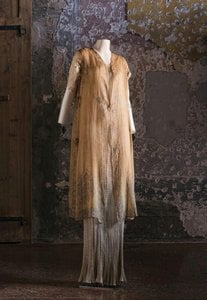
Cape

Mariano Fortuny’s ‘Cape,’ created in 1930, exemplifies his groundbreaking approach to fashion and stage lighting. This photograph captures a mannequin draped in a luxurious velvet coat adorned with delicate lace—a testament to Fortuny's revival of historical motifs and pioneering techniques.

Mariano Fortuny (1871-1949) var en spansk konstnär och designer känd för innovativa textilier, eleganta klänningar och banbrytande scenbelysning. Utforska hans orientalistiska influenser, uppfinningar och arv inom konsthistorien!

Giclée / Konsttryck

Giclée- eller canvasprint av museumskvalitet med snabb produktion och flexibla ytbehandlingsalternativ. (Beställ handmålad reproduktion Beställ handmålad reproduktionKöp högupplöst bild Köp högupplöst bild)

Standardstorlek
skräddarsydd
CM
INCH

Välj bland våra förinställda storlekar som motsvarar konstverkets ursprungliga proportioner.

bredd
höjd

Du kan ange egna mått för att passa en specifik ram eller yta. Om det valda måttet inte överensstämmer med originalbildens proportioner kommer vi antingen att beskära konstverket eller utöka bilden med en speglad eller enfärgad kant. En digital mockup skickas för ditt godkännande innan produktionen påbörjas.
Vänligen notera att förhandsvisningen på skärmen inte återspeglar den faktiska beskärningen eller utökningen. Endast mockuppen visar den slutgiltiga kompositionen korrekt.
Även om anpassade storlekar är möjliga, rekommenderar vi att du väljer ett mått från den fördefinierade listan för att bevara de ursprungliga proportionerna.

Leverans över hela världen () på 2 veckor istället för standard 4/5 veckor. (5 september)

why_choose_icon
Fri expressfrakt över hela världen
why_choose_icon
Högkvalitativ linnecanvas
why_choose_icon
Fullständig fraktförsäkring
why_choose_icon
Garantier för återbetalning av tullavgifter
why_choose_icon
Garantier för exakt färgåtergivning
why_choose_icon
60 dagars returrätt (endast vid fabrikationsfel)
why_choose_icon
100% pengarna tillbaka-garanti
why_choose_icon
Mängdrabatt erbjuds

Totalpris

$ 68

reproduction

Cape

Giclée / Konsttryck

Storlek på reproduktion

-

Slutgiltigt pris

$ 68

Snabbfakta

  • Title: Cape
  • Influences: Historical Sources"; "Non-Western Traditions
  • Medium: Textile
  • Artist: Mariano Fortuny
  • Location: Palazzo Fortuny, Venice
  • Subject or theme: Fashion Design; Artistic Presentation
  • Movement: Decorative Arts

Konstquiz

Det finns endast ett korrekt svar på varje fråga.

Fråga 1:
What is the primary subject matter of Mariano Fortuny’s ‘Cape’?
Fråga 2:
The photograph showcases Fortuny’s ‘Cape’ within what type of setting?
Fråga 3:
What technique is Fortuny credited with pioneering in theater design?
Fråga 4:
The photograph highlights the textures of both the garment and its background. What is a prominent textural element in the image?
Fråga 5:
Fortuny’s artistic inspiration drew heavily from historical and non-Western sources. What is a key characteristic of his creative approach?

A Vision of Elegance: The Timeless Allure of Mariano Fortuny’s ‘Cape’

In the realm of textile art, few pieces command the same reverence as Mariano Fortuny’s 1930 masterpiece, ‘Cape.’ This is not merely a garment; it is a profound reimagining of theatrical presentation and a masterful fusion of historical inspiration with avant-garde technique. To behold this work is to witness a moment where fashion transcends utility to become pure sculpture. The piece embodies a sophisticated dialogue between the weight of history and the lightness of innovation, making it an essential inspiration for collectors and designers who seek to infuse their spaces with a sense of storied grandeur.

The soul of the ‘Cape’ lies in its ability to reinterpret antiquity through a modern lens. Fortuny, a true polymath, drew deep inspiration from Greco-Roman mythology, specifically evoking the dramatic drapery associated with Zeus during the siege of Mount Olympus. By translating these epic narratives into fabric, he transformed a mannequin into a conduit for mythological grandeur. The garment serves as a visual spectacle where the heavy, luxurious velvet of the collar and hood meets the ethereal, delicate patterns of a lace-like overlay. This deliberate juxtaposition creates a captivating interplay of surfaces, inviting the eye to wander through layers of texture and light.

Mastery of Texture and the Art of Light

Technique is the heartbeat of this work. Fortuny was as much an inventor as he was a designer, and his mastery over material is evident in every fold of the ‘Cape.’ The way the dark, sumptuous velvet absorbs light stands in stark contrast to the translucent, patterned overlay that allows glimpses of the form beneath to emerge like a half-remembered dream. This interplay mirrors Fortuny’s revolutionary work with the cyclorama dome, where he used reflected light to create seamless, immersive environments in theater. In this piece, the fabric itself acts as a stage, performing a silent drama of shadow and brilliance.

For the interior designer or art enthusiast, the ‘Cape’ offers a rich palette of textures that can elevate any setting. The verticality of the pleated skirt provides a rhythmic stability, while the organic, flowing lines of the draped coat introduce a sense of movement. It is a study in balance—the heavy against the light, the structured against the fluid. This complexity makes a high-quality reproduction of such a work an extraordinary focal point, capable of anchoring a room with its profound sense of craftsmanship and historical weight.

An Emotional Legacy for the Modern Collector

Beyond its physical attributes, the ‘Cape’ carries an emotional resonance that speaks to the enduring human desire for beauty and transcendence. It evokes a sense of timelessness, bridging the gap between the ancient world and the modern era. There is a certain mystery held within its folds, a whisper of the aristocratic intrigue and theatrical magic that defined Fortuny’s life in Venice. To possess or display an homage to this work is to celebrate the spirit of the alchemist of aesthetics—an artist who refused to see boundaries between fashion, stagecraft, and fine art.

Whether integrated into a curated gallery collection or used as a sophisticated element in high-end decor, the ‘Cape’ remains a symbol of refined beauty. It invites viewers to contemplate the intersection of memory and innovation, making it a timeless investment for those who appreciate art that does not merely decorate a space, but breathes life and narrative into it.


Konstnärsbiografi

Early Life and Inspiration

Mariano Fortuny, en spansk-italiensk konstnär och designer, föddes den 11 maj 1871 i Granada, Spanien. Hans barndom präglades av ett tragiskt förlust – hans far, Mariano Fortuny y Marsal, en framstående genrepjänt, dog bara tre år gammalt. Denna tidiga sorg ledde familjen till Paris, Frankrike, där hans mor introducerade honom till den rika världen av textilier och tyger som skulle komma att forma hans kreativa vision. Fortuny visade redan i ung ålder en exceptionell konstnärlig talang, med skicklighet inom måleri, fotografi, skulptur, arkitektur, grafitering och teaterns ljussättning. Hans tidiga intresse för material och deras potential var tydligt, och han experimenterade flitigt med olika färger och tekniker, ofta inspirerad av de exotiska mönstren i orientalistiska textilier som hans mor samlade in under sina resor. Denna tidiga exponering för konst och design skulle senare bli grunden för hans unika stil.

Artistic Talents and Revolutionary Inventions

Från sin ungdom utmärkte sig Mariano Fortuny med en mångsidig talang, demonstrerad genom skicklighet i måleri, fotografi, skulptur, arkitektur, grafitering och teaterns ljussättning. Han var inte bara en konstnär utan också en innovatör – en uppfinnare som revolutionerade scenkonsten under sin tid. Fortuny utvecklade över tjugo patent mellan 1901 och 1934, vilket inkluderade den banbrytande "Fortuny-cyklorama"-domen, en kvart-dom med plaster eller tyg som skapade en sömlös övergång mellan scener genom indirekt belysning. Hans essä "Eclairage Scenique" (1904) beskrev hans upptäckt av att reflektera ljus från olika ytor, vilket förändrade dess färg, intensitet och egenskaper. Dessa innovationer var inte bara tekniska framsteg utan också en reflektion av hans djupa fascination för ljus och skugga, och hur de kunde användas för att skapa illusioner och atmosfär. Fortuny var en visionär som kombinerade konstnärlig intuition med vetenskapliga principer.

Collaborations and Recognition

Fortunys verk fick stor erkännelse under 1920-talet. Han samarbetade med framstående figurer, inklusive den tyska kompositören Richard Wagner, vars operaer inspirerade honom att skapa scener fyllda av drama och passion. Han installerade sin dome på den berömda operahuset La Scala i Milano, anpassade den för teaterns storlek och uppfann en sugfläkt för att bibehålla dess spända struktur. Hans arbete blev ett symboliskt exempel på innovation och teknisk skicklighet. Fortuny var också en värdig mottagare av uppmärksamhet från de mest exklusiva kretsarna i Paris, där hans textilier och kläder efterfrågades av aristokrati och modeelit.

Legacy and Lasting Influence

Mariano Fortuny dog den 3 maj 1949 i Venedig, Italien. Hans verk inspirerade den franska författaren Marcel Proust, och hans liv porträtterades i Pere Gimferrer's roman "Fortuny." Fortunys arv fortsätter att påverka världen av teaterdesign och mode. Hans innovativa metoder och unika stil har bevarats genom generationer av konstnärer och designers, och hans verk fortsätter att fascinera och inspirera oss idag. Han är en pionjär som utmanade konventionerna och öppnade nya vägar för konst och design. Fortuny var inte bara en konstnär utan också en uppfinnare, en designer och en visionär – en sällsynt kombination av talanger som gjorde honom till en av sin tids mest framstående figurer.
Mariano Fortuny

Mariano Fortuny

1871 - 1949 , Spanien

Kortfakta

  • Artistic Movement Or Style: Orientalism art
  • Artists Or Movements Influenced By This Artist: ['Marcel Proust']
  • Artists Who Influenced This Artist: ['Richard Wagner']
  • Date Of Birth: 1871-05-11
  • Date Of Death: 1949-05-03
  • Full Name: Mariano Fortuny y Marsal
  • Nationality: Spansk
  • Notable Artworks:
    • Teagown
    • Portrait Henriette
  • Place Of Birth: Granada, Spanien
Utforska konstverk sorterade efter tema, stil och egenskaper.