A Botanical Symphony: The Resilience of The Neem
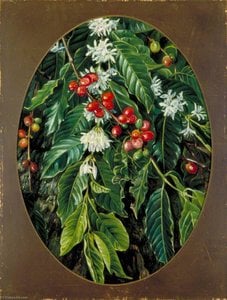
In the quiet corners of the Royal Botanic Gardens, Kew, there exists a window into a vanished era of discovery, a portal through which we can witness the untamed vitality of the natural world as seen through the eyes of a Victorian pioneer. Marianne North’s “The Neem,” completed around 1878, is far more than a mere botanical study; it is a vibrant, breathing testament to a life lived in pursuit of the extraordinary. At first glance, the viewer is greeted by the lush, upward surge of a flowering branch, its delicate blossoms and verdant leaves set against a serene, pale blue sky. There is an immediate sense of movement within the composition, as if the tree itself is reaching toward the light, mirroring the very spirit of North herself—a woman who defied the stifling domesticity of her age to traverse continents in search of botanical truth.
The subject matter centers on the Azadirachta indica, known globally as the Neem tree, a species revered for centuries in Ayurvedic traditions for its medicinal potency. North does not merely document the specimen; she celebrates its essence. Each petal is rendered with such meticulous care that one can almost sense the soft texture and luminosity of the blossoms. The composition utilizes organic, flowing lines that trace the natural contours of the branches, creating a rhythmic, curvilative elegance that draws the eye upward in a graceful arc. This dynamic arrangement prevents the painting from feeling static, instead imbuing the piece with a sense of growth and biological persistence.
Mastery of Light and Texture
Technically, “The Neem” stands as a triumph of Victorian realism elevated by a profound intimacy with her subject. Utilizing oil on canvas, North employed a sophisticated approach to texture, often incorporating impasto—the application of thicker pigment—to bring the veins of leaves and the delicate centers of flowers into sharp, tactile relief. This technique creates a palpable surface that catches the light, lending a three-dimensional quality to the foliage. The lighting within the piece is soft and diffused, eschewing harsh shadows in favor of an even, gentle illumination that highlights the rich saturation of the greens and the subtle, creamy tones of the flowers.
For the discerning collector or interior designer, this artwork offers a unique opportunity to introduce a sense of organic luxury into a space. The painting’s palette—a harmonious blend of deep botanical greens, soft floral whites, and a tranquil sky blue—possesses a versatility that complements both classical and contemporary settings. Whether framed in a traditional dark wood to enhance its historical gravity or presented in a modern, minimalist way to highlight its vibrant colors, “The Neem” acts as a focal point of natural serenity. It brings the restorative power of the outdoors inside, offering an emotional anchor of peace and a sophisticated connection to the enduring beauty of the earth.
A Legacy of Exploration and Artistry
To possess a reproduction of this work is to hold a piece of history. Marianne North was not just an artist; she was a scientific adventurer whose travels allowed her to document ecosystems that were, at the time, largely unknown to the Western world. Her ability to blend the precision of a botanist with the soul of a romantic painter allows “The Neem” to resonate on both an intellectual and emotional level. It serves as a reminder of the tenacity of life and the courage required to explore the unknown. In an age of digital fleetingness, North’s work offers a permanent, tactile connection to the enduring rhythms of nature, making it an invaluable addition to any curated collection of fine art.



 Förhandsvisa
 Beställ handmålad reproduktion
 Skicka
 Dela
Dela
 Visa detaljer

 Ladda ner
 Liknande objekt
 Röntgen
 Bildspel
 Statistik


 Visa mer






































 Glasalternativet är endast tillgängligt i storlekar under 110 cm.