


Handmålad olja på duk i din valda storlek och ram, tillverkad efter beställning av våra konstnärer. ( Beställ tryck Köp högupplöst bild)





























Välj bland våra förinställda storlekar som motsvarar konstverkets ursprungliga proportioner.

Du kan ange egna mått för att passa en specifik ram eller yta. Om den valda storleken inte matchar originalbildens proportioner kommer vi antingen att beskära konstverket eller utöka målningen med ytterligare handmålade element. En digital skiss skickas till dig för godkännande innan produktionen påbörjas.
Observera att förhandsvisningen på skärmen inte återspeglar den faktiska beskärningen eller utökningen. Endast skissen visar den slutgiltiga kompositionen korrekt.
Även om anpassade storlekar är möjliga, rekommenderar vi att du väljer en dimension från den fördefinierade listan för att bevara originalproportionerna.
Leverans över hela världen () på 3–4 veckor istället för standard 5 veckor. (7 september). Inga kompromisser med kvaliteten.


Chichikov shaves
Storlek på reproduktion
Marc Chagall’s “Chichikov Shaves,” created in 1923 during his formative years in Paris, stands as a quintessential example of Naïve Art—a movement that championed unfiltered emotion and imaginative vision over meticulous realism. More than just a depiction of shaving, this lithograph delves into the complexities of identity and memory, mirroring Chagall’s own artistic journey and deeply rooted in his Jewish heritage.
The artwork immediately captivates with its dynamic composition. Chagall employs a flattened perspective—a hallmark of Naïve Art—compressing space to create an unsettling yet alluring atmosphere. Figures are positioned at oblique angles, disrupting conventional spatial relationships and emphasizing movement. Thick hatching and crosshatching dominate the rendering of Chichikov’s hair and clothing, conveying texture and volume with remarkable accuracy despite the lack of traditional shading. These expressive lines contribute significantly to the overall mood—a blend of tranquility and unease.
Executed in a striking monochrome palette of black, white, and gray, “Chichikov Shaves” eschews color’s decorative role for emotional impact. The stark contrast between light and dark areas amplifies dramatic shadows and highlights, creating a theatrical effect. Beyond the visual aesthetic, the monochromatic scheme underscores the painting's introspective nature. Notably, the mirror reflects Chichikov’s image—a recurring motif in Chagall’s oeuvre—representing not merely physical appearance but also psychological self-awareness. The distorted reflection hints at hidden anxieties and adds to the artwork’s enigmatic quality.
Chagall's artistic style draws inspiration from folk art traditions, particularly those prevalent in Vitebsk—the town that profoundly shaped his worldview. This influence is evident in the simplified forms and stylized depictions of figures and objects. The painting’s subject matter—a seemingly mundane activity elevated by Chagall’s imaginative sensibility—reflects a broader preoccupation with exploring themes of memory, myth, and spirituality.
"Chichikov Shaves" transcends mere representation; it invites contemplation. Its dreamlike atmosphere evokes feelings of nostalgia and wonder, prompting viewers to consider the interplay between inner experience and external reality. Chagall’s masterful use of line and texture—combined with the symbolic significance of the mirror—creates a powerfully evocative artwork that continues to resonate with audiences today.


1887 - 1985 , Belarus

Embark on a scholarly journey through the alchemy of lithography. This definitive guide offers collectors profound insights into the chemical mastery of stone and ink, the medium's historical legacy, and essential expertise for acquiring rare, museum-quality prints with absolute confidence.

Discover the enchanting world of Naive Art. Explore the profound beauty of self-taught masters like Henri Rousseau through an art-history lens, uncovering how simple forms and vibrant colors create timeless, soulful masterpieces for the discerning collector.

Explore the profound mastery of engraving and intaglio printmaking. Delve into the rich history, technical precision of the burin, and the enduring legacy of fine art techniques that shaped the world's most iconic masterpieces.

Discover the profound beauty of folk art through a cultural lens. Explore how naive masterpieces and vibrant global traditions preserve heritage, offering timeless inspiration for collectors and art enthusiasts seeking authenticity and soul in every brushstroke.
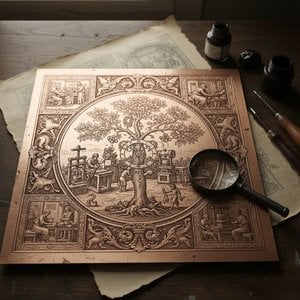
Explore the intricate world of etching and intaglio printmaking. Discover how masters use acid and metal to create profound textures and lines, from Romanticism to modern era, through an expert lens of art history and technical mastery.

 Förhandsvisa
 Skicka
 Dela
Dela
 Visa detaljer

 Ladda ner
 Liknande objekt
 Röntgen
 Bildspel

 Visa mer







 Glasalternativet är endast tillgängligt i storlekar under 110 cm.


