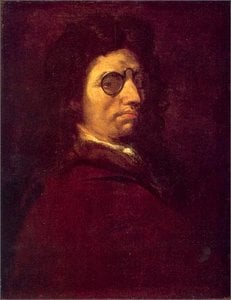
En napolitansk virtuos: Luca Giordanos liv och konst
Luca Giordano, född i Neapel 1634, var mer än bara en målare – han var ett fenomen, en kraftfull energi som präglade den sena barockens konstnärliga landskap. Hans namn blev snabbt synonymt med den exuberanta andan i sin tid och hans produktion förändrade både dukar och arkitektoniska rum över hela Italien och Spanien. Redan från ung ålder visade Luca en exceptionell talang, uppmuntrad av sin far, Antonio Giordano, som själv var målare. Men det var under den stränge men mästerlige Jusepe de Ribera som han verkligen började forma sin unika stil. Denna tidiga lärdom lämnade ett bestående intryck, synligt i den dramatiska intensiteten och realistiska skildringen av figurer som kännetecknar Giordanos tidiga verk. Dock skiljde sig Luca från Ribera genom en naturlig benägenhet till ljus och rörelse – kvaliteter som skulle komma att definiera hans särpräglade konstnärskap. Redan då fick han smeknamnet “Luca fa presto” – Luca den snabbe – ett vittnesbörd om hans anmärkningsvärda hastighet och gränslösa energi. Han var inte bara skicklig, utan förmågan att fånga djupa känslor och bländande spektakel med en lätthet som förvånade samtiden.
Från Neapel till Spanien: En karriär i ständig rörelse
Giordanos konstnärliga resa var allt annat än statisk. Det var en dynamisk utveckling driven av beställningar och resor, som tog honom över hela den italienska halvön och bortom. Efter att ha etablerat sig som en stigande stjärna i Neapel sökte han möjligheter i Rom, Florens och Venedig, absorberade varje stads unika influenser som en svamp. I Venedig studerade han verk av Tizian och Veronese, omfamnade deras livfulla färgpaletter och dynamiska kompositioner – en skarp kontrast till den tenebrism som präglat hans tidiga utbildning. Florens gav honom uppdrag att skapa betydande freskcykler, framför allt i kupolen i Corsini-kapellet vid Chiesa del Carmine, vilket visade hans spirande behärskning av illusionistiskt rum och berättande förmåga. Men det var hans tio år långa vistelse i Spanien (1682–1692) som cementerade hans internationella rykte. Utnämnd till hovmålare hos Karl II förvandlade Giordano spanska interiörer med överdådiga fresker, injicerade en välbehövlig dos italiensk exuberans i den mer återhållsamma spanska konsttraditionen. Biblioteca Riccardiana i Florens, prydd med allegoriska fresker som hyllar gudomlig visdom, står som ett bevis på denna period och visar hans förmåga att förena intellektuell djuphet med visuell prakt.
En syntes av stilar: Giordanos konstnärliga signatur
Giordanos geni låg inte i att uppfinna helt nya tekniker utan i att syntetisera befintliga till en anmärkningsvärt flytande och dekorativ stil. Han kombinerade mästerligt den dramatiska realismen han ärvt från Ribera, den ljusa kolorismen inspirerad av venetianska målare och de dynamiska kompositionerna som påminde om Pietro da Cortona. Hans penseldrag kännetecknades av frihet och spontanitet, vilket skapade ett intryck av ansträngningslös grace. Han fruktade inte att omfamna ornamentik, fyllde sina dukar med intrikata detaljer och virvlande draperier – ett varumärke för hans mogna stil. Detta tillvägagångssätt gjorde det möjligt för honom att tackla ett brett spektrum av ämnen – från religiösa scener och mytologiska berättelser till porträtt och dekorativa scheman – med lika bravur.
Domaren Paris, som finns i Berlins museum, exemplifierar denna syntes; det är en livfull skildring av klassisk mytologi återgiven med en tydligt barock stil. Hans fresker, särskilt de som finns i Neapels katedral och olika neapolitanska palats, är monumentala prestationer som förvandlar arkitektoniska rum till uppslukande visuella upplevelser som omslöt betraktaren i en värld av färg och drama.
Arv och inflytande: En mästares bestående inverkan
Luca Giordanos inflytande sträckte sig långt bortom hans egen livstid. Han utbildade ett stort antal elever, inklusive Paolo de Matteis, som gick vidare till att bli framgångsrika konstnärer i sin egen rätt och spred hans stilistiska innovationer över hela Italien och bortom. Hans verk fungerade som en brygga mellan den höga barocken och rokoko-perioden och banade väg för den lättare, mer lekfulla estetik som skulle känneteckna 1700-talets konst. Hans omfattande produktion – uppskattningsvis över sexhundra målningar och otaliga freskcykler – fortsätter att fängsla publiken än idag. Palatset Capodimonte i Neapel är en skattkista av hans verk, som ger en omfattande översikt över hans konstnärliga utveckling. Giordanos förmåga att sömlöst förena teknisk virtuositet med emotionellt djup säkerställer hans plats som en av de viktigaste och mest älskade figurerna inom italiensk barock. Han dog i sitt hemland Neapel 1705, efterlämnande ett arv som fortsätter att inspirera konstnärer och konstälskare än idag.
- The Judgment of Paris (Berlins museum): Ett utmärkt exempel på Giordanos mytologiska målningar, som visar hans livfulla färgpalett och dynamiska komposition.
- Kristus med lärarna i templet (Corsini-galleriet, Rom): Demonstrerar hans skicklighet i religiös berättelse och behärskning av ljus och skugga.
- Fresker i Florens & Neapel: Monumentala verk som förvandlade arkitektoniska rum till uppslukande visuella upplevelser.
- Influenser: Jusepe de Ribera, Tizian, Veronese, Pietro da Cortona
- Påverkade konstnärer: Paolo de Matteis och en generation neapolitanska målare.



 Förhandsvisa
 Byt till tryck
 Skicka
 Dela
Dela
 Visa detaljer

 Ladda ner
 Liknande objekt
 Röntgen
 Bildspel
 Statistik


 Visa mer






































 Glasalternativet är endast tillgängligt i storlekar under 110 cm.