Handmålad olja på duk i din valda storlek och ram, tillverkad efter beställning av våra konstnärer. ( Beställ tryck
Köp högupplöst bild)
Välj bland våra förinställda storlekar som motsvarar konstverkets ursprungliga proportioner.
Du kan ange egna mått för att passa en specifik ram eller yta. Om den valda storleken inte matchar originalbildens proportioner kommer vi antingen att beskära konstverket eller utöka målningen med ytterligare handmålade element. En digital skiss skickas till dig för godkännande innan produktionen påbörjas.
Observera att förhandsvisningen på skärmen inte återspeglar den faktiska beskärningen eller utökningen. Endast skissen visar den slutgiltiga kompositionen korrekt.
Även om anpassade storlekar är möjliga, rekommenderar vi att du väljer en dimension från den fördefinierade listan för att bevara originalproportionerna.
Leverans över hela världen () på 3–4 veckor istället för standard 5 veckor. (6 september). Inga kompromisser med kvaliteten.
Minerva Dressing
Storlek på reproduktion
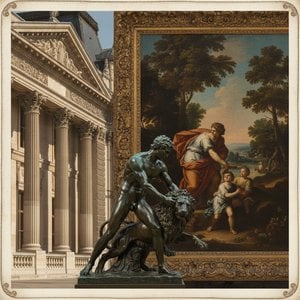
Lavinia Fontana’s “Minerva Dressing,” painted in 1613 and currently residing within the Galleria Borghese in Rome, is far more than a simple depiction of a woman preparing for her toilette. It's a carefully constructed tableau brimming with classical allusion, Baroque drama, and a subtle exploration of female agency—a rarity in art of that era. The painting immediately draws the eye to its central figure: a nude woman, turned away from the viewer, bathed in the diffused light filtering through a window behind her. This deliberate positioning invites us into a private moment, a space of contemplation and preparation, as if witnessing a sacred ritual rather than a mundane activity.
Fontana’s masterful use of chiaroscuro—the dramatic interplay of light and shadow—is immediately apparent. The bright illumination focused on Minerva's back and the garment she holds creates a powerful contrast against the darker recesses of the room, lending an almost theatrical quality to the scene. This technique, characteristic of the Baroque period, not only enhances the figure’s physicality but also suggests a deeper narrative – a struggle between light and darkness, perhaps representing wisdom versus ignorance, or inner strength versus vulnerability.
The composition is rich with classical references. The room itself speaks to Roman grandeur, evidenced by the opulent golden curtains that frame the window and contribute to an atmosphere of luxurious abundance. The presence of two putti – cherubic figures engaged in playful musical activity – further anchors the scene within a mythological context. These youthful sprites are not merely decorative; they subtly introduce a sense of divine patronage, suggesting that Minerva’s actions are overseen by the gods themselves. The inclusion of a helmet and other symbols associated with Athena (Minerva's Roman counterpart) reinforces this connection to the goddess of wisdom and strategic warfare.
Notably, the garment being draped over Minerva’s shoulder is not simply clothing; it’s a symbol of power and authority. Its rich folds and textures hint at the divine status of the figure, while its deliberate concealment suggests a carefully guarded secret or a moment of private reflection. The artist's attention to detail—the delicate drape of the fabric, the subtle modeling of the body – speaks volumes about her skill and understanding of human anatomy and drapery.
“Minerva Dressing” is a prime example of Fontana’s innovative approach to painting. She was one of the first female artists to achieve significant recognition as a professional painter, largely due to her ability to secure commissions from wealthy patrons. This painting demonstrates her mastery of the Baroque style—characterized by dynamic movement, intense emotion, and dramatic lighting—while simultaneously challenging conventional representations of women in art. Traditionally, nude figures were often depicted in mythological scenes or as allegorical symbols, rarely presented with such a degree of naturalism and psychological depth.
Fontana’s decision to portray Minerva in a moment of private preparation rather than in an active role—as a warrior goddess, for instance—is particularly significant. It subtly shifts the focus from external power to internal contemplation, suggesting that wisdom is not solely derived from battle but also from introspection and self-awareness. “Minerva Dressing” remains a captivating work, offering viewers a glimpse into the artistic genius of Lavinia Fontana and her bold assertion of female agency within the confines of 17th-century art.
1552 - 1614 , Italien