


Giclée- eller canvasprint av museumskvalitet med snabb produktion och flexibla ytbehandlingsalternativ. ( Beställ handmålad reproduktion Köp högupplöst bild)





























Välj bland våra förinställda storlekar som motsvarar konstverkets ursprungliga proportioner.

Du kan ange egna mått för att passa en specifik ram eller yta. Om det valda måttet inte överensstämmer med originalbildens proportioner kommer vi antingen att beskära konstverket eller utöka bilden med en speglad eller enfärgad kant. En digital mockup skickas för ditt godkännande innan produktionen påbörjas.
Vänligen notera att förhandsvisningen på skärmen inte återspeglar den faktiska beskärningen eller utökningen. Endast mockuppen visar den slutgiltiga kompositionen korrekt.
Även om anpassade storlekar är möjliga, rekommenderar vi att du väljer ett mått från den fördefinierade listan för att bevara de ursprungliga proportionerna.
Leverans över hela världen () på 2 veckor istället för standard 4/5 veckor. (7 september)


Study for Seated Figures 'El Jaleo'
Storlek på reproduktion
John Singer Sargent’s “Study for Seated Figures ‘El Jaleo’” isn’t merely a painting; it’s a captured moment, a whisper from the opulent heart of the late 19th century. Completed in 1880, this oil on canvas offers a glimpse into a world defined by lavish entertainment and social grace – a world that captivated Sargent and, subsequently, continues to fascinate us today. The painting’s immediate impact lies in its vibrant energy, a palpable sense of movement conveyed through the dynamic poses of its three figures. It's a scene brimming with potential, a preparatory study hinting at a larger, more fully realized composition, yet possessing an undeniable power in its concentrated drama.

(Placeholder image – Replace with actual painting image)
Sargent's technical prowess is immediately apparent in the confident, almost impasto-like application of paint. He employs a broken brushstroke technique, layering colors to create a shimmering effect that captures both light and shadow with remarkable sensitivity. The use of bold, saturated hues – particularly the striking red of the woman’s dress – draws the viewer's eye immediately, anchoring the composition while simultaneously injecting it with vitality. Notice how he builds up form not through meticulous detail but through carefully placed strokes, suggesting volume and texture without resorting to photographic realism. This approach aligns perfectly with Sargent’s broader artistic philosophy: to capture not just what is seen, but *how* it is perceived – the fleeting impression of a moment.
“El Jaleo,” Spanish for “merrymaking” or “celebration,” speaks directly to the burgeoning fascination with Spanish culture that swept across Europe and America during the late 19th century. The Spanish court, recently restored after decades of exile, was a source of immense glamour and intrigue. Sargent, who spent considerable time in Paris at this period, absorbed this influence, incorporating elements of Spanish dance and theatricality into his work. This painting isn’t simply a portrait; it's an evocation of the spirit of celebration, mirroring the lavish balls and social gatherings that defined the lives of the wealthy elite. The figures are likely intended to be part of a larger scene depicting a Spanish fiesta or performance, reflecting the fashionable trend of incorporating exotic themes into artistic representations.
Beyond its technical brilliance and historical context, “El Jaleo” possesses a subtle emotional depth. The woman in red dominates the composition, her posture suggesting both confidence and perhaps a touch of playful abandon. Her gaze is directed outwards, inviting the viewer into her world. The seated figures on either side contribute to the dynamic tension, creating a sense of movement and interaction. While seemingly frivolous, the painting speaks to universal themes of social connection, pleasure, and the transient nature of beauty – elements that continue to resonate with audiences today. It’s a reminder that even in moments of opulent celebration, there's an inherent vulnerability and fleeting quality to human experience.


1856 - 1925 , Italien

Discover the breathtaking elegance of John Singer Sargent's masterpieces. From iconic Gilded Age portraits to impressionistic landscapes, explore the technical brilliance and timeless allure of this American master through our premium, hand-painted fine art reproductions.
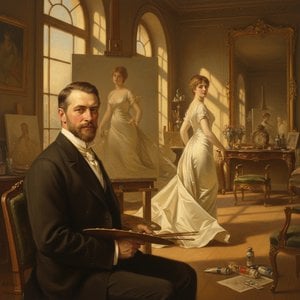
Discover the luminous mastery of John Singer Sargent. Explore an expert analysis of his legendary light, Gilded Age elegance, and technical brilliance, perfect for fine art enthusiasts seeking to bring timeless classical beauty into their modern collections.

Embark on a sophisticated exploration of Spanish art history, from the chiaroscuro mastery of Velázquez to the profound shadows of Goya. Discover how the dramatic light and emotional depth of Spain's greatest masters continue to inspire collectors and connoisseurs today.

Explore the profound drama of Spanish Baroque art. Delve into the mastery of light, shadow, and realism through the legendary works of Diego Velázquez and the Spanish Golden Age.

 Förhandsvisa
 Skicka
 Dela
Dela
 Visa detaljer

 Ladda ner
 Liknande objekt
 Röntgen
 Bildspel


 Visa mer







 Glasalternativet är endast tillgängligt i storlekar under 110 cm.


