KOSTNADSFRI KONSTRÅDGIVNING

x
Beställ målning Beställ målningKöp högupplöst digital bild Köp högupplöst digital bild SkickaSkicka
DetaljerDetaljer Lägg till i favoriter Lägg till i favoriter Ladda nerLadda ner Liknande objektLiknande objekt RöntgenRöntgen BildspelBildspel

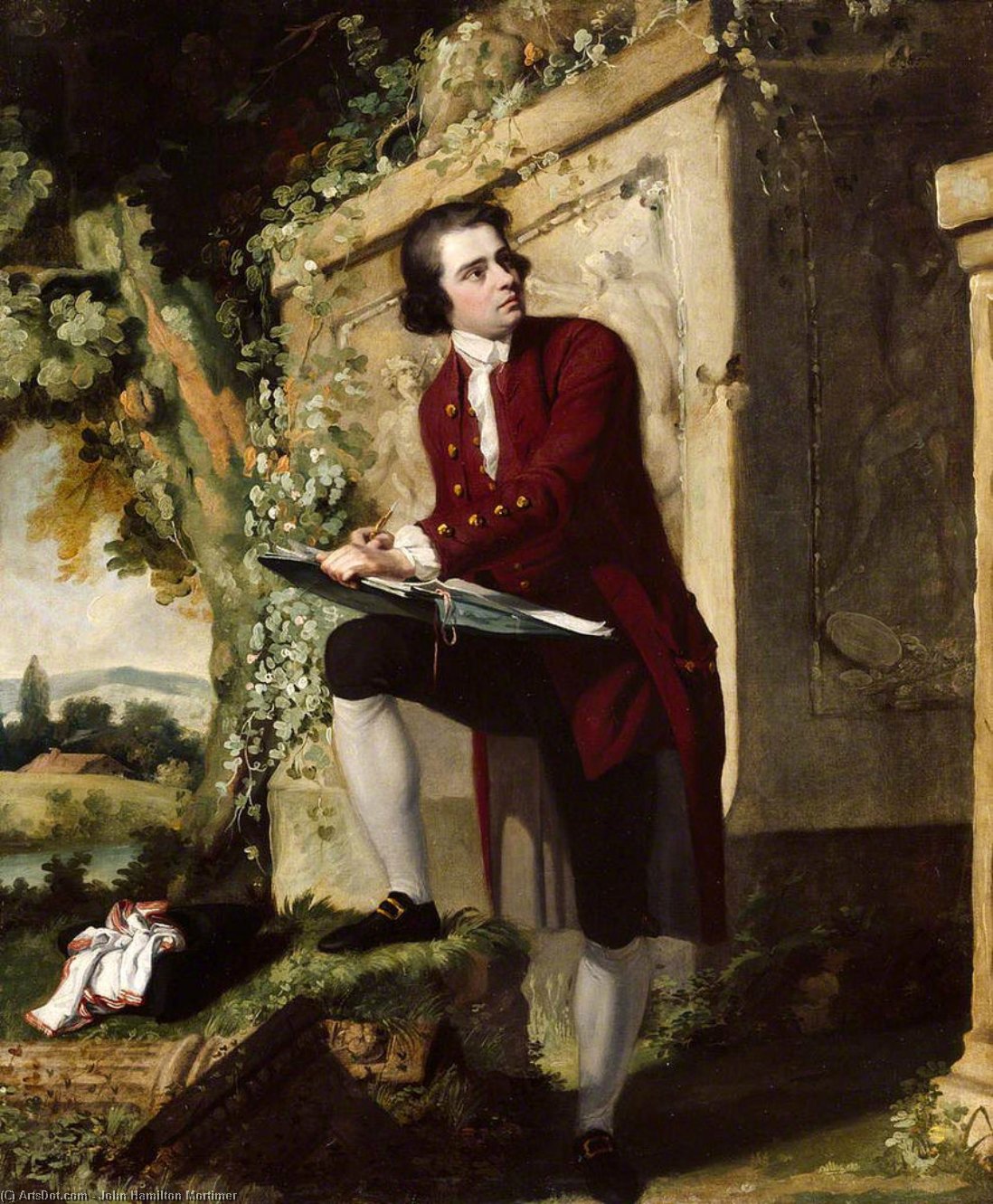
Self Portrait

John Hamilton Mortimer (1740–1779) var en engelsk målare och grafiker känd för romantiska italienska landskap, dramatiska krigsbilder inspirerade av Salvator Rosa samt historiska målningar. Första presidenten för Konstakademien.

Giclée / Konsttryck

Giclée- eller canvasprint av museumskvalitet med snabb produktion och flexibla ytbehandlingsalternativ.

Standard
custom
CM
INCH

Välj bland våra förinställda storlekar som motsvarar konstverkets ursprungliga proportioner.

bredd
höjd

Du kan ange egna mått för att passa en specifik ram eller yta. Om det valda måttet inte överensstämmer med originalbildens proportioner kommer vi antingen att beskära konstverket eller utöka bilden med en speglad eller enfärgad kant. En digital mockup skickas för ditt godkännande innan produktionen påbörjas.
Vänligen notera att förhandsvisningen på skärmen inte återspeglar den faktiska beskärningen eller utökningen. Endast mockuppen visar den slutgiltiga kompositionen korrekt.
Även om anpassade storlekar är möjliga, rekommenderar vi att du väljer ett mått från den fördefinierade listan för att bevara de ursprungliga proportionerna.

Leverans över hela världen () på 2 veckor istället för standard 4/5 veckor. (2 juli)

why_choose_icon
Fri expressfrakt över hela världen
why_choose_icon
Högkvalitativ linnecanvas
why_choose_icon
Fullständig fraktförsäkring
why_choose_icon
Garantier för återbetalning av tullavgifter
why_choose_icon
Garantier för exakt färgåtergivning
why_choose_icon
60 dagars returrätt (endast vid fabrikationsfel)
why_choose_icon
100% pengarna tillbaka-garanti
why_choose_icon
Mängdrabatt erbjuds

Totalpris

-

reproduction

Self Portrait

Giclée / Konsttryck

Storlek på reproduktion

-

Slutgiltigt pris

-


Konstnärsbiografi

John Hamilton Mortimer (1740–1779): A Life Painted in Romantic Hues

John Hamilton Mortimer, a name perhaps less instantly recognizable than his contemporaries like Reynolds or Wright of Derby, nevertheless occupies a significant and fascinating niche within the landscape of 18th-century British art. Born in Eastbourne, Sussex, on September 17th, 1740, Mortimer’s brief but intensely productive life—he died at just thirty-nine years old—was marked by artistic ambition, a restless spirit, and an evolving style that mirrored the shifting tastes of his era. His father, Thomas Mortimer, was a customs officer with mercantile interests, providing a stable if unremarkable background for a young man destined to pursue a path steeped in creativity. By 1757, Mortimer had already gravitated towards London, enrolling at the Duke of Richmond’s Academy, where he forged a lifelong friendship with Joseph Wright, a bond that would prove mutually supportive throughout their careers. This early immersion into the artistic milieu fostered not only technical skill but also an awareness of the burgeoning intellectual currents shaping British art—particularly the fascination with classical ideals and the emerging Romantic sensibility.

Early Training and Artistic Foundations

Mortimer’s formative years were spent honing his craft under the tutelage of masters such as Hudson and Cipriani at St Martin's Lane Academy, alongside fellow students like Thomas Jones and William Pars. He demonstrated an exceptional aptitude for drawing and painting from life, securing prestigious prizes for studies after Michelangelo’s *Bacchus* and a subsequent accolade for capturing the dynamism of human anatomy. These accomplishments established a bedrock of classical principles—proportion, perspective, and careful observation—that would inform his artistic vision throughout his career. His dedication to mastering technique wasn't merely academic; it reflected a profound belief in the power of art to represent reality accurately and powerfully.

Historical Painting: St Paul Preaching to the Ancient Druids

Mortimer’s breakthrough came with *St Paul Preaching to the Ancient Druids in Britain*, a monumental canvas housed in the Guildhall at High Wycombe. This ambitious undertaking showcased his ability to convey dramatic narratives with meticulous detail and expressive brushwork—qualities that would become hallmarks of his oeuvre. The painting captures a pivotal moment in British history, depicting Saint Paul delivering a sermon before druidic representatives, imbued with an atmosphere of solemn grandeur and spiritual contemplation. It exemplifies Mortimer’s commitment to capturing the emotional intensity of historical events while adhering to the conventions of Baroque composition.

The Influence of Salvator Rosa and Romanticism

However, Mortimer wasn't content with simply replicating established styles; he possessed a keen sensitivity to evolving aesthetic preferences. He was profoundly influenced by the work—and legend—of Salvator Rosa, the 17th-century Neapolitan painter celebrated for his wild, untamed scenes of outlaws and dramatic landscapes. Rosa’s rebellious spirit and masterful depiction of nature resonated deeply with Mortimer's artistic sensibilities, prompting him to explore more masculine and even criminal themes in his later paintings. This fascination with the darker side of human experience—the confrontation between civilization and barbarity—found its expression in depictions of rugged landscapes populated by bandits and soldiers, foreshadowing the stylistic innovations that would characterize Romanticism. Notably, Mortimer created an etching after Rosa's self-portrait, demonstrating his admiration for the artist’s uncompromising vision.

Collaboration and Artistic Leadership

Mortimer wasn’t solely a solitary painter; he actively engaged in collaborative projects with fellow artists. He frequently contributed figure work to compositions by others, most notably assisting Thomas Jones on ambitious canvases like *A Land Storm, with the Story of Dido and Aeneas*, *The Death of Orpheus*, and a pair of paintings inspired by Milton’s *Allegro* and *Penseroso*. These collaborations underscore his versatility and willingness to contribute his skills to larger artistic endeavors—a testament to his belief in collective creativity. Furthermore, he played a crucial role in the decoration of Brocket Hall, Hertfordshire, working alongside Francis Wheatley and James Durno on a lavish saloon scheme that celebrated aristocratic patronage and reflected the grandeur of the era. His election as President of the Society of Artists in 1774 solidified his position within the artistic community—a recognition of his talent and influence during a period of significant transformation.

A Legacy Tempered by Early Loss

Despite his successes, Mortimer’s career was tragically cut short. He succumbed to an undocumented illness on February 4th, 1779, leaving behind a legacy that remains somewhat elusive. His marriage to Jane Hurrel seemed to impact his artistic output, and he died at just thirty-nine years old—a premature end to the life of one of Britain’s most promising painters. Nevertheless, Mortimer's paintings endure as powerful expressions of Romantic ideals—characterized by dramatic compositions, expressive brushwork, and exploration of complex themes—serving as a reminder of the transformative potential of art and its ability to capture the spirit of an age. His contribution bridged the gap between classical tradition and burgeoning Romanticism, paving the way for future generations of artists to embrace emotion and imagination in their work.
John Hamilton Mortimer

John Hamilton Mortimer

1740 - 1779 , Storbritannien

Kortfattad information

  • Artistic Movement Or Style: Romantik
  • Artists Or Movements Influenced By This Artist: ['Romantik']
  • Artists Who Influenced This Artist:
    • Salvator Rosa
    • Joseph Wright
  • Date Of Birth: 17 september 1740
  • Date Of Death: 4 februari 1779
  • Full Name: John Hamilton Mortimer
  • Nationality: Brittisk
  • Notable Artworks: ['St Paul Preaching to the Ancient Druids in Britain']
  • Place Of Birth: Eastbourne, Storbritannien