FörhandsvisaFörhandsvisa Förhandsgranska i ARFörhandsgranska i AR Beställ handmålad reproduktion Beställ handmålad reproduktionKöp högupplöst bild Köp högupplöst bild SkickaSkicka
Visa detaljerVisa detaljer Lägg till i favoriter Lägg till i favoriter Ladda nerLadda ner Liknande objektLiknande objekt RöntgenRöntgen BildspelBildspel

The Ascension

Upptäck Tintoretto (Jacopo Comin), en dramatisk venetiansk mästare med kraftfulla kompositioner, expressiva penseldrag ('Il Furioso') och innovativ ljus- & perspektivbruk. Utforska ikoniska verk & hans arv!

Giclée / Konsttryck

Giclée- eller canvasprint av museumskvalitet med snabb produktion och flexibla ytbehandlingsalternativ. (Beställ handmålad reproduktion Beställ handmålad reproduktionKöp högupplöst bild Köp högupplöst bild)

P118B $10
P118H $10
P118W $10
P438Z $10
P508JH $12
P508YH $12
P805H $10
P805Z $10
P919BZ $10
P919G $10
P919XJ $10
P959ZH $10
P968JZ $12
W106C $8
W218G $10
W218JH $8
W218Y $10
W307PJ $10
W316G $10
W316PJ $8
W316Y $10
W398PJ $8
W4111J $10
W500HY $15
W500JH $15
W692G $12
W849H $8
W940BG $15
W953PJ $8

Standardstorlek
skräddarsydd
CM
INCH

Välj bland våra förinställda storlekar som motsvarar konstverkets ursprungliga proportioner.

bredd
höjd

Du kan ange egna mått för att passa en specifik ram eller yta. Om det valda måttet inte överensstämmer med originalbildens proportioner kommer vi antingen att beskära konstverket eller utöka bilden med en speglad eller enfärgad kant. En digital mockup skickas för ditt godkännande innan produktionen påbörjas.
Vänligen notera att förhandsvisningen på skärmen inte återspeglar den faktiska beskärningen eller utökningen. Endast mockuppen visar den slutgiltiga kompositionen korrekt.
Även om anpassade storlekar är möjliga, rekommenderar vi att du väljer ett mått från den fördefinierade listan för att bevara de ursprungliga proportionerna.

Leverans över hela världen () på 2 veckor istället för standard 4/5 veckor. (7 september)

why_choose_icon
Fri expressfrakt över hela världen
why_choose_icon
Högkvalitativ linnecanvas
why_choose_icon
Fullständig fraktförsäkring
why_choose_icon
Garantier för återbetalning av tullavgifter
why_choose_icon
Garantier för exakt färgåtergivning
why_choose_icon
100 dagars returrätt (endast vid fabrikationsfel)
why_choose_icon
100% pengarna tillbaka-garanti
why_choose_icon
Mängdrabatt erbjuds

Totalpris

$ 68

reproduction

The Ascension

Giclée / Konsttryck

Storlek på reproduktion

-

Slutgiltigt pris

$ 68

Snabbfakta

  • Subject or theme: Religious scene
  • Movement: Venetian Baroque
  • Artistic style: Dramatic, theatrical
  • Medium: Oil on canvas
  • Influences: Titian
  • Notable elements: Dynamic composition
  • Dimensions: 538 x 325 cm

Konstquiz

Det finns endast ett korrekt svar på varje fråga.

Fråga 1:
What is the primary subject depicted in Jacopo Tintoretto’s ‘The Ascension’?
Fråga 2:
In what year was ‘The Ascension’ painted?
Fråga 3:
According to the text, what was a key characteristic of Jacopo Tintoretto’s artistic development?
Fråga 4:
The text mentions Tintoretto’s nickname. What does this nickname suggest about his family's profession?
Fråga 5:
What artistic technique is most associated with Jacopo Tintoretto’s style, as described in the text?

A Dramatic Ascent: Tintoretto’s “The Ascension” – A Venetian Masterpiece

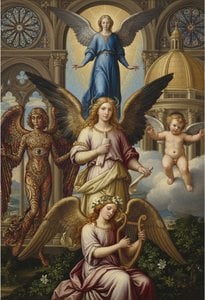
Jacopo Tintoretto's "The Ascension," completed in 1579, is not merely a depiction of a biblical event; it’s a visceral experience. This monumental canvas, measuring an impressive 538 x 325 cm, plunges the viewer directly into the heart of Christ’s divine departure – a moment brimming with both triumphant joy and profound sorrow. Painted during a pivotal period of artistic transition in Venice, this work exemplifies Tintoretto's signature style: a masterful blend of Renaissance precision and Baroque dynamism, fueled by an almost theatrical use of light and shadow.

The scene unfolds with arresting immediacy. At the center, Christ, rendered not as a serene figure but as a powerfully sculpted form, is being lifted heavenward by a multitude of angels. Their wings, vast and feathered, dominate the upper portion of the painting, creating an overwhelming sense of upward movement. The figures are caught in a swirling vortex of motion – hands reaching, bodies straining, faces etched with expressions ranging from ecstatic surrender to anguished farewell. Tintoretto’s genius lies not just in capturing the physical act of ascension but in conveying the emotional weight of it; the palpable grief of those left behind is balanced against the radiant hope offered by Christ's departure.

The Language of Light and Shadow – Tintoretto’s Revolutionary Technique

Tintoretto was a revolutionary painter, constantly experimenting with techniques to achieve his desired effects. “The Ascension” showcases this brilliantly. He employed a technique known as *sfumato*, subtly blurring the edges of forms and creating an atmospheric haze that intensifies the drama. The light source, seemingly originating from above and behind Christ, dramatically illuminates his body and the surrounding angels, while plunging the lower portion of the painting into deep shadow. This stark contrast amplifies the sense of depth and creates a powerful illusion of three-dimensionality – a hallmark of Tintoretto’s approach.

  • Color Palette: Dominated by rich reds, blues, and golds, reflecting the opulence of Venetian art and the spiritual significance of the subject.
  • Compositional Dynamics: The swirling figures and diagonal lines create a sense of perpetual motion, mirroring the tumultuous nature of faith and the transition between earthly existence and divine realm.
  • Layered Brushwork: Tintoretto’s signature technique involved applying paint in multiple layers, building up textures and creating an almost sculptural quality to his figures.

Symbolism and Context – A Venetian Vision

“The Ascension” is deeply rooted in the theological debates of its time. The event depicted—Christ's departure into heaven after his resurrection—was a central theme in Christian art during the late 16th century, reflecting anxieties about mortality and the promise of salvation. Beyond the purely religious, the painting also speaks to Venice itself – a city grappling with political instability and economic challenges. Tintoretto’s dramatic style mirrored the turbulent spirit of the Venetian Republic.

Note the figures surrounding Christ: one holding a book, likely representing scripture and divine law; another reaching out in supplication. These details add layers of meaning to the scene, inviting contemplation on faith, obedience, and the human condition. The overall composition subtly references Old Testament prophecies concerning the Messiah’s return, further enriching the painting's symbolic resonance.

Bringing “The Ascension” Home – A Reproduction for Collectors

WahooArt offers meticulously crafted hand-painted reproductions of Tintoretto’s "The Ascension," allowing you to experience this monumental masterpiece in your own space. Our skilled artisans replicate Tintoretto’s revolutionary techniques, capturing the drama, light, and emotional intensity of the original with breathtaking accuracy. Whether adorning a grand salon or adding a touch of Venetian grandeur to a contemporary interior, this reproduction provides an authentic connection to one of art history's most compelling figures. Invest in a piece that speaks volumes – a testament to Tintoretto’s genius and a window into the heart of faith and artistic innovation.


Konstnärsbiografi

A Venetian Master of Drama and Light

Jacopo Tintoretto, född Jacopo Robusti i Venedig omkring 1518, förblir en av de mest fängslande och gåtfulla figurerna under den höga renässansen och den tidiga barocken. Hans egen smekmamma, “Tintoretto” – litet målare – talar om hans familjs yrke, men döljer den enorma konstnärliga skicklighet som skulle skilja honom från alla andra. Till skillnad från många konstnärer som hade nytta av strukturerade lärlingskap, var Tintorettos väg i stort sett självstyrd, drivet av en outsläcklig nyfikenhet och ett skoningslöst strävande efter innovation. Även om beräkningar tyder på en kort och misslyckad period under Titian, den erkända mästaren av venetiansk färgism, verkar erfarenheten ha visat sig mer kontroversiell än formativ. Titans anklagade bortvisande av den unga Jacopo – varefter det var på grund av girighet eller konstnärlig oenighet – uppmuntrade Tintoretto till en självständig bana, präglad av vågspjutningsexperiment och ett unikt dynamiskt stil. Han fördjupade sig i anatomisk studie, rapporteras genom dissekeringar, och finslipade sina färdigheter genom att noggrant kopiera klassiska skulpturer och verk av andra mästare. Detta engagemang lade grunden för en karriär som skulle omdefiniera venetiansk målning.

Forging a Distinctive Style: *Il Furioso*

Tintorettos konstnärliga utveckling präglades av en nästan feberaktig energi, vilket gav honom ett annat suggestiva smeknamn: *Il Furioso* – ”Den Vrede”. Detta smeknamn var inte bara beskrivande av hans arbetshastighet utan fångade också intensiteten och den emotionella laddning som genomsyrade hans dukar. Hans tidiga verk antydde redan ett avvikande från traditionella venetianska konventioner. Medan han erkände Titian’s inflytande i färg, dragen sig Tintoretto mot Michelangelos kraftfulla figurer och dramatiska kompositioner. Han syntesade dessa influenser till något helt nytt: en stil präglad av förlängda former, virvlande draperier och ett innovativt användande av perspektiv som ofta skapade en känsla av bedövande djup och rörelse. Han lämnade traditionella venetianska färdigheter bakom sig, och valde istället för en snabb, nästan skissliknande penseldrag som uttryckte omedelbarhet och rå emotion. Denna teknik, i kombination med hans mästarliga manipulation av ljus och skugga – *chiaroscuro* – tillät honom att skapa scener av otrolig dramatik och psykologisk intensitet. Han målade inte bara händelser; han förmedlade deras känslomässiga kärna.

Monumental Achievements: San Rocco and Beyond

Tintoretto’s prodigiosa produktion spred sig över decennier, omfattande religiösa berättelser, historiska allegorier och porträtt. Däremot är hans mest betydelsefulla prestationer att skapa en cykel av målningar för Scuola Grande di San Rocco, en venetiansk confraternite dedikerad till helgonen Sankt Markus. Under en period på över femtio år dekorerade Tintoretto Scuola’s hallar med över sextio dukar, och förvandlade det till ett betagande visuellt testamente till tro och mänskligt upplevelse. Verk som ”The Last Supper”, slutförd sent i hans liv, visar hans fortsatta experimenterande med perspektiv och komposition. Avvikande från traditionella representationer placerade Tintoretto scenen i en dramatiskt belyst, arkitektoniskt instabil plats, vilket betonar de känslomässiga turbulenserna i Jesu sista måltid med sina lärjungar. Andra notabla verk inkluderar ”The Miracle of St Mark Freeing the Slave”, en kraftfull visning av dynamisk komposition och förkortning, samt många målningar för venetianska kyrkor och palats som visar hans makt över skala och berättande. Dessa monumentala projekt säkrade Tintoretto’s rykte som en av Venedigs viktigaste konstnärer.

Influences and Artistic Roots

Tintoretto's artistic journey was deeply rooted in the traditions of Venetian painting, yet he simultaneously challenged and transcended them. He drew inspiration from the High Renaissance masters like Michelangelo and Raphael, but his work possessed a raw energy and emotional intensity that set him apart. His early training is somewhat unclear, but accounts suggest a brief and unsuccessful stint under Titian, the acknowledged master of Venetian colorism. This experience, however, proved more contentious than formative, pushing Tintoretto toward an independent course. He studied classical sculpture extensively, meticulously copying works by artists like Donatello and Veronese, absorbing their techniques and compositional strategies. Furthermore, he was influenced by Mannerist painters such as Pontormo and Bronzino, adopting their use of distorted perspective and exaggerated forms. These diverse influences coalesced into Tintoretto’s unique style, characterized by dramatic lighting, dynamic compositions, and a sense of movement that captivated viewers.

Historical Significance

Jacopo Tintoretto died in Venice in 1594, leaving behind a vast and influential body of work. He bridged the gap between the High Renaissance and the Baroque period, anticipating many of the stylistic innovations that would define the latter. His dramatic compositions, expressive brushwork, and innovative use of light and shadow profoundly influenced artists such as Caravaggio, Rembrandt, and Delacroix. He wasn’t merely a painter; he was a visual storyteller who understood how to harness the power of art to evoke emotion and inspire awe. As one of the three great Venetian painters of the 16th century – alongside Titian and Paolo Veronese – Tintoretto played a crucial role in shaping the artistic landscape of Venice during its golden age. His work reflects not only the religious fervor and political tensions of his time but also a uniquely personal vision that continues to resonate with audiences today, solidifying his place as one of history’s most important and captivating artists.
Tintoretto

Tintoretto

1518 - 1594 , Italien

Kortfakta

  • Artistic Movement Or Style: Renaissance, Mannerism
  • Artists Or Movements Influenced By This Artist:
    • Caravaggio
    • Barock
  • Artists Who Influenced This Artist:
    • Tizian
    • Michelangelo
  • Date Of Birth: 1518
  • Date Of Death: 1594
  • Full Name: Jacopo Robusti
  • Nationality: Italiensk
  • Notable Artworks:
    • Mirakel Markus
    • Senapsten
  • Place Of Birth: Venedig, Italien
Utforska konstverk sorterade efter tema, stil och egenskaper.