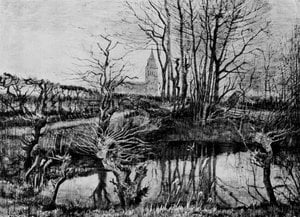
Isaac van Ostade: A Master of Dutch Realism
The world of 17th-century Dutch painting is a rich tapestry woven with the threads of commerce, religious fervor, and burgeoning artistic innovation. Within this vibrant landscape emerged Isaac van Ostade (1621 – 1649), a painter whose work stands apart not for grand pronouncements or revolutionary techniques, but for its profoundly honest depiction of everyday life—particularly the hardships and quiet dignity of peasant existence. Born in Haarlem, a city renowned as a center of art and trade, Ostade’s early life was marked by poverty and loss; his father, also an artist, died when he was young, leaving him to support his family. This formative experience undoubtedly shaped his artistic vision, imbuing his paintings with a palpable sense of realism and empathy.
Ostade's artistic journey began in the workshop of his uncle, Pieter van Ostade, another painter known for his scenes of peasant life. Initially, Isaac followed in his uncle’s footsteps, producing similar works – depictions of market days, farm interiors, and tavern gatherings. However, unlike his uncle’s often boisterous and theatrical compositions, Isaac developed a quieter, more introspective style. He possessed an extraordinary ability to capture the subtle nuances of human emotion—the weariness in a farmer's face, the quiet contemplation of a woman mending clothes, the simple joy of children playing. This focus on psychological realism distinguished him from many of his contemporaries and laid the foundation for his enduring appeal.
The Influence of Rembrandt and Haarlem’s Artistic Climate
Ostade’s style was deeply influenced by Rembrandt van Rijn, a towering figure in Dutch art. While Ostade never directly studied with Rembrandt, he clearly admired the master's use of light and shadow—the *chiaroscuro* technique—to create dramatic effects and evoke mood. Like Rembrandt, Ostade employed a limited palette, favoring earthy tones and muted colors to convey the somber realities of peasant life. Furthermore, both artists shared a fascination with portraying ordinary people in their natural surroundings, eschewing idealized representations in favor of honest depictions.
Haarlem itself played a crucial role in shaping Ostade’s artistic development. The city was a hub of artistic activity during the 17th century, attracting painters from across Europe and fostering a vibrant exchange of ideas. Haarlem's thriving merchant class provided a ready market for art, while its numerous workshops and galleries offered ample opportunities for young artists to hone their skills. Ostade benefited immensely from this stimulating environment, absorbing the techniques and sensibilities of his fellow artists and developing his own distinctive voice.
Themes and Techniques: Peasant Life and Atmospheric Perspective
Ostade’s paintings are overwhelmingly focused on the lives of peasants—farmers, laborers, and their families. He depicted them not as romanticized figures of rural virtue, but as individuals grappling with the challenges of daily existence: poverty, hardship, and the relentless demands of agricultural labor. His scenes often portray interiors – cramped farmhouses, dimly lit barns, and humble kitchens – offering intimate glimpses into the lives of these working-class families. These spaces are rendered with remarkable detail, capturing the textures of rough wood, worn fabrics, and simple furnishings.
A key element of Ostade’s technique was his masterful use of atmospheric perspective. He skillfully employed variations in color and tone to create a sense of depth and distance, drawing the viewer into the scene and immersing them in its atmosphere. His winter landscapes, in particular, are renowned for their evocative depiction of snow-covered fields, frozen streams, and darkened interiors—a testament to his ability to capture the stark beauty of the Dutch countryside. He often used a limited range of colors, relying on subtle shifts in value to create mood and drama.
Major Works and Legacy
Among Ostade’s most celebrated works are “The Village Feast” (1649), a poignant depiction of a peasant celebration marred by poverty and hardship; “Winter Landscape with a Wagon” (c. 1650-1652), showcasing his mastery of atmospheric perspective; and “The Farmhouse Interior” (c. 1648), offering a glimpse into the daily routines of a rural family. Sadly, Ostade’s career was tragically cut short by illness at the age of twenty-eight. He died in Haarlem, leaving behind a relatively small but remarkably powerful body of work.
Despite his untimely death, Isaac van Ostade's legacy endures. His paintings are valued for their honesty, emotional depth, and remarkable realism. He is remembered as one of the most important Dutch genre painters of the 17th century—a master of capturing the essence of everyday life and offering a profound meditation on the human condition. His work continues to resonate with viewers today, reminding us of the dignity and resilience of ordinary people.



 Förhandsvisa
 Byt till tryck
 Skicka
 Dela
Dela
 Visa detaljer

 Ladda ner
 Liknande objekt
 Röntgen
 Bildspel
 Statistik
 Visa mer