


 Oil On CanvasWallArtRomantic Landscape
 1787Early Modern
 242.0 x 242.0 cm
 Louvren
Köp en högupplöst, förbättrad digital bild med betydligt högre kvalitet än förhandsvisningen online.
Varje fil är noggrant förberedd av våra interna specialister med hjälp av avancerade verktyg och professionell manuell retuschering. Vi säkerställer att varje bild har exceptionell skärpa, exakt färgåtergivning och fina detaljer.
Den slutgiltiga filen levereras via e-post inom 72 timmar, optimerad för omedelbar användning i professionella sammanhang, redaktionellt bruk och tryckmiljöer. Detta är samma kvalitet som med förtroende används av ledande designstudior, förlag och gallerier.
Ladda ner en högupplöst fil för personlig visning, utskrift och kreativa projekt. ( Beställ tryck Beställ handmålad reproduktion)
När du väljer WahooArt.com får du inte bara en bild – du får ett professionellt förädlat digitalt konstverk, skapat med precision och med en garanterad tillfredsställelse. Här är allt som ingår i din beställning, automatiskt:

Din högupplösta digitala bild skickas till dig via e-post inom 72 timmar efter beställning – redo för omedelbar användning.

Ditt konstverk optimeras professionellt med hjälp av avancerade AI-verktyg och manuell redigering, vilket garanterar maximal detaljrikedom, skärpa och färgnoggrannhet.

Har du råkat radera eller tappa bort din fil? Ingen oro – vi skickar den kostnadsfritt till dig när som helst.

Njut av ditt konstverk omedelbart utan tull, importavgifter eller leveranskostnader – digitala nedladdningar är alltid skattefria.

Vi säkerställer att din digitala bild återger de ursprungliga färgerna så exakt som möjligt med hjälp av professionella verktyg och färghantering.

Om du inte är nöjd med din digitala bild kommer vi att revidera den eller återbetala 100% inom 100 dagar – utan frågor.

Inte nöjd? Få full återbetalning inom 100 dagar efter att du har tagit emot din digitala fil – utan frågor och diskussioner.

Köp 3 bilder, spara 10% – Köp 5, spara 15% – Köp 10+, spara 20%. Perfekt för kreativa projekt, gallerier och byråer.
In the soft, diffused light of a fading afternoon, Hubert Robert’s 1787 masterpiece, The Pont du Gard, invites the viewer into a world where history and imagination coalesce. This breathtaking work transcends a mere topographical record of the famous Roman aqueduct; instead, it serves as a profound meditation on the passage of time and the enduring spirit of human achievement. As the eye travels across the canvas, one is immediately struck by the monumental scale of the stone arches, which soar against a hazy, ethereal sky. Robert, a master of the capriccio style, does not simply present a ruin; he crafts a stage where the grandeur of antiquity meets the quiet pulse of contemporary life. The structure itself, a UNESCO World Heritage Site, stands as a silent sentinel of Roman engineering, its weathered stones telling stories of an empire that once commanded the landscape.
The painting is alive with a delicate, rhythmic energy. Below the imposing arches, the river flows with a gentle grace, populated by small figures and boats that provide a vital sense of scale. These tiny, scattered souls—some standing near the water's edge, others navigating the currents in small vessels—act as a poignant reminder of the fleeting nature of human existence when juxtaposed against the permanence of stone. This deliberate contrast creates a captivating tension, drawing the observer into a contemplative state where one might reflect on their own place within the vast tapestry of history.
Technically, Robert’s brilliance lies in his ability to manipulate light and atmosphere to evoke deep emotion. Moving away from the rigid precision of earlier eras, he employs a technique reminiscent of sfumato, subtly blending tonal variations to soften edges and create a sense of mysterious depth. The color palette is a masterful study in harmony; warm, earthy ochres and sun-drenched stones contrast beautifully with the cool, receding blues and purples of the distant sky. This use of atmospheric perspective does more than create distance; it imbues the scene with a dreamlike, almost spiritual quality, as if the viewer is witnessing a memory rather than a physical location.
For the discerning collector or interior designer, this painting offers an unparalleled opportunity to introduce a sense of timelessness and intellectual depth into a space. The composition is balanced yet dynamic, making it a perfect centerpiece for a room that seeks to inspire quiet reflection or sophisticated conversation. Whether placed in a sunlit gallery or a moody, library-style study, the luminous quality of Robert’s brushwork brings an air of classical elegance and romantic nostalgia to any environment.
Historically, The Pont du Gard emerged during a pivotal moment in French art, capturing the transition from the playful ornamentation of the Rococo to the more austere, thoughtful ideals of Neoclassicism. Robert was uniquely positioned to capture this shift, blending the decorative charm of his era with an emerging fascination for the sublime and the melancholic beauty of ruins. His work anticipates the Romantic movement, prioritizing feeling and imagination over literal documentation. Through this lens, the aqueduct becomes a symbol of both stability and inevitable decay—a testament to the triumph of human ambition and the inescapable cycle of nature.
To possess a high-quality reproduction of this work is to hold a piece of the Enlightenment’s soul. It is an invitation to look beyond the surface of the modern world and reconnect with the monumental echoes of the past. For those who appreciate art that speaks to the heart as much as the eye, Robert’s vision remains an eternal masterpiece of light, shadow, and historical wonder.

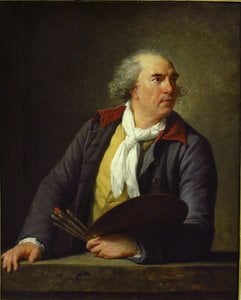
1733 - 1808 , Frankrike

 Förhandsvisa
 Skicka
 Dela
Dela
 Visa detaljer

 Ladda ner
 Liknande objekt
 Röntgen
 Bildspel
 Visa mer


