Hieronymus Bosch: En Mystisk Konstnärs Värld
Hieronymus Bosch, ursprungligen Jheronimus van Aken, född omkring 1450 i den livliga staden ’s-Hertogenbosch i Nederländerna – då en del av Brabant – är en av konsthistoriens mest fascinerande och gåtfulla figurer. Hans värld var genomsyrad av senmedeltida religiös passion, folktro och en växande känsla av samhällelig oro, allt vilket djupt påverkade hans unikt obehagliga konstnärliga vision. Från en familj med en lång tradition inom måleriet – hans farfar, Jan van Aken, och fadern, Anthonius van Aken, var båda konstnärer – fick Bosch sannolikt sin tidigaste utbildning inom familjens verkstad, där han absorberade tekniker och konventioner från nederländska målningar. Ändå började han redan i sina tidiga år att avvika från etablerade normer, vilket antydde den extraordinära fantasi som skulle definiera hans karriär. Biografiska detaljer är frustrerande bristfälliga; register är fragmenterade, vilket lämnar mycket öppet för spekulation och tolkning, vilket bidrar till mystiken kring både mannen och hans verk. Han gifte sig med Aleyt Goyaerts van den Meerveen någon gång före 1481, en union som gav honom viss ekonomisk trygghet genom hennes familjs innehav, men lite annat är känt om deras privata liv.
Fantastiska Visioner och Symboliska Djup
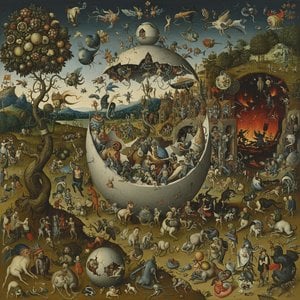
Boschs konstnärliga stil är omedelbart igenkännlig – en fängslande blandning av minutiös detaljrikedom och vågade fantasifulla bilder. Han arbetade huvudsakligen med olja på ekpaneler, vilket visade enastående behärskning av mediet, och skapade ljusa färger och invecklade texturer. Även om hans tidiga verk visar inflytande från traditionell nederländska målningar – särskilt i sin realism och uppmärksamhet på detaljer – rörde han sig snabbt bortom enkel imitation, utvecklande en djupt originell vision. Hans målningar är inte bara representationer av verkligheten; de är allegoriska landskap bebodda av bisarra varelser, hybrider och obehagliga scener som verkar stulna från drömmar – eller mardrömmar.
Religiösa teman genomsyrar mycket av hans arbete, men de är sällan raka beskrivningar av bibliska berättelser. Istället använder Bosch symbolik för att utforska komplexa moraliska och teologiska koncept, ofta med fokus på syndens faror, jordiska nöjes flyktighet och den oundvikliga gudomliga domstolen. Hans varelser – groteska demoner, fantastiska djur och märkligt mänskliga figurer – är inte bara dekorativa element; de är förebilder för vice, lockelse och andlig korruption. Den blandning av heligt och profant, vackert och groteskt skapar en unikt obehaglig effekt som fortsätter att fängsla betraktare århundraden senare.
Huvudverk och Symbolik
Bosch var en pionjär inom konstens representation av abstrakta koncept, vilket syns tydligt i hans triptyker.
The Garden of Earthly Delights (c. 1490-1510) är ett exempel på detta, och anses vara en av de mest gåtfulla och debatterade verken i konsthistorien. När det öppnas presenteras en panoramautsikt över paradiset, jordelivet och helvetet – en komplex allegorisk representation av mänsklighetens föllande från nåd. Den vänstra panelen visar Eden, fyllt av fantastiska varelser och frodig vegetation; den centrala panelen skildrar en värld uppslukad av sinnliga nöjer och okontrollerade begär; och den högra panelen erbjuder en skrämmande glimt in i helvetets fördömelse.
The Last Judgement Triptych (c. 1480-1490) är ett annat kraftfullt exempel på hans förmåga att måla både himmelsk lycka och infernalisk förödelse, medan *The Ascent of the Blessed* (c. 1480-1490) visar hans skicklighet i att skapa eteriska och drömlika scener. Även mindre verk som *Epiphany* (c. 1495) visar upp hans innovativa användning av olja på trä och komplex symbolik, vilket avslöjar en tanke som ständigt brottas med djupa frågor om tro, moral och den mänskliga tillstånd.
Inflytande och Bestående Inverkan
Att identifiera Boschs direkta influenser är en utmaning, givet originaliteten i hans vision. Studenter pekar på kopplingar till medeltida folktro, religiösa texter – särskilt de som betonar apokalyptiska teman – och den rådande samhälleliga ångesten under tiden, inklusive rädslor för kätteri och social oro. Men det är tydligt att han syntetiserade dessa element till något helt nytt och unikt för sig själv. Hans inflytande på efterföljande konstnärer är obestridligt.
Pieter Bruegel den Äldre följde direkt i hans fotspår, adopterade liknande teman och kompositionstekniker, medan senare rörelser, såsom Surrealismen, också drog inspiration från Boschs drömlika bilder och utforskning av det undermedvetna. Konstnärer som Salvador Dalí och Max Ernst erkände öppet sin tacksamhet till hans obehagliga visioner. Även idag fortsätter Boschs verk att fascinera och provocera debatt, vilket säkerställer hans plats som en mästare inom nederländska målningar och en visionär konstnär vars inflytande sträcker sig långt bortom sin egen tid. Hans målningar ger värdefulla insikter i den religiösa, sociala och psykologiska klimaten under det sena 1400-talet och tidiga 1500-talet, utmanar konventionella normer och banar väg för nya former av konstnärligt uttryck. Han dog 1516, lämnande efter sig ett verk som fortsätter att hemsöka och inspirera, vilket säkerställer hans bestående arv som en av konsthistoriens mest unika och oförglömda röster.
Ytterligare information



 Förhandsvisa
 Beställ handmålad reproduktion
 Skicka
 Dela
Dela
 Visa detaljer

 Ladda ner
 Liknande objekt
 Röntgen
 Bildspel
 Statistik

 Visa mer






































 Glasalternativet är endast tillgängligt i storlekar under 110 cm.