Köp en högupplöst, förbättrad digital bild med betydligt högre kvalitet än förhandsvisningen online.
Varje fil är noggrant förberedd av våra interna specialister med hjälp av avancerade verktyg och professionell manuell retuschering. Vi säkerställer att varje bild har exceptionell skärpa, exakt färgåtergivning och fina detaljer.
Den slutgiltiga filen levereras via e-post inom 72 timmar, optimerad för omedelbar användning i professionella sammanhang, redaktionellt bruk och tryckmiljöer. Detta är samma kvalitet som med förtroende används av ledande designstudior, förlag och gallerier.
Ladda ner en högupplöst fil för personlig visning, utskrift och kreativa projekt. ( Beställ tryck Beställ handmålad reproduktion)
När du väljer WahooArt.com får du inte bara en bild – du får ett professionellt förädlat digitalt konstverk, skapat med precision och med en garanterad tillfredsställelse. Här är allt som ingår i din beställning, automatiskt:

Din högupplösta digitala bild skickas till dig via e-post inom 72 timmar efter beställning – redo för omedelbar användning.

Ditt konstverk optimeras professionellt med hjälp av avancerade AI-verktyg och manuell redigering, vilket garanterar maximal detaljrikedom, skärpa och färgnoggrannhet.

Har du råkat radera eller tappa bort din fil? Ingen oro – vi skickar den kostnadsfritt till dig när som helst.

Njut av ditt konstverk omedelbart utan tull, importavgifter eller leveranskostnader – digitala nedladdningar är alltid skattefria.

Vi säkerställer att din digitala bild återger de ursprungliga färgerna så exakt som möjligt med hjälp av professionella verktyg och färghantering.

Om du inte är nöjd med din digitala bild kommer vi att revidera den eller återbetala 100% inom 100 dagar – utan frågor.

Inte nöjd? Få full återbetalning inom 100 dagar efter att du har tagit emot din digitala fil – utan frågor och diskussioner.

Köp 3 bilder, spara 10% – Köp 5, spara 15% – Köp 10+, spara 20%. Perfekt för kreativa projekt, gallerier och byråer.
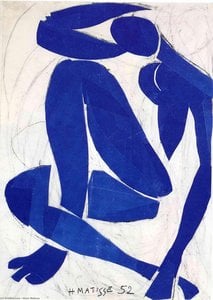
Henri Matisse's "Untitled (720)," a captivating study in form, color, and the very essence of human presence, stands as a testament to his revolutionary approach to painting. This work, rendered with the characteristic boldness that defined his mature style, isn’t merely a depiction of a woman; it’s an exploration of gesture, space, and the emotional resonance of simplified shapes. The photograph itself reveals a striking simplicity – a nude figure posed before a brick wall, bathed in a serene blue light. Yet, within this apparent restraint lies a profound dynamism, inviting viewers to contemplate the subject's posture, her gaze (implied rather than explicitly shown), and the subtle interplay between form and background.
Matisse’s journey to this iconic style was far from straightforward. Initially trained as a lawyer, his path dramatically shifted after an illness in 1889, leading him to embrace painting as a deeply personal and liberating pursuit. This early convalescence ignited a passion for color – a passion that would become the cornerstone of his artistic identity. His formative years at the Académie Julian and École Nationale des Beaux-Arts provided a foundation, but it was through experimentation with Impressionism and the influence of artists like Van Gogh and Cézanne that he began to forge his own unique vocabulary. The work’s brushstrokes, visible throughout the image, speak to an immediate, almost tactile approach – a deliberate rejection of meticulous detail in favor of capturing the essence of the subject.
“Untitled (720)” is firmly rooted within the Fauvist movement, a period of intense artistic experimentation that emerged around 1905. The Fauves – meaning “wild beasts” – sought to liberate color from its traditional role and use it expressively, often employing jarring juxtapositions and vibrant hues divorced from naturalistic representation. Matisse’s masterful manipulation of blue creates a sense of both tranquility and mystery; it's not the cool, restful blue of a clear sky, but rather a richer, more saturated tone that seems to emanate its own light. This deliberate chromatic choice immediately draws the eye and establishes a mood of quiet contemplation.
The brick wall serves as a crucial element within the composition, acting as both a grounding force and a visual counterpoint to the figure’s lightness. Its rough texture and muted tones provide a stark contrast to the woman's smooth skin and vibrant color palette. This juxtaposition highlights her presence—she is not simply *in* space, but actively shaping it with her posture and gesture. The simplicity of the wall also directs the viewer's attention solely onto the subject, emphasizing her form and inviting introspection.
While seemingly straightforward in its depiction, “Untitled (720)” is rich in symbolic potential. The nude figure herself embodies a timeless quality—a representation of female strength, vulnerability, and perhaps even defiance. Her hands on her hips are not merely a pose; they convey a sense of self-assuredness and quiet power. There’s an inherent dignity in her stance, suggesting a connection to the earth and a profound awareness of her own being.
Matisse's deliberate simplification of form—reducing the figure to its essential elements—is key to understanding his artistic vision. He wasn’t interested in creating a realistic portrait; he was striving to capture the *feeling* of the subject, the underlying energy that animated her presence. This approach aligns with Matisse’s broader philosophy of art as a means of expressing joy and beauty – a belief deeply ingrained in his work throughout his career.
“Untitled (720)” is more than just a painting; it's a pivotal moment in the history of modern art. It exemplifies Matisse’s groundbreaking use of color, his innovative approach to composition, and his unwavering commitment to capturing the essence of human experience. Reproductions of this work offer an exceptional opportunity to bring this vibrant and emotionally resonant image into any space, allowing viewers to engage with Matisse's genius and appreciate the enduring power of art to inspire and uplift.


1869 - 1954 , Frankrike

 Förhandsvisa
 Skicka
 Dela
Dela
 Visa detaljer

 Ladda ner
 Liknande objekt
 Röntgen
 Bildspel
 Visa mer