FörhandsvisaFörhandsvisa Förhandsgranska i ARFörhandsgranska i AR Byt till tryck Byt till tryckByt till digital bild Byt till digital bild SkickaSkicka
Visa detaljerVisa detaljer Lägg till i favoriter Lägg till i favoriter Ladda nerLadda ner Liknande objektLiknande objekt RöntgenRöntgen BildspelBildspel StatistikStatistik

untitled

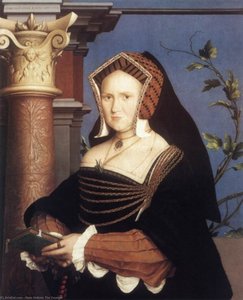
Renaissance portrait of a noblewoman by Hans Holbein the Younger. Admire exquisite detail in fabrics & expression. Own a hand-painted reproduction – elegance & history for your home!

Hans Holbein the Younger (1497-1543): Nordens mästare inom realistisk porträttkonst, född i Augsburg och känd för sina detaljerade verk av Tudorkungar som Henry VIII samt hans förmåga att fånga människans psykologi.

Handgjord oljereproduktion

Handmålad olja på duk i din valda storlek och ram, tillverkad efter beställning av våra konstnärer. (Byt till tryck Byt till tryckByt till digital bild Byt till digital bild)

P118B $10
P118H $10
P118W $10
P438Z $10
P508JH $12
P508YH $12
P805H $10
P805Z $10
P919BZ $10
P919G $10
P919XJ $10
P959ZH $10
P968JZ $12
W106C $8
W218G $10
W218JH $8
W218Y $10
W307PJ $10
W316G $10
W316PJ $8
W316Y $10
W398PJ $8
W4111J $10
W500HY $15
W500JH $15
W692G $12
W849H $8
W940BG $15
W953PJ $8

Standardstorlek
skräddarsydd
CM
INCH

Välj bland våra förinställda storlekar som motsvarar konstverkets ursprungliga proportioner.

bredd
höjd

Du kan ange egna mått för att passa en specifik ram eller yta. Om den valda storleken inte matchar originalbildens proportioner kommer vi antingen att beskära konstverket eller utöka målningen med ytterligare handmålade element. En digital skiss skickas till dig för godkännande innan produktionen påbörjas.
Observera att förhandsvisningen på skärmen inte återspeglar den faktiska beskärningen eller utökningen. Endast skissen visar den slutgiltiga kompositionen korrekt.
Även om anpassade storlekar är möjliga, rekommenderar vi att du väljer en dimension från den fördefinierade listan för att bevara originalproportionerna.

Exempel på vad som kan anpassas: Byt ut ansiktet mot ett foto av kunden; Lägg till ett husdjur (t.ex. byt ut en katt mot en hund); Inkludera ett dolt meddelande i bakgrunden; Ändra bakgrundens landskap eller element.
Efter beställning kommer WahooArt.com team att mejla kunden för instruktioner och tillhandahålla en skissförhandsvisning

Leverans över hela världen () på 3–4 veckor istället för standard 5 veckor. (13 september). Inga kompromisser med kvaliteten.

why_choose_icon
Fri expressfrakt över hela världen
why_choose_icon
Högkvalitativ linnecanvas
why_choose_icon
Fullständig fraktförsäkring
why_choose_icon
Garantier för återbetalning av tullavgifter
why_choose_icon
Garantier för exakt färgåtergivning
why_choose_icon
100 dagars returrätt (endast vid defekter)
why_choose_icon
100% pengarna tillbaka-garanti
why_choose_icon
Mängdrabatt erbjuds

Totalpris

$ 272

reproduction

untitled

Reproduktionsmedium

Storlek på reproduktion

-

Slutgiltigt pris

$ 272

Snabbfakta

  • artist: Hans Holbein the Younger (attributed)
  • movement: Early Renaissance, Northern Renaissance
  • influences: Northern European traditions
  • title: untitled
  • style: Realistic portraiture
  • medium: Oil on wood panel (presumed)

Konstquiz

Det finns endast ett korrekt svar på varje fråga.

Fråga 1:
Based on the description, to what social class did the subject of this portrait likely belong?
Fråga 2:
The artwork's style is most closely associated with which artistic period?
Fråga 3:
What detail in the background might symbolically represent abundance or fertility?
Fråga 4:
Which technique is highlighted as being skillfully employed by the artist in rendering the artwork?
Fråga 5:
The woman's expression can best be described as…

A Renaissance Vision of Noble Grace

This captivating portrait offers a glimpse into the world of the Renaissance elite, presenting a woman of evident status and quiet dignity. Executed with meticulous detail characteristic of the period, likely during the early to mid-16th century, this artwork embodies the refined aesthetic sensibilities prevalent in Northern European courtly circles. It’s a piece that speaks volumes about an era defined by burgeoning humanism, artistic innovation, and a fascination with capturing individual likeness.

Masterful Technique & Artistic Style

The artist demonstrates exceptional skill in oil painting, employing layering and glazing techniques to achieve remarkable depth and luminosity. The smooth application of paint creates a polished finish while simultaneously conveying the varied textures – from the delicate skin tones to the crisp folds of luxurious fabrics and the sheen of pearls. Influenced by both Italian Renaissance advancements and the meticulous realism of Northern masters like Jan van Eyck, the style leans towards precise observation and detailed rendering rather than idealized forms. The composition’s symmetry is subtly offset, creating a dynamic balance that draws the eye directly to the subject's face and expression.

Decoding Symbolism & Historical Context

The woman’s elaborate attire – a black bodice with golden embroidery over a red underdress, complemented by puffed yellow sleeves and a pearl necklace – immediately signifies her wealth and social standing. The striped headdress is particularly striking, adding an unusual yet elegant touch to the composition. Beyond mere ornamentation, elements within the painting carry symbolic weight. Grapes carved into the columns flanking the figure traditionally represent abundance, fertility, or even allude to religious themes related to wine and communion. Pearls often symbolized purity and wealth. Commissioned portraits like this served not only as records of appearance but also as statements of power, lineage, and social aspiration within a rapidly changing world.

Emotional Resonance & Interior Appeal

The subject’s expression is subtly melancholic, conveying a sense of quiet contemplation rather than overt joy. This reserved emotion was common in Renaissance portraiture, reflecting ideals of noble composure and inner strength. The rich yet restrained color palette – dominated by reds, blacks, golds, creams, and browns – creates an atmosphere of dignified elegance. This artwork would serve as a stunning focal point in a variety of interior settings. Its classic aesthetic complements traditional décor schemes while adding depth and sophistication to more contemporary spaces. Imagine it gracing the walls of a library, dining room, or study, sparking conversation and inspiring contemplation. A high-quality reproduction allows you to bring this piece of history and artistry into your own home, enriching your surroundings with its timeless beauty.

Konstnärsbiografi

A Life Etched in Detail: The World of Hans Holbein the Younger

Hans Holbein the Younger (1497/8 – 1543) was a German-Swiss painter and printmaker who worked in the Northern Renaissance—a master portraitist whose work continues to resonate with breathtaking realism and psychological depth. His upbringing within an artistically gifted family laid the foundation for his exceptional talent; his father, Hans Holbein the Elder, was a respected painter and printmaker who instilled in young Hans a meticulous approach to observation and technique. This early training wasn’t merely about mastering brushstrokes or mixing pigments—it was about learning to *see*, to capture not just likeness but the very essence of a subject. Holbein's initial artistic explorations occurred within his father’s workshop, where he honed his skills before embarking on a journey that would lead him through Switzerland and ultimately to the heart of the English court.

From Basel to the Tudor Court: A Rising Star

Holbein’s formative years were spent in Basel, Switzerland, where he established himself as an independent artist with a burgeoning reputation. He excelled not only in portraiture but also in religious art—creating monumental murals and stained glass windows that showcased his mastery of color and composition. Perhaps most strikingly, Holbein designed the *Dance of Death* series, a macabre depiction of mortality featuring exquisitely detailed figures representing every stratum of society. These early works reveal a profound fascination with capturing human emotion and exploring themes of life and death—qualities that would permeate his entire artistic career. The influence of Italian Renaissance humanist ideals is palpable in Basel’s artistic milieu during this period, shaping Holbein's stylistic choices and broadening his intellectual horizons.

The Art of Perception: Style and Masterpieces

Holbein’s distinctive style is characterized by an unparalleled commitment to realism—a pursuit achieved through painstaking attention to detail in rendering textures, fabrics, and the subtle nuances of facial expressions. He didn’t simply *paint* portraits; he meticulously constructed them, layering upon layer, capturing not just physical appearances but also the personality and inner life of his sitters. His innovative compositions further enhanced the impact of his work—often employing symbolic objects or backgrounds to convey deeper meaning. The Ambassadors (1533), arguably Holbein’s most celebrated masterpiece, exemplifies this approach—a complex and symbolically rich double portrait showcasing both Holbein’s technical brilliance and intellectual depth. The anamorphic skull subtly embedded within the painting serves as a stark *memento mori*, reminding viewers of the inevitability of death. This masterful use of perspective and detail elevates the image beyond mere representation, inviting contemplation on themes of mortality and human ambition. His portraits of Henry VIII—particularly his depiction of the king’s coronation robes—became iconic representations of royal power and solidified Holbein's reputation as one of the foremost portraitists of his time.

Historical Significance: A Legacy Enduring Through Time

Holbein’s artistic journey coincided with a period of profound intellectual and religious upheaval—the Reformation—and he skillfully utilized his art to convey messages of faith and authority. His depictions of Erasmus of Rotterdam capture the humanist scholar's erudition and moral integrity, reflecting the values of the Renaissance humanism movement. Furthermore, Holbein’s meticulous documentation of historical events—such as Henry VIII’s reign—provides invaluable insights into the political landscape and cultural sensibilities of Tudor England. He remains one of the most admired and studied painters of the Renaissance—a master whose legacy continues to inspire artists today. His work transcends mere technical skill; it embodies intellectual curiosity, artistic innovation, and a profound understanding of the human condition—qualities that cemented his place as a cornerstone of Northern Renaissance art history. He didn't merely record appearances—he captured moments in time, preserving them for posterity.
Hans Holbein den yngre

Hans Holbein den yngre

1497 - 1543 , Tyskland

Kortfakta

  • Artistic Movement Or Style: Nordländska renässansen
  • Artists Or Movements Influenced By This Artist: ['Later portrait artists']
  • Artists Who Influenced This Artist: ['Albrecht Dürer']
  • Date Of Birth: c. 1497
  • Full Name: Hans Holbein den Yngre
  • Nationality: Tysk
  • Notable Artworks:
    • Ambrosius Holbein
    • Nikolaus Kratzer
    • The Ambassadors
  • Place Of Birth: Augsburg, Germany
Utforska konstverk sorterade efter tema, stil och egenskaper.