FörhandsvisaFörhandsvisa Förhandsgranska i ARFörhandsgranska i AR Beställ handmålad reproduktion Beställ handmålad reproduktionKöp högupplöst bild Köp högupplöst bild SkickaSkicka
Visa detaljerVisa detaljer Lägg till i favoriter Lägg till i favoriter Ladda nerLadda ner Liknande objektLiknande objekt RöntgenRöntgen BildspelBildspel

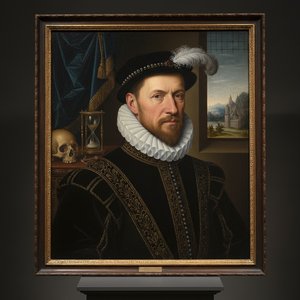
untitled (951)

Discover 'untitled (951)' by Hans Holbein the Younger – a captivating portrait of a man with a hawk, showcasing Renaissance mastery and intricate detail.

Hans Holbein the Younger (1497-1543): Nordens mästare inom realistisk porträttkonst, född i Augsburg och känd för sina detaljerade verk av Tudorkungar som Henry VIII samt hans förmåga att fånga människans psykologi.

Giclée / Konsttryck

Giclée- eller canvasprint av museumskvalitet med snabb produktion och flexibla ytbehandlingsalternativ. (Beställ handmålad reproduktion Beställ handmålad reproduktionKöp högupplöst bild Köp högupplöst bild)

P118B $10
P118H $10
P118W $10
P438Z $10
P508JH $12
P508YH $12
P805H $10
P805Z $10
P919BZ $10
P919G $10
P919XJ $10
P959ZH $10
P968JZ $12
W106C $8
W218G $10
W218JH $8
W218Y $10
W307PJ $10
W316G $10
W316PJ $8
W316Y $10
W398PJ $8
W4111J $10
W500HY $15
W500JH $15
W692G $12
W849H $8
W940BG $15
W953PJ $8

Standardstorlek
skräddarsydd
CM
INCH

Välj bland våra förinställda storlekar som motsvarar konstverkets ursprungliga proportioner.

bredd
höjd

Du kan ange egna mått för att passa en specifik ram eller yta. Om det valda måttet inte överensstämmer med originalbildens proportioner kommer vi antingen att beskära konstverket eller utöka bilden med en speglad eller enfärgad kant. En digital mockup skickas för ditt godkännande innan produktionen påbörjas.
Vänligen notera att förhandsvisningen på skärmen inte återspeglar den faktiska beskärningen eller utökningen. Endast mockuppen visar den slutgiltiga kompositionen korrekt.
Även om anpassade storlekar är möjliga, rekommenderar vi att du väljer ett mått från den fördefinierade listan för att bevara de ursprungliga proportionerna.

Leverans över hela världen () på 2 veckor istället för standard 4/5 veckor. (6 september)

why_choose_icon
Fri expressfrakt över hela världen
why_choose_icon
Högkvalitativ linnecanvas
why_choose_icon
Fullständig fraktförsäkring
why_choose_icon
Garantier för återbetalning av tullavgifter
why_choose_icon
Garantier för exakt färgåtergivning
why_choose_icon
100 dagars returrätt (endast vid fabrikationsfel)
why_choose_icon
100% pengarna tillbaka-garanti
why_choose_icon
Mängdrabatt erbjuds

Totalpris

$ 68

reproduction

untitled (951)

Giclée / Konsttryck

Storlek på reproduktion

-

Slutgiltigt pris

$ 68

Snabbfakta

  • Notable elements or techniques: Blue background, detailed robe
  • Subject or theme: Portrait of a man with hawk
  • Title: untitled (951)
  • Artist: Hans Holbein the Younger
  • Movement: Northern Renaissance

Konstquiz

Det finns endast ett korrekt svar på varje fråga.

Fråga 1:
Based on the description, what is the central subject of this portrait?
Fråga 2:
Hans Holbein the Younger was renowned for his skill in what artistic style?
Fråga 3:
The painting features a background of which color?
Fråga 4:
Hans Holbein the Younger's early artistic training took place within the workshop of whom?
Fråga 5:
Holbein is known to have painted portraits of which prominent historical figures?

A Glimpse into Renaissance Nobility: Decoding Hans Holbein the Younger’s Portrait

The untitled portrait attributed to Hans Holbein the Younger—identified as “951” within WahooArt's collection—offers a compelling window into the world of 16th-century nobility and the burgeoning artistry of the Northern Renaissance. The painting immediately draws the eye with its central figure: a man of evident status, cloaked in dark attire and distinguished by a striking black hat. He is not merely *wearing* his finery; he embodies it, radiating an air of quiet authority and contemplative power. The most captivating element, however, is undoubtedly the hawk perched upon his gloved hand. This isn’t simply a decorative addition; it's a carefully considered symbol deeply rooted in the aristocratic culture of the time.

Falconry and Status: Unveiling Hidden Symbolism

To understand the significance of this portrait, one must consider the practice of falconry itself. In Holbein’s era, falconry was not merely a sport; it was an exclusive privilege reserved for the upper echelons of society. Owning and expertly handling a bird of prey—particularly a hawk, known for its keen eyesight and swiftness—demonstrated wealth, skill, and noble lineage. The man's confident grip on the bird speaks volumes about his social standing and mastery over both nature and his own domain. The hawk, therefore, becomes an emblem of power, control, and refined taste. Holbein was a master of imbuing his portraits with such subtle yet potent symbolism, elevating them beyond mere likenesses to become complex statements about the sitter’s identity and place in the world. The ring on his finger further emphasizes this status, hinting at family connections or perhaps a significant alliance.

Technique and Style: Holbein's Northern Renaissance Mastery

Holbein’s technical prowess is readily apparent even in reproductions of this work. He was renowned for his meticulous attention to detail—a hallmark of the Northern Renaissance style—and his ability to capture not just physical resemblance, but also a sense of inner character. The textures of the man's clothing, from the rich folds of his robe or coat to the smooth leather of his glove, are rendered with remarkable precision. This dedication to realism wasn’t simply about technical skill; it was about conveying the sitter’s presence and personality with unwavering accuracy. The deep blue background serves not as a mere backdrop but as a complementary element that enhances the colors of the man's attire and the bird, creating a harmonious visual balance. Holbein’s use of light and shadow is also masterful, subtly modeling the face and hands to create a sense of depth and volume.

A Legacy of Portraiture: Holbein in Context

Hans Holbein the Younger (1497-1543) stands as one of the most significant portraitists of his time. Born in Augsburg, Germany, he honed his skills within his father’s artistic workshop before embarking on a career that would take him across Switzerland and ultimately to England. His arrival at the court of Henry VIII proved pivotal, establishing him as the King's Painter and securing his place in history. Holbein’s portraits of Henry VIII and other members of the Tudor dynasty are iconic representations of power and authority. While this particular work—untitled (951)—may not depict a royal figure, it embodies the same level of artistry and attention to detail that defined Holbein's oeuvre. It offers a fascinating glimpse into the broader world of Renaissance nobility and the cultural values of the era.


Konstnärsbiografi

A Life Etched in Detail: The World of Hans Holbein the Younger

Hans Holbein the Younger (1497/8 – 1543) was a German-Swiss painter and printmaker who worked in the Northern Renaissance—a master portraitist whose work continues to resonate with breathtaking realism and psychological depth. His upbringing within an artistically gifted family laid the foundation for his exceptional talent; his father, Hans Holbein the Elder, was a respected painter and printmaker who instilled in young Hans a meticulous approach to observation and technique. This early training wasn’t merely about mastering brushstrokes or mixing pigments—it was about learning to *see*, to capture not just likeness but the very essence of a subject. Holbein's initial artistic explorations occurred within his father’s workshop, where he honed his skills before embarking on a journey that would lead him through Switzerland and ultimately to the heart of the English court.

From Basel to the Tudor Court: A Rising Star

Holbein’s formative years were spent in Basel, Switzerland, where he established himself as an independent artist with a burgeoning reputation. He excelled not only in portraiture but also in religious art—creating monumental murals and stained glass windows that showcased his mastery of color and composition. Perhaps most strikingly, Holbein designed the *Dance of Death* series, a macabre depiction of mortality featuring exquisitely detailed figures representing every stratum of society. These early works reveal a profound fascination with capturing human emotion and exploring themes of life and death—qualities that would permeate his entire artistic career. The influence of Italian Renaissance humanist ideals is palpable in Basel’s artistic milieu during this period, shaping Holbein's stylistic choices and broadening his intellectual horizons.

The Art of Perception: Style and Masterpieces

Holbein’s distinctive style is characterized by an unparalleled commitment to realism—a pursuit achieved through painstaking attention to detail in rendering textures, fabrics, and the subtle nuances of facial expressions. He didn’t simply *paint* portraits; he meticulously constructed them, layering upon layer, capturing not just physical appearances but also the personality and inner life of his sitters. His innovative compositions further enhanced the impact of his work—often employing symbolic objects or backgrounds to convey deeper meaning. The Ambassadors (1533), arguably Holbein’s most celebrated masterpiece, exemplifies this approach—a complex and symbolically rich double portrait showcasing both Holbein’s technical brilliance and intellectual depth. The anamorphic skull subtly embedded within the painting serves as a stark *memento mori*, reminding viewers of the inevitability of death. This masterful use of perspective and detail elevates the image beyond mere representation, inviting contemplation on themes of mortality and human ambition. His portraits of Henry VIII—particularly his depiction of the king’s coronation robes—became iconic representations of royal power and solidified Holbein's reputation as one of the foremost portraitists of his time.

Historical Significance: A Legacy Enduring Through Time

Holbein’s artistic journey coincided with a period of profound intellectual and religious upheaval—the Reformation—and he skillfully utilized his art to convey messages of faith and authority. His depictions of Erasmus of Rotterdam capture the humanist scholar's erudition and moral integrity, reflecting the values of the Renaissance humanism movement. Furthermore, Holbein’s meticulous documentation of historical events—such as Henry VIII’s reign—provides invaluable insights into the political landscape and cultural sensibilities of Tudor England. He remains one of the most admired and studied painters of the Renaissance—a master whose legacy continues to inspire artists today. His work transcends mere technical skill; it embodies intellectual curiosity, artistic innovation, and a profound understanding of the human condition—qualities that cemented his place as a cornerstone of Northern Renaissance art history. He didn't merely record appearances—he captured moments in time, preserving them for posterity.
Hans Holbein den yngre

Hans Holbein den yngre

1497 - 1543 , Tyskland

Kortfakta

  • Artistic Movement Or Style: Nordländska renässansen
  • Artists Or Movements Influenced By This Artist: ['Later portrait artists']
  • Artists Who Influenced This Artist: ['Albrecht Dürer']
  • Date Of Birth: c. 1497
  • Full Name: Hans Holbein den Yngre
  • Nationality: Tysk
  • Notable Artworks:
    • Ambrosius Holbein
    • Nikolaus Kratzer
    • The Ambassadors
  • Place Of Birth: Augsburg, Germany
Utforska konstverk sorterade efter tema, stil och egenskaper.