FörhandsvisaFörhandsvisa Förhandsgranska i ARFörhandsgranska i AR Byt till tryck Byt till tryckBeställ handmålad reproduktion Beställ handmålad reproduktion SkickaSkicka
Visa detaljerVisa detaljer Lägg till i favoriter Lägg till i favoriter Ladda nerLadda ner Liknande objektLiknande objekt RöntgenRöntgen BildspelBildspel StatistikStatistik

The Ballad

Discover Gustave Moreau's 'The Ballad,' a mesmerizing Symbolist watercolor (1885). Explore intricate details, mythological themes & dreamlike beauty in this captivating masterpiece – now available as a stunning hand-painted reproduction.

Gustave Moreau (1826-1898): En symbolistisk konstnär vars drömlika målningar utforskar myter, religion och människans psykologi med färgrik palett och suggestiva detaljer. Inspirerade Matisse & Rouault.

Köp en högupplöst, förbättrad digital bild med betydligt högre kvalitet än förhandsvisningen online.

Varje fil är noggrant förberedd av våra interna specialister med hjälp av avancerade verktyg och professionell manuell retuschering. Vi säkerställer att varje bild har exceptionell skärpa, exakt färgåtergivning och fina detaljer.

Den slutgiltiga filen levereras via e-post inom 72 timmar, optimerad för omedelbar användning i professionella sammanhang, redaktionellt bruk och tryckmiljöer. Detta är samma kvalitet som med förtroende används av ledande designstudior, förlag och gallerier.

Digital bild

Ladda ner en högupplöst fil för personlig visning, utskrift och kreativa projekt. (Byt till tryck Byt till tryckBeställ handmålad reproduktion Beställ handmålad reproduktion)

Totalpris

$ 24,90

Ingår i varje beställning av digital bild

Professionell digital leverans, garanterad

När du väljer WahooArt.com får du inte bara en bild – du får ett professionellt förädlat digitalt konstverk, skapat med precision och med en garanterad tillfredsställelse. Här är allt som ingår i din beställning, automatiskt:

shipping_icon
Snabb leverans via e-post

Din högupplösta digitala bild skickas till dig via e-post inom 72 timmar efter beställning – redo för omedelbar användning.

canvas_icon
AI-förbättrad digital bild

Ditt konstverk optimeras professionellt med hjälp av avancerade AI-verktyg och manuell redigering, vilket garanterar maximal detaljrikedom, skärpa och färgnoggrannhet.

insurance_icon
Gratis livstidsåterutskick

Har du råkat radera eller tappa bort din fil? Ingen oro – vi skickar den kostnadsfritt till dig när som helst.

tax_icon
Inga importavgifter – någonsin

Njut av ditt konstverk omedelbart utan tull, importavgifter eller leveranskostnader – digitala nedladdningar är alltid skattefria.

color_icon
Garanterad färgåtergivning

Vi säkerställer att din digitala bild återger de ursprungliga färgerna så exakt som möjligt med hjälp av professionella verktyg och färghantering.

return_icon
100 dagars nöjdhetsgaranti

Om du inte är nöjd med din digitala bild kommer vi att revidera den eller återbetala 100% inom 100 dagar – utan frågor.

guarantee_icon
100% pengarna-tillbaka-garanti

Inte nöjd? Få full återbetalning inom 100 dagar efter att du mottagit din digitala fil – utan frågor.

discount_icon
Rabatt vid storköp

Köp 3 bilder, spara 10% – Köp 5, spara 15% – Köp 10+, spara 20%. Perfekt för kreativa projekt, gallerier och byråer.

Snabbfakta

  • Influences:
    • Baudelaire
    • Mallarmé
  • Title: The Ballad
  • Location: Musée Gustave Moreau, Paris
  • Movement: Symbolism
  • Year: 1885
  • Artistic style: Dreamlike & Ethereal
  • Subject or theme: Allegorical Narrative

Konstquiz

Det finns endast ett korrekt svar på varje fråga.

Fråga 1:
What artistic movement is Gustave Moreau most closely associated with?
Fråga 2:
The painting ‘The Ballad’ primarily utilizes which of the following techniques to create its atmosphere?
Fråga 3:
What literary influence is most evident in Moreau’s approach to painting as described in the text?
Fråga 4:
In the image, what is the woman standing in front of the man wearing?
Fråga 5:
The painting ‘The Ballad’ is housed in which museum?

A Dreamscape Unveiled: Gustave Moreau’s “The Ballad”

Gustave Moreau's "The Ballad," painted in 1885, isn’t merely a depiction of a scene; it’s an immersion into a realm of potent symbolism and deeply felt emotion. This watercolor, born from the heart of Symbolism, transcends simple representation to become a visual poem—a testament to Moreau's profound engagement with mythology, literature, and the hidden currents of the human psyche. The painting immediately draws the viewer in with its vibrant palette and intricate details, creating an atmosphere that feels both familiar and profoundly strange, like stepping into a half-remembered dream.

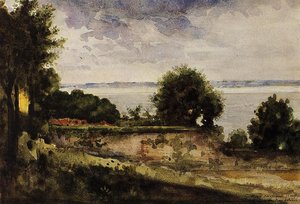
At first glance, the composition presents a striking tableau: a man, clad in armor and wielding a sword, rides atop a magnificent horse, while a woman stands before him, her hair whipped about by an unseen wind. The scene is layered with elements of nature – twisting branches, blossoming flowers—and fantastical details that hint at a world beyond the everyday. Two additional horses are present, one further back in the landscape, adding depth and suggesting a journey or procession. A soaring bird cuts across the upper portion of the canvas, injecting a sense of movement and perhaps even prophecy into the scene.

The Language of Symbolism: Moreau’s Influences

Moreau's artistic vision was deeply rooted in the intellectual currents of his time, particularly influenced by the evocative poetry of Charles Baudelaire and Stéphane Mallarmé. These writers explored themes of beauty, decay, spirituality, and the subconscious—ideas that directly informed Moreau’s approach to painting. He wasn’t interested in faithfully recreating reality; instead, he sought to distill complex emotions and philosophical concepts into visual symbols. The armor worn by the man, for instance, could represent both strength and constraint, while the woman's wind-swept hair might symbolize vulnerability or a connection to the untamed forces of nature.

The painting’s meticulous detail—the texture of the horse’s mane, the delicate folds of the woman’s gown, the intricate patterns in the background foliage—is characteristic of Moreau's style. He employed a technique that combined watercolor with gouache and other pigments to achieve a luminous quality and an almost jewel-like intensity of color. This careful layering creates a sense of depth and atmosphere, contributing significantly to the painting’s dreamlike quality.

Mythic Echoes and Emotional Resonance

"The Ballad" is rich in mythological allusions, though their precise interpretation remains open to debate. Some scholars suggest connections to ancient Greek myths, while others see echoes of medieval romances or even biblical narratives. The central figures could represent a heroic quest, a tragic love story, or perhaps a meditation on the duality of masculine and feminine power. Regardless of its specific mythological source, the painting powerfully conveys a sense of longing, mystery, and profound emotional intensity.

Moreau’s intention wasn't to provide definitive answers but rather to evoke a feeling—a visceral response in the viewer. He aimed to tap into universal human experiences – love, loss, courage, and mortality – through the evocative language of symbolism. The painting invites contemplation, encouraging us to project our own interpretations onto its enigmatic figures and symbolic landscape.

Bringing “The Ballad” Home: Reproductions for Collectors

WahooArt offers meticulously crafted, hand-painted reproductions of Gustave Moreau’s "The Ballad," capturing the artist's unique style and emotional depth with unparalleled accuracy. These reproductions are created by skilled artisans using traditional techniques, ensuring that every detail—from the vibrant colors to the intricate textures—is faithfully reproduced. Whether you’re an art collector seeking a stunning addition to your collection or an interior designer looking for a captivating piece of artwork to enhance your space, a WahooArt reproduction of “The Ballad” offers a beautiful and authentic way to experience the power and beauty of Moreau's vision.

Explore our selection of Gustave Moreau reproductions today and bring this timeless masterpiece into your world. Browse Now


Konstnärsbiografi

A Dream Weaver of Symbolism: The Life and Art of Gustave Moreau

Gustave Moreau, en namn synonymt med den eteriska skönheten och de gåtfulla djupen av symbolistisk målning, steg fram ur 1800-talets Paris som en unik konstnärlig röst. Född 1826 i en borgerskapfamilj – hans far arkitekt och archivarie – var Moreaus tidiga liv genomsyrade av intellektuell nyfikenhet och estetisk känslighet. Redan i unga år visade han en anmärkningsvärd talang för teckning, fostrad genom traditionell akademisk utbildning vid École des Beaux-Arts under figurer som François-Édouard Picot. Men Moreaus konstnärliga väg skulle avvika skarpt från de rådande realistiska och impressionistiska strömningarna av sin tid. Han var inte intresserad av att fånga flyktiga ögonblick eller objektiv verklighet; istället sökte han att låsa upp de dolda rikena av myt, religion och den mänskliga psykén genom ett djupt personligt och symboliskt visuellt språk. Hans resa var en av inåtvänd utforskning, översättande subjektiva känslor och andliga längtan till duken med en besatt uppmärksamhet på detaljer och en livlig, ofta överflödig palett.

The Forge of Imagination: Influences and Artistic Development

Moreaus konstnärliga utveckling föddes inte i ett vakuum. Medan han avvisade de dominerande trenderna i sin tid, drog han inspiration från olika källor. Den dramatiska användningen av färg och exotiska motiv som fanns i Eugène Delacroix’s verk resonerade djupt med honom, vilket antände en passion för berättarperspektiv fyllt av emotionell intensitet. Han beundrade också renässansmästare som Michelangelo och Leonardo da Vinci, beundrade deras behärskning av komposition, anatomi och psykologisk insikt. Men Moreau kopierade inte bara dessa konstnärer; han syntetiserade deras inflytande till något helt nytt. Hans resor till Italien på 1850-talet visade sig vara avgörande, vilket fördjupade honom i antikens och renässanskonstens konst, vilket gav en rikedom av motiv och stilistiska ledtrådar som skulle befolka hans framtida verk. Han kopierade noggrant gamla målningar, inte som en övning i replikering, utan som ett sätt att absorbera deras tekniker och låsa upp deras hemligheter. Denna dedikation till hantverk, kombinerat med hans växande intresse för mytologi och litteratur, lade grunden för hans unika konstnärliga vision.

A World of Symbols: Themes and Techniques

Moreaus målningar är inte bara illustrationer av myter eller bibliska berättelser; de är komplexa allegorier som bjuder in till eftertanke och tolkning. Han grävde i berättelser som Salomes, Orpheus, Jupiter och Semele och otaliga andra, inte för att berätta dem bokstavligt talat, utan för att utforska deras underliggande psykologiska och andliga sanningar. Hans dukar är fyllda med symboliskt motiv – ormar som representerar lockelse, juveler som signalerar jordiska önskningar och figurer som uttrycker abstrakta koncept som sorg, förlust eller upplärning. Han skapade skickligt en drömlik atmosfär genom invecklad detaljrikedom, rika texturer och ofta ett kuslig samspel mellan ljus och skugga. Moreaus teknik kännetecknades av besatt lagerfärgning, vilket skapade ytor som skimrar med iriserande färger och väcker en känsla av övernaturlig skönhet. Hans användning av bladguld förstärkte detta effektfullt och lånade hans verk en bysantinsk kvalitet som understryker deras andliga dimension. Han var inte intresserad av att fånga realistiska texturer eller perspektiv; istället prioriterade han den uttrycksfulla kraften hos färg och form för att förmedla stämning och mening.

Notable Works and Historical Significance

Moreau’s oeuvre is vast and varied, encompassing over 8,000 paintings, watercolors, and drawings. His most celebrated works include *Salome Dancing before Herod* (1876), a mesmerizing depiction of the biblical tale that showcases his opulent style and fascination with mythological narratives; *Jupiter and Semele*, a dramatic portrayal of Greek mythology emphasizing composition and color; and numerous interpretations of Orpheus, each imbued with personal symbolism. Moreau’s work exerted a significant influence on subsequent generations of artists, particularly during the Symbolist movement. He encouraged his students to embrace imagination, symbolism, and individual expression, urging them to break free from conventional artistic norms. Although initially met with mixed reactions, he became a central figure in the Symbolist movement, shaping its aesthetic direction and inspiring countless artists. Gustave Moreau’s Musée Gustave Moreau, housed within his former studio and home in Paris, stands as a testament to his enduring legacy—a sanctuary where visitors can immerse themselves in the captivating world of this extraordinary artist. His paintings continue to resonate with audiences today, offering glimpses into the hidden depths of the human soul and reminding us of the power of art to transcend the boundaries of reality.

Influences on Later Artists

Moreau’s impact extended far beyond his own lifetime. He is considered a key influence on artists such as Henri Matisse and Georges Rouault, who admired his use of color, symbolism, and evocative imagery. His emphasis on psychological depth and emotional expression paved the way for later movements in modern art, demonstrating the lasting relevance of his artistic vision.
Gustave Moreau

Gustave Moreau

1826 - 1898 , Frankrike

Snabbfakta

  • Artistic Movement Or Style: Symbolism
  • Artists Or Movements Influenced By This Artist:
    • Matisse
    • Rouault
  • Artists Who Influenced This Artist:
    • Delacroix
    • Michelangelo
    • Leonardo
  • Date Of Birth: 6 april 1826
  • Date Of Death: 18 april 1898
  • Full Name: Gustave Moreau
  • Nationality: Fransk
  • Notable Artworks:
    • Salome
    • Jupiter
    • Orpheus
    • Apparition
    • Desdemona
  • Place Of Birth: Paris, Frankrike