

Giclée- eller canvasprint av museumskvalitet med snabb produktion och flexibla ytbehandlingsalternativ. ( Beställ handmålad reproduktion Byt till digital bild)





























Välj bland våra förinställda storlekar som motsvarar konstverkets ursprungliga proportioner.

Ange den bredd och höjd du behöver för att passa din ram eller vägg. Ett tryck kan endast beskäras, aldrig göras större än originalbilden, vilket innebär att ett format med en annan proportion leder till att en del av bilden går förlorad. Vi skickar en digital mockup för godkännande innan vi påbörjar tryckningen. Bilden som visas på denna sida visar inte den faktiska beskärningen — det är endast mockuppen som gör det.
Leverans över hela världen () på 2 veckor istället för standard 4/5 veckor. (8 november)
Page 1
Storlek på reproduktion
While seemingly a simple handwritten document, "Page 1," dated 1913, offers a fascinating and unexpected window into the world of Gustav Klimt. This intimate work diverges from his celebrated opulent paintings, yet reveals crucial aspects of his artistic process and intellectual life during a pivotal period.
The artwork presents a close-up view of aged paper densely covered in cursive script. The composition is not one of grand design, but rather an accumulation of names, dates, and annotations – likely related to musical events or performances. This suggests Klimt was meticulously documenting his social engagements, perhaps even inspirations for future works. The sheer volume of text creates a captivating visual texture, a chaotic order that draws the eye across the page.
“Page 1” showcases Klimt’s skill beyond his signature gilded style. Executed in black ink on aged paper, the technique is straightforward – pen and ink calligraphy. However, the *variations* within the cursive script—different sizes, flourishes, and pressures—reveal a personal touch and an immediacy rarely seen in his more polished works. This piece demonstrates Klimt’s foundational training in draftsmanship, harking back to his early days at the Vienna Kunstgewerbeschule.
1913 falls within a complex period for Klimt and the Viennese art scene. The height of the Vienna Secession had passed, but its influence remained strong. Klimt was grappling with evolving artistic trends and personal challenges. While known for works like “Pallas Athene” (1898) – a powerful example of Secessionist symbolism – this document suggests a more private, reflective side to the artist. It’s possible these notes relate to performances he attended seeking inspiration or collaborations.
Unlike his allegorical paintings brimming with symbolism, “Page 1” operates on a different level. Its power lies in its authenticity and intimacy. The document isn’t *about* something; it is something – a tangible remnant of Klimt's daily life. The aged paper evokes a sense of history and nostalgia, while the handwritten script feels deeply personal. It invites contemplation on the ephemeral nature of time and memory.
“Page 1” is more than just a document; it's a fragment of Klimt’s world – a testament to his multifaceted talent and enduring legacy.
Se diaporamat för "Page 1" på konstverkets sida Bildspel.
Färgkompositionen i "Page 1" av Gustav Klimt förenar en Balanced kontrast med en Unified Palette harmoni.
"Page 1" representerar Gustav Klimts Mature Period.


1862 - 1918 , Österrike

Discover the exquisite world of Art Nouveau. Explore the elegant fusion of nature and design through architectural masterpieces, organic forms, and the legendary masters of the Belle Époque. Immerse yourself in a journey of timeless sophistication and ornamental beauty.

Embark on a sophisticated journey through the splendor of Austrian art. From Gustav Klimt’s golden masterpieces to the elegance of the Viennese Secession, discover the history and symbolism behind Europe's most iconic works for the discerning collector.
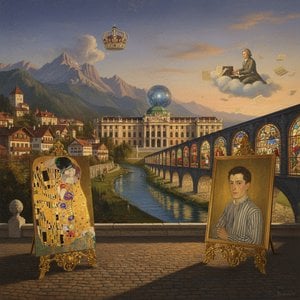
Embark on a sophisticated journey through Austrian art history. Explore the golden brilliance of Gustav Klimt and the elegance of the Vienna Secession through an expert lens, celebrating the enduring soul of Central European masterpieces.

Explore the profound impact of the Vienna Secession movement. Discover how visionaries like Gustav Klimt revolutionized modern art through symbolism, gold leaf, and bold ornamentation in this deep dive into the aesthetic revolution that redefined the visual landscape of Europe.

Explore the imperial grandeur of Vienna through art history. Discover the architectural mastery of Otto Wagner and the elegance of the Secessionist movement in this sophisticated guide to Austria's timeless aesthetic legacy.
 Förhandsvisa
 Skicka
 Dela
Dela
 Visa detaljer
 Guide
Guide

 Ladda ner
 Liknande objekt
 Röntgen
 Bildspel
 Frågor och svar
 Statistik

 Visa mer









 Glasalternativet är endast tillgängligt i storlekar under 110 cm.


