

Giclée- eller canvasprint av museumskvalitet med snabb produktion och flexibla ytbehandlingsalternativ. ( Beställ handmålad reproduktion Byt till digital bild)





























Välj bland våra förinställda storlekar som motsvarar konstverkets ursprungliga proportioner.

Ange den bredd och höjd du behöver för att passa din ram eller vägg. Ett tryck kan endast beskäras, aldrig göras större än originalbilden, vilket innebär att ett format med en annan proportion leder till att en del av bilden går förlorad. Vi skickar en digital mockup för godkännande innan vi påbörjar tryckningen. Bilden som visas på denna sida visar inte den faktiska beskärningen — det är endast mockuppen som gör det.
Leverans över hela världen () på 2 veckor istället för standard 4/5 veckor. (8 november)
Ballerina
Storlek på reproduktion
Gustav Klimt’s “Ballerina” transcends mere representation; it embodies a profound exploration of femininity, artistry, and the ephemeral nature of beauty. Completed in 1916-17 during Klimt's celebrated “Golden Phase,” this monumental canvas captures a ballerina poised with captivating poise—a figure simultaneously vulnerable and resolute—within an opulent tapestry of blossoms that speaks volumes about Art Nouveau’s fascination with organic forms and decorative splendor.
More than just ornamentation, the swirling arrangement of roses, lilies, and other blossoms serves as a conduit for symbolic meaning. Traditionally associated with love, purity, and rebirth, these flowers encapsulate themes central to Art Nouveau's spiritual ethos—a yearning for transcendence and an appreciation of nature’s transformative power. Klimt skillfully utilizes floral motifs to heighten the painting’s emotional resonance, suggesting that beauty itself is fleeting yet eternally significant.
Klimt's masterful technique—primarily oil paint applied in multiple glazes and textured impasto—represents a pivotal moment in artistic history. He seamlessly blends elements of Symbolism with Byzantine influences, mirroring the grandeur and spiritual contemplation found in Orthodox iconography. This fusion results in an aesthetic that prioritizes decorative impressionism: capturing fleeting moments of light and color while simultaneously constructing intricate patterns and textures that engage the viewer’s senses on a visceral level.
"Ballerina" stands as a testament to Klimt's unparalleled ability to fuse artistic innovation with emotional depth. Its enduring appeal lies in its evocative portrayal of feminine grace and beauty—a celebration of artistry that continues to inspire collectors and interior designers alike. The painting’s luminous surface, combined with its symbolic richness, invites contemplation on themes of life, death, and the transformative power of art itself.
Statistik för "Ballerina" av Gustav Klimt finns på verkets Besöksstatistik-sida: månatliga besök för verket, besök för konstnärens verk samt en uppdelning av nyligen anlända besökare per land och språk.
Färgerna i "Ballerina" har en Soft Shadow luminans.
Se diaporamat för "Ballerina" på konstverkets sida Bildspel.


1862 - 1918 , Österrike

Discover the enchanting world of Art Nouveau. Explore the flowing lines of Alphonse Mucha and learn how to integrate these timeless, organic masterpieces into your collection with expert guidance on fine art appreciation and preservation.

Embark on a sophisticated journey through the splendor of Austrian art. From Gustav Klimt’s golden masterpieces to the elegance of the Viennese Secession, discover the history and symbolism behind Europe's most iconic works for the discerning collector.

Explore the profound impact of the Vienna Secession movement. Discover how visionaries like Gustav Klimt revolutionized modern art through symbolism, gold leaf, and bold ornamentation in this deep dive into the aesthetic revolution that redefined the visual landscape of Europe.

Discover the exquisite world of Art Nouveau. Explore the elegant fusion of nature and design through architectural masterpieces, organic forms, and the legendary masters of the Belle Époque. Immerse yourself in a journey of timeless sophistication and ornamental beauty.
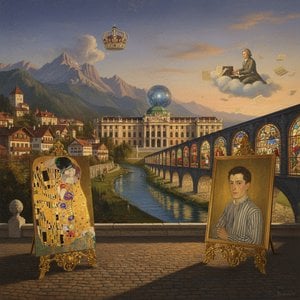
Embark on a sophisticated journey through Austrian art history. Explore the golden brilliance of Gustav Klimt and the elegance of the Vienna Secession through an expert lens, celebrating the enduring soul of Central European masterpieces.
 Förhandsvisa
 Skicka
 Dela
Dela
 Visa detaljer
 Guide
Guide

 Ladda ner
 Liknande objekt
 Röntgen
 Bildspel
 Frågor och svar
 Statistik
 Visa mer









 Glasalternativet är endast tillgängligt i storlekar under 110 cm.


