x
FörhandsvisaFörhandsvisa Förhandsgranska i ARFörhandsgranska i AR Beställ handmålad reproduktion Beställ handmålad reproduktionKöp högupplöst bild Köp högupplöst bild SkickaSkicka
Visa detaljerVisa detaljer Lägg till i favoriter Lägg till i favoriter Ladda nerLadda ner Liknande objektLiknande objekt RöntgenRöntgen BildspelBildspel

Perspective View (Stage design)

Discover Canaletto's 'Perspective View (Stage design)': A captivating capriccio depicting a fantastical Roman Capitol stage set, showcasing intricate details and masterful perspective.

Canaletto: En skicklig venetiansk målare känd för sina detaljerade stadsvyer och vedute-landskap från 1700-talet. Hans verk speglar en unik kombination av realism, teknik och konstnärligt uttryck.

Giclée / Konsttryck

Giclée- eller canvasprint av museumskvalitet med snabb produktion och flexibla ytbehandlingsalternativ. (Beställ handmålad reproduktion Beställ handmålad reproduktionKöp högupplöst bild Köp högupplöst bild)

P118B $10
P118H $10
P118W $10
P438Z $10
P508JH $12
P508YH $12
P805H $10
P805Z $10
P919BZ $10
P919G $10
P919XJ $10
P959ZH $10
P968JZ $12
W106C $8
W218G $10
W218JH $8
W218Y $10
W307PJ $10
W316G $10
W316PJ $8
W316Y $10
W398PJ $8
W4111J $10
W500HY $15
W500JH $15
W692G $12
W849H $8
W940BG $15
W953PJ $8

Standardstorlek
skräddarsydd
CM
INCH

Välj bland våra förinställda storlekar som motsvarar konstverkets ursprungliga proportioner.

bredd
höjd

Du kan ange egna mått för att passa en specifik ram eller yta. Om det valda måttet inte överensstämmer med originalbildens proportioner kommer vi antingen att beskära konstverket eller utöka bilden med en speglad eller enfärgad kant. En digital mockup skickas för ditt godkännande innan produktionen påbörjas.
Vänligen notera att förhandsvisningen på skärmen inte återspeglar den faktiska beskärningen eller utökningen. Endast mockuppen visar den slutgiltiga kompositionen korrekt.
Även om anpassade storlekar är möjliga, rekommenderar vi att du väljer ett mått från den fördefinierade listan för att bevara de ursprungliga proportionerna.

Leverans över hela världen () på 2 veckor istället för standard 4/5 veckor. (4 september)

why_choose_icon
Fri expressfrakt över hela världen
why_choose_icon
Högkvalitativ linnecanvas
why_choose_icon
Fullständig fraktförsäkring
why_choose_icon
Garantier för återbetalning av tullavgifter
why_choose_icon
Garantier för exakt färgåtergivning
why_choose_icon
60 dagars returrätt (endast vid fabrikationsfel)
why_choose_icon
100% pengarna tillbaka-garanti
why_choose_icon
Mängdrabatt erbjuds

Totalpris

$ 68

reproduction

Perspective View (Stage design)

Giclée / Konsttryck

Storlek på reproduktion

-

Slutgiltigt pris

$ 68

Snabbfakta

  • Movement: Venetian School
  • Title: Perspective View (Stage design)
  • Medium: Oil on canvas
  • Notable elements or techniques: Perspective, foreshortening
  • Artistic style: Veduta, Capriccio
  • Artist: giovanni antonio canal

Konstquiz

Det finns endast ett korrekt svar på varje fråga.

Fråga 1:
What is the primary subject depicted in ‘Perspective View (Stage design)’?
Fråga 2:
The description mentions that the painting may have been created shortly after Canaletto’s stay in Rome. What does this suggest about its style?
Fråga 3:
The painting features a prominent equestrian monument. What historical figure does it resemble?
Fråga 4:
According to the description, what is a key characteristic of Canaletto’s style that has been debated by scholars?
Fråga 5:
What type of perspective is prominently featured in ‘Perspective View (Stage design)’?

A Captivating Vision of Venetian Theatre

Canaletto’s “Perspective View (Stage Design)” is more than just a depiction of a bustling scene; it's a window into the vibrant theatrical culture of 18th-century Venice. Painted likely in the early 1720s, this capriccio – a term Canaletto himself employed for imaginary or idealized views – transports us to a fantastical Capitol, glimpsed through a grand loggia adorned with Corinthian columns and shimmering with golden ornamentation. The composition is anchored by an equestrian monument, reminiscent of Marcus Aurelius, rising majestically from the steps of a triumphal arch, creating a powerful sense of grandeur and historical resonance.

The painting’s genius lies not merely in its technical precision but also in its evocative atmosphere. Canaletto masterfully employs linear perspective to draw the viewer into this meticulously rendered space. The receding lines of the loggia, the diminishing scale of the statues, and the subtle shifts in light create a convincing illusion of depth, inviting us to step through the painted world and become part of the scene. Notice how he uses atmospheric perspective – distant elements are paler and less defined, contributing to the overall sense of vastness and theatrical spectacle.

The Artist’s Context: Canaletto and Venetian Topography

Giovanni Antonio Canal, known as Canaletto, was a pivotal figure in the development of topographical painting. Born in Venice in 1697, he initially trained under his father, Bernardo Canal, a stage designer for theatrical productions. This early experience instilled in him a deep understanding of perspective and spatial relationships – skills that would later define his remarkable career. Canaletto’s work was profoundly shaped by the bustling commercial activity of Venice, a city renowned for its trade and artistic patronage. He meticulously documented the city's canals, palaces, markets, and everyday life, creating a vast archive of visual records.

His approach differed significantly from earlier Venetian painters who focused primarily on religious or mythological subjects. Canaletto’s interest lay in capturing the tangible reality of Venice – its architecture, its people, and its atmosphere. This shift towards secular subject matter reflected a broader cultural trend during the 18th century, as artists increasingly sought to depict the world around them with greater accuracy and detail. The painting's attribution has been debated by scholars, but Stefano Susinno recognized it as a unique example in Canaletto’s oeuvre due to its drawing, points of light, and similarities to other capricci.

Symbolism and Theatrical Allusion

Beyond its technical brilliance, “Perspective View (Stage Design)” is rich in symbolic meaning. The equestrian monument, a reference to Roman emperors, suggests an ideal of leadership and power. The triumphal arch evokes the grandeur of ancient Rome, while the golden ornaments symbolize wealth and prestige. The inclusion of figures engaged in various activities – musicians, spectators, and performers – underscores the importance of theatre as a central element of Venetian society. It’s a scene brimming with life, energy, and the allure of entertainment.

Interestingly, scholars believe this painting may have been created shortly after Canaletto's stay in Rome (1718-1720), possibly inspired by the city’s ancient ruins and theatrical traditions. The presence of numerous architectural elements reminiscent of Roman antiquity suggests a deliberate attempt to evoke the spirit of the classical world.

A Legacy of Precision and Vision

“Perspective View (Stage Design)” stands as a testament to Canaletto's exceptional skill and artistic vision. It’s a captivating blend of realism, imagination, and theatricality – a painting that continues to delight and intrigue viewers centuries after its creation. Reproductions of this work offer a remarkable opportunity to experience the beauty and detail of Canaletto’s artistry in your own home or office, bringing a touch of Venetian elegance and historical grandeur to any space.


Konstnärsbiografi

Giovanni Antonio Canal: The Master of Venetian Light

Giovanni Antonio Canal, universally known as Canaletto, was born in Venice on October 18, 1697, into a family deeply rooted in the world of visual arts. His father, Bernardo Canal, was a skilled painter specializing in theatrical scene settings – a profession that instilled in young Giovanni an early appreciation for composition, perspective, and the art of capturing fleeting moments. Artemisia Barbieri, his mother, further nurtured his artistic sensibilities, providing him with a foundation in technique and observation. Canaletto’s formative years were thus spent immersed in the vibrant atmosphere of Venetian artistry, laying the groundwork for his future success as one of the most celebrated veduta painters of the 18th century.

His early training wasn't solely within the family workshop; Canaletto sought experience beyond Venice. In 1718, he embarked on a significant journey to Rome, where he found employment assisting his father in creating backdrops for two operas staged by Alessandro Scarlatti. This period proved invaluable, exposing him to the grandeur of Roman architecture and the theatrical demands of stage design – experiences that profoundly shaped his artistic vision and honed his ability to render complex spatial relationships with remarkable accuracy.

The Rise of a Venetian Master

Upon returning to Venice in 1720, Canaletto swiftly established himself as a respected artist. Initially, he focused on producing commissioned works for wealthy patrons – portraits, interiors, and decorative panels that showcased his burgeoning talent. However, it was his fascination with the city itself—its intricate canals, bustling markets, and magnificent palaces—that truly ignited his artistic passion. He began to specialize in *vedute*, Italian term for "views," meticulously documenting Venice’s urban landscape with an unprecedented level of detail and realism.

Canaletto's approach was revolutionary. Unlike earlier artists who often idealized their subjects, Canaletto sought to capture the city as it truly existed—warts and all. He employed a systematic method, beginning with extensive preparatory drawings that captured every nuance of perspective, light, and shadow. These detailed sketches served as the foundation for his finished paintings, ensuring remarkable accuracy and a palpable sense of authenticity. He was also known to use a camera obscura – a device that projected an image of the outside world onto a surface – to aid in achieving precise topographical details, though he always prioritized compositional design above all else.

Collaborations and Artistic Influence

Canaletto’s career flourished through collaborations with other talented artists. Notably, his nephew, Bernardo Bellotto, became an accomplished landscape painter in his own right, often working alongside Canaletto and adopting a similar style. Their partnership produced numerous stunning views of Venice, showcasing the evolving cityscape and reflecting the artistic sensibilities of both men. The rivalry between them was also notable; they competed for commissions and sought to establish their individual reputations within the Venetian art world.

Canaletto’s influence extended far beyond Venice. In 1746, he traveled to England, invited by wealthy collectors eager to acquire his unique style. His paintings of London—including views of Buckingham Palace, St. Paul's Cathedral, and the Tower of London—became immensely popular, establishing him as a leading figure in European art. The British merchant Joseph “Consul” Smith played a pivotal role in this success, recognizing Canaletto’s talent and securing royal patronage for his work. King George III acquired a significant collection of Canaletto's paintings, further elevating the artist’s status and ensuring his works were widely exhibited throughout England.

Legacy and Enduring Appeal

Canaletto died in Venice on April 19, 1768, leaving behind a remarkable body of work that continues to captivate audiences today. His paintings offer an invaluable glimpse into the vibrant life of 18th-century Venice—a city teeming with commerce, culture, and artistic innovation. His meticulous attention to detail, masterful use of light and shadow, and unwavering commitment to realism have earned him a place among the greatest veduta painters in history.

Canaletto’s legacy is reflected in the numerous museums that house his works—including the National Gallery in London, where his paintings are celebrated for their beauty and historical significance. His influence can also be seen in the work of countless artists who followed in his footsteps, solidifying his position as a true master of Venetian art.

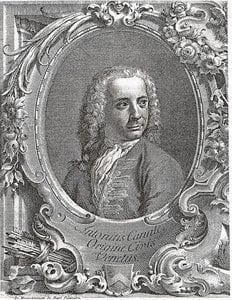
Canaletto

Canaletto

1697 - 1768 , Italien

Kortfakta

  • Artistic Movement Or Style: Vedute Venedig
  • Artists Or Movements Influenced By This Artist: ['Giovanni Paolo Pannini']
  • Artists Who Influenced This Artist: ['Bernardo Canal']
  • Date Of Birth: 18 okt 1697
  • Date Of Death: 19 apr 1768
  • Full Name: Giovanni Antonio Canal
  • Nationality: Italiensk
  • Notable Artworks:
    • Stenläggarens verkstad
    • Regatta på Grand Canal
    • Eton College
  • Place Of Birth: Venedig, Italien
Utforska konstverk sorterade efter tema, stil och egenskaper.