Konstnärsbiografi
Georges Seurat: En Pionjär för Ljusets Vetenskap och Modern Konst
Georges Pierre Seurat, född i Paris den 2 december 1859, framträdde som en avgörande gestalt i övergången från impressionismen till modern konst. Hans korta men intensivt fokuserade karriär revolutionerade målningen genom utvecklingen av punktillismen, en teknik grundad på vetenskapliga principer och ett orubbligt sökande efter optisk sanning. Seurats berättelse är en om noggrann observation, intellektuell stringens och en djup känslighet för ljusets och färgens nyanser – kvaliteter som skiljde honom från hans samtida och fortsätter att fängsla publiken än idag. Hans tidiga liv, om än till synes konventionellt, lade grunden för hans framtida konstnärliga utforskningar. Familjen flyttade till Boulevard de Magenta kort efter hans födelse, och hans far, Antoine Chrysostome Seurat, en före detta jurist som blev fastighetsinvesterare, gav den unge Georges en bekväm uppväxt som gav honom tillgång till konstnärlig utbildning. Han började formell träning vid École Municipale de Sculpture et Dessin under skulptören Justin Lequien, följt av inskrivning vid det prestigefyllda École des Beaux-Arts 1878, där han studerade under Henri Lehmann. Dessa formativa år ingav honom en solid grund i traditionella tekniker, men även då började en unik artistisk personlighet ta form – en blandning av delikat känslighet och ett växande intresse för systematisk analys.
Från Akademiska Rötter till Kromoluminarism
Seurats konstnärliga utveckling var inte ett plötsligt språng mot innovation, utan snarare en gradvis evolution driven av intellektuell nyfikenhet och rigorös experimentering. Initialt speglade hans verk tidens akademiska standarder, vilket visade skicklighet i teckning och respekt för etablerade kompositionella principer. Han började dock snart ifrågasätta dessa konventioner och sökte ett mer vetenskapligt tillvägagångssätt för målningen. Han fördjupade sig i det framväxande färgfältsområdet, studerade skrifter av forskare som Michel Eugène Chevreul och Ogden Rood, vilka utforskade de optiska effekterna av kontrasterande färger. Denna forskning blev hörnstenen i hans revolutionerande teknik, kromoluminarism – färgens vetenskap – och dess praktiska tillämpning, punktillismen. Kärnidén var enkelt formulerad: att applicera små, distinkta prickar av rena färger på en duk, med förlitandet på betraktarens öga för att optiskt blanda dem och skapa en livfull, lysande effekt. Det handlade inte bara om att uppnå ljusare färger; det handlade om att förstå hur det mänskliga visuella systemet uppfattade ljus och färg, och utnyttja den kunskapen för att skapa en mer dynamisk och engagerande målningupplevelse. Han förberedde noggrant sina storskaliga kompositioner med Conté krita ritningar på grovt papper, där han noggrant kartlade placeringen av varje prick, vilket visade en nästan matematisk precision i sin konstnärliga process.
Landmärken av Innovation: Viktiga Verk och Konstnärlig Vision
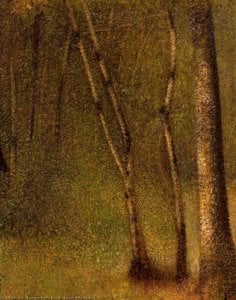
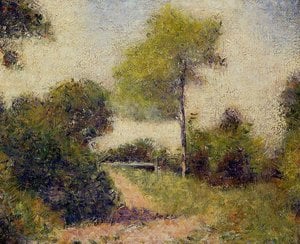
Kulminationen på Seurats forskning och experimenterande syns kanske bäst i A Sunday Afternoon on the Island of La Grande Jatte (1884-1886), ett monumentalt verk som markerade början av Neo-Impressionismen. Denna ikoniska målning, som skildrar parisare som njuter av en ledig eftermiddag vid Seine, visar hans punktillistiska teknik i sin fulla omfattning. Figurerna, återgivna som noggrant placerade färgprickar, verkar skimra och vibrera med ljus, vilket skapar en atmosfär av stillsam ro. Alfalfa, Saint-Denis (1886-1887) visar hans tillämpning av färgteori på ett lantligt landskap, medan tidigare verk som Landscape at Saint-Ouen (1882-1883) avslöjar hans utvecklande stil och växande intresse för att fånga ljusets och atmosfärens effekter. Även skildringar av det moderna parisiska livet, som The Eiffel Tower (1889), transformerades genom sin unika teknik, vilket visade en harmonisk blandning av industriell modernitet och konstnärlig innovation. Bathers at Asnières (1884), ett annat betydande verk, utforskade teman som fritid och modernt liv med sin distinkta stil, vilket förutspådde det mer raffinerade tillvägagångssättet i *La Grande Jatte*. Dessa målningar var inte bara representationer av scener; de var noggrant konstruerade visuella experiment utformade för att utforska möjligheterna med färg och perception.
En Varaktig Arv: Inflytande och Historisk Betydelse
Trots en tragiskt kort livslängd – Seurat dog vid endast 31 års ålder 1891 – var hans inverkan på konstvärlden djupgående och långtgående. Hans arbete utmanade traditionella konstnärliga konventioner, banade väg för otaliga efterföljande rörelser. Betoningen på subjektivt uttryck och utforskning av nya tekniker resonerade med konstnärer som sökte att bryta sig loss från akademiska begränsningar. Seurats inflytande kan ses i verken hos Fauvister, som omfamnade djärva färger och expressiva penseldrag; Kubister, som dekonstruerade former till geometriska former; och Abstrakta expressionister, som prioriterade emotionell intensitet och spontan gester. Seurats vetenskapliga tillvägagångssätt för målning, även om det initialt var kontroversiellt, utvidgade i slutändan definitionen av konstnärlig möjlighet. Han visade att konsten kunde vara både intellektuellt rigorös och emotionellt gripande – en syntes som fortsätter att inspirera konstnärer idag. Seurats arv sträcker sig bortom hans tekniska innovationer; han lämnade efter sig ett verk som fångar essensen av det moderna livet med oöverträffad precision och skönhet, vilket cementerade sin plats som en sann pionjär inom modern konst. Hans målningar är fortfarande vittnesbörd om kraften i observation, experimentering och den bestående mänskliga önskan att förstå världen omkring oss genom linsen av artistisk uttryck.



 Förhandsvisa
 Byt till tryck
 Skicka
 Dela
Dela
 Visa detaljer

 Ladda ner
 Liknande objekt
 Röntgen
 Bildspel
 Statistik

 Visa mer