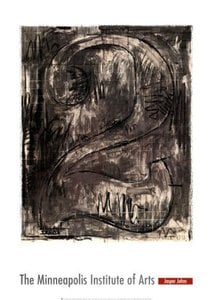
1986
1986 285.0 x 226.0 cm
Köp en högupplöst, förbättrad digital bild med betydligt högre kvalitet än förhandsvisningen online.
Varje fil är noggrant förberedd av våra interna specialister med hjälp av avancerade verktyg och professionell manuell retuschering. Vi säkerställer att varje bild har exceptionell skärpa, exakt färgåtergivning och fina detaljer.
Den slutgiltiga filen levereras via e-post inom 72 timmar, optimerad för omedelbar användning i professionella sammanhang, redaktionellt bruk och tryckmiljöer. Detta är samma kvalitet som med förtroende används av ledande designstudior, förlag och gallerier.
Ladda ner en högupplöst fil för personlig visning, utskrift och kreativa projekt. ( Beställ tryck Beställ handmålad reproduktion)
När du väljer WahooArt.com får du inte bara en bild – du får ett professionellt förädlat digitalt konstverk, skapat med precision och med en garanterad tillfredsställelse. Här är allt som ingår i din beställning, automatiskt:

Din högupplösta digitala bild skickas till dig via e-post inom 72 timmar efter beställning – redo för omedelbar användning.

Ditt konstverk optimeras professionellt med hjälp av avancerade AI-verktyg och manuell redigering, vilket garanterar maximal detaljrikedom, skärpa och färgnoggrannhet.

Har du råkat radera eller tappa bort din fil? Ingen oro – vi skickar den kostnadsfritt till dig när som helst.

Njut av ditt konstverk omedelbart utan tull, importavgifter eller leveranskostnader – digitala nedladdningar är alltid skattefria.

Vi säkerställer att din digitala bild återger de ursprungliga färgerna så exakt som möjligt med hjälp av professionella verktyg och färghantering.

Om du inte är nöjd med din digitala bild kommer vi att revidera den eller återbetala 100% inom 100 dagar – utan frågor.

Inte nöjd? Få full återbetalning inom 100 dagar efter att du har tagit emot din digitala fil – utan frågor och diskussioner.

Köp 3 bilder, spara 10% – Köp 5, spara 15% – Köp 10+, spara 20%. Perfekt för kreativa projekt, gallerier och byråer.

Born in Georgia and raised amidst the vibrant, often turbulent, landscape of Chicago’s South Side in 1945, Frederick J. Brown's artistic journey is inextricably linked to his heritage—a potent blend of blues music, working-class roots, and a deep engagement with the complexities of American identity. From an early age, he was immersed in the sounds and stories of the city’s Black community, absorbing the rhythms of jazz and the narratives of hardship and resilience that permeated its streets. This formative experience profoundly shaped his artistic vision, informing his distinctive style—a captivating fusion of abstract expressionism, figurative painting, and a keen interest in portraying marginalized figures within American society.
Brown’s early career unfolded during the dynamic art scene of New York City's SoHo district in the 1970s. He found himself amidst a constellation of influential artists—Willem de Kooning, Jim Nutt, and Richard Lindner—whose work challenged conventional notions of representation and explored themes of sexuality, social critique, and psychological intensity. De Kooning’s encouragement proved particularly pivotal, solidifying Brown's commitment to pushing the boundaries of his own artistic practice. This period witnessed a shift in his style, moving from primarily abstract gestural painting towards a more nuanced approach that incorporated collage elements and a heightened sense of narrative depth.
A defining characteristic of Brown’s oeuvre is his extensive series of portraits dedicated to the giants of jazz and blues music. These are not merely likenesses; they are deeply felt evocations of character, imbued with a palpable sense of history, struggle, and triumph. Influenced by his Chicago upbringing and his lifelong love for the Blues, Brown sought to capture the essence of these musical icons—their spirit, their vulnerability, and their profound impact on American culture. He meticulously researched each subject, often incorporating photographs into his compositions, creating layered visual narratives that blended portraiture with collage.
The portraits are characterized by a distinctive approach: Brown frequently employed bold outlines, gestural brushwork, and a carefully calibrated palette of colors to convey both the physical presence and the inner lives of his subjects. He wasn’t interested in simply replicating appearances; instead, he aimed to distill their personalities—the weariness of a seasoned performer, the intensity of a young innovator, or the quiet dignity of an elder statesman—into powerful visual statements. His work with musicians like Ornette Coleman, Anthony Braxton, and Memphis Slim demonstrates his ability to translate musical energy into compelling visual forms.
As Brown’s career progressed, his artistic interests expanded beyond the realm of jazz portraits. He began exploring a wider range of subjects—gamblers, hustlers, transvestites, and other figures inhabiting the shadowy corners of urban life. These works often carried a subtle undercurrent of social commentary, reflecting on themes of poverty, inequality, and the complexities of American identity. His paintings frequently juxtaposed seemingly disparate elements—historical references, religious iconography, and contemporary imagery—creating visually arresting compositions that demanded close scrutiny.
This period saw the emergence of his “History of Art” series – a monumental undertaking comprising 110 interlocking paintings that traced the evolution of Western art from its earliest beginnings to the present day. This ambitious project served as both a personal reflection on Brown’s own artistic journey and a broader meditation on the enduring power of art to shape our understanding of the world.
Frederick J. Brown's work has garnered significant recognition throughout his career, with pieces held in prestigious collections including the Smithsonian American Art Museum, the Metropolitan Museum of Art, and the Kemper Museum of Contemporary Art. His retrospective exhibition at the National Museum of China in Beijing in 1988 marked a pivotal moment, establishing him as one of the first Western artists to exhibit in mainland China. Brown’s legacy extends beyond his individual achievements; he remains an important figure in American art history—a soulful portraitist who captured the spirit of a nation through his evocative and often challenging works.
Brown passed away in 2012, leaving behind a rich body of work that continues to resonate with audiences today. His paintings serve as powerful reminders of the complexities of the American experience—the beauty and the brutality, the joy and the sorrow, all interwoven into a vibrant tapestry of human life.

1945 - 2012

 Förhandsvisa
 Skicka
 Dela
Dela
 Visa detaljer

 Ladda ner
 Liknande objekt
 Röntgen
 Bildspel
 Visa mer