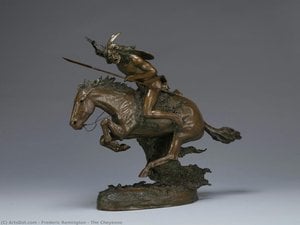
BronzeSculptureImpressionistic Realism
 189619th Century
 81.0 x 51.0 cm
 Amon Carter Museum of American Art
Köp en högupplöst, förbättrad digital bild med betydligt högre kvalitet än förhandsvisningen online.
Varje fil är noggrant förberedd av våra interna specialister med hjälp av avancerade verktyg och professionell manuell retuschering. Vi säkerställer att varje bild har exceptionell skärpa, exakt färgåtergivning och fina detaljer.
Den slutgiltiga filen levereras via e-post inom 72 timmar, optimerad för omedelbar användning i professionella sammanhang, redaktionellt bruk och tryckmiljöer. Detta är samma kvalitet som med förtroende används av ledande designstudior, förlag och gallerier.
Ladda ner en högupplöst fil för personlig visning, utskrift och kreativa projekt. ( Beställ tryck Beställ handmålad reproduktion)
När du väljer WahooArt.com får du inte bara en bild – du får ett professionellt förädlat digitalt konstverk, skapat med precision och med en garanterad tillfredsställelse. Här är allt som ingår i din beställning, automatiskt:

Din högupplösta digitala bild skickas till dig via e-post inom 72 timmar efter beställning – redo för omedelbar användning.

Ditt konstverk optimeras professionellt med hjälp av avancerade AI-verktyg och manuell redigering, vilket garanterar maximal detaljrikedom, skärpa och färgnoggrannhet.

Har du råkat radera eller tappa bort din fil? Ingen oro – vi skickar den kostnadsfritt till dig när som helst.

Njut av ditt konstverk omedelbart utan tull, importavgifter eller leveranskostnader – digitala nedladdningar är alltid skattefria.

Vi säkerställer att din digitala bild återger de ursprungliga färgerna så exakt som möjligt med hjälp av professionella verktyg och färghantering.

Om du inte är nöjd med din digitala bild kommer vi att revidera den eller återbetala 100% inom 100 dagar – utan frågor.

Inte nöjd? Få full återbetalning inom 100 dagar efter att du har tagit emot din digitala fil – utan frågor och diskussioner.

Köp 3 bilder, spara 10% – Köp 5, spara 15% – Köp 10+, spara 20%. Perfekt för kreativa projekt, gallerier och byråer.
In the pantheon of American Western art, few works possess the visceral, heart-pounding immediacy of Frederic Sackrider Remington’s 1896 masterpiece, "The Wounded Bunkie." This bronze sculpture does not merely depict a scene from the late 19th century; it captures a fragment of a much larger, more turbulent story. As we gaze upon the dynamic forms of two cavalry troopers in mid-retreat, we are thrust into the chaotic atmosphere of the Indian Wars. Remington, an artist who possessed a rare ability to translate the rugged energy of the frontier into permanent form, presents us with a scene where the air feels thick with dust and the palpable tension of an unseen adversary. The sculpture serves as a profound exploration of the human condition under duancce—capturing that fleeting, breathless second where courage meets vulnerability.
The subject matter is as poignant as it is intense. Remington meticulously portrays the physical and emotional toll of combat through the interaction of his two protagonists. One trooper, struck by an enemy bullet to the torso, struggles to remain upright, his very life held in the balance. The true soul of the piece, however, lies in the outstretched arm of his "bunkie"—his comrade-in-arms—whose desperate grip provides the only thing keeping the wounded man from falling. This single, physical connection transforms the work from a mere military study into a moving tribute to the unbreakable bonds forged in the crucible of war. It is a narrative of resilience, where the strength of one man becomes the lifeline for another.
Technically, "The Wounded Bunkie" is a triumph of the lost-wax casting method, a laborious process that allowed Remington to achieve an extraordinary level of textural richness. The bronze surface is far from uniform; it possesses a ruggedness that mimics the weathered leather of cavalry saddles and the dull sheen of polished metal weaponry. Through masterful use of shading and volume, Remington creates a sense of deep, three-dimensional movement. The horses themselves are not static figures but are sculpted with a kinetic energy that mirrors the urgency of the retreat. Their powerful muscles and strained postures contribute to a composition that feels as though it might burst from its pedestal at any moment.
Remington’s stylistic approach represents a sophisticated fusion of Romanticism and Realism. While his commitment to accurate observation—the specific gear of the US Cavalry, the anatomy of the horses, the grit of the landscape—grounds the work in historical truth, his Romantic sensibilities elevate it to the level of legend. He does not shy away from the emotional weight of the scene, using the dramatic interplay of light and shadow to emphasize the psychological complexity of the moment. For the collector or the interior designer, this piece offers more than just a historical reference; it provides a focal point of profound character and movement, capable of anchoring a room with its storied presence and commanding aesthetic power.
To possess a reproduction of "The Wounded Bunkie" is to invite a piece of American history into one's personal space. The sculpture stands as a testament to an era of intense westward expansion and the legendary figures who inhabited it. It evokes a sense of nostalgia for the vanishing West, yet its themes of companionship, sacrifice, and endurance are universal and timeless. Whether placed in a sophisticated study, a grand gallery, or a curated living space, this work serves as a conversation piece that transcends mere decoration.
For those seeking to surround themselves with art that tells a story, Remington’s work offers an unparalleled opportunity. It is an invitation to contemplate the grit and grace of the American spirit. As a high-quality reproduction, it allows the admirer to experience the intricate details and the sweeping emotional landscape of Remington's vision, ensuring that the echoes of the frontier continue to resonate in the modern home.


1861 - 1909 , USA

 Skicka
 Dela
Dela
 Visa detaljer

 Ladda ner
 Liknande objekt
 Bildspel
 Visa mer