DrawingWallArtModernism
 1945Modern
 14.0 x 20.0 cm
 Penrith Regional Gallery - Home of the Lewers Bequest
Handmålad olja på duk i din valda storlek och ram, tillverkad efter beställning av våra konstnärer. ( Beställ tryck Köp högupplöst bild)
Välj bland våra förinställda storlekar som motsvarar konstverkets ursprungliga proportioner.

Du kan ange egna mått för att passa en specifik ram eller yta. Om den valda storleken inte matchar originalbildens proportioner kommer vi antingen att beskära konstverket eller utöka målningen med ytterligare handmålade element. En digital skiss skickas till dig för godkännande innan produktionen påbörjas.
Observera att förhandsvisningen på skärmen inte återspeglar den faktiska beskärningen eller utökningen. Endast skissen visar den slutgiltiga kompositionen korrekt.
Även om anpassade storlekar är möjliga, rekommenderar vi att du väljer en dimension från den fördefinierade listan för att bevara originalproportionerna.
Leverans över hela världen () på 3–4 veckor istället för standard 5 veckor. (6 september). Inga kompromisser med kvaliteten.


untitled
Storlek på reproduktion
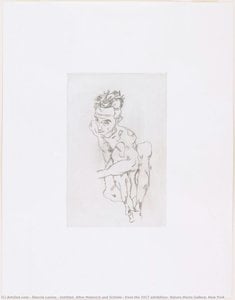
In this evocative black and white drawing from 1945, we are invited into a private, quiet moment of profound introspection. The subject, a man seated in a chair, is captured in a posture of deep thought, his head resting heavily in his hands. There is an undeniable weight to the composition; the way his elbows press against his knees and his frame leans forward suggests a soul grappling with the complexities of a world in transition. Through the masterful use of light and shadow, the artist directs our gaze toward this central figure, creating a sense of intimacy that makes the viewer feel like a silent witness to a deeply personal psychological state. For collectors of mid-century works, this piece offers more than just a portrait; it offers a window into the human condition during the closing chapters of World and II.
The technique employed here speaks to the burgeoning modernist movement in Australia, where artists like Francis Hinder began to bridge the gap between traditional representation and the raw emotionality of abstraction. While the subject is clearly defined, the artist utilizes a delicate interplay of tonal values to create depth and atmosphere. The starkness of the monochrome palette strips away the distractions of color, forcing us to confront the texture of the man's suit, the structural lines of the chair, and the heavy, somber mood that permeates the space. This focus on form and light serves as a precursor to Hinder’s later, more celebrated forays into geometric abstraction, revealing a foundational mastery of capturing essence through line and shadow.
To understand this work is to understand the era of its creation. In 1945, as the world emerged from the shadows of global conflict, there was a palpable sense of both exhaustion and rebirth. This drawing captures that specific tension—the stillness of a man reflecting on a period of immense upheaval. As a pioneer of Australian abstraction, Hinder’s early works like this one provide an essential historical document of the mid-century zeitgeist. The piece sits at the intersection of traditional figurative drawing and the experimental spirit that would soon define the Sydney art scene in the 1950s and 60s.
For the discerning interior designer or art enthusiast, this artwork serves as a sophisticated focal point. Its understated elegance and monochromatic depth allow it to integrate seamlessly into modern, minimalist, or classic academic settings. It does not merely decorate a wall; it commands a presence, inviting conversation about the nature of solitude and the beauty found in quiet reflection. Owning a high-quality reproduction of such a significant piece allows one to bring a fragment of Australian modernist history into a contemporary living space, providing a timeless connection to the pioneers of abstract expressionism.


1906 - 1992 , Australien

Elevate your most cherished memories with WahooArt’s bespoke service. We transform your personal photos into breathtaking, hand-painted black & white oil masterpieces. Experience museum-quality craftsmanship and timeless elegance for your private collection. Discover the art of legacy.

Explore the profound artistry of black and white photography. From historical mastery to the interplay of light and shadow, discover how monochrome captures timeless emotion and form through a sophisticated lens of art history.

Elevate your artistic practice with this expert guide to mastering the line. Discover advanced techniques in graphite, charcoal, and contour drawing designed for art students seeking technical precision and expressive depth in their fine art studies.

Explore the profound artistry of graphite drawing. Discover professional techniques for mastering depth, texture, and detail through a lens of art history, from classical sketches to modern masterpieces. Elevate your understanding of the pencil medium with our expert guide.

 Förhandsvisa
 Skicka
 Dela
Dela
 Visa detaljer

 Ladda ner
 Liknande objekt
 Röntgen
 Bildspel
 Visa mer




































 Glasalternativet är endast tillgängligt i storlekar under 110 cm.