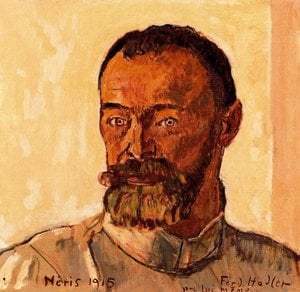
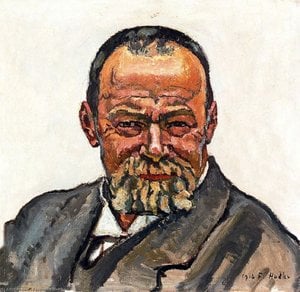
A Life Etched in Symbolism: The World of Ferdinand Hodler
Ferdinand Hodler, ett namn som är intimt förknippat med den schweiziska målarscenen och det kraftfulla språket hos symbolismen, steg från beskedna början till att bli en av de mest betydelsefulla konstnärerna under det sena 1800-talet och tidiga 1900-talet. Född i Bern, Schweiz, år 1853, formades hans liv djupt av tidig förlust – ett återkommande tema som genomsyrade hans konstnärliga vision. De plågsamma dödsfallen till sin far och två yngre bröder innan han bara var tonåring kastade en lång skugga över honom, inställde en djup eftertanke om dödlighet och livets flyktighet. Dessa erfarenheter, sammanvävda med en skarp känsla för naturens skönhet och makt, blev centrala principer i hans utvecklande verk. Ursprungligen anställd som dekorationsmålare, överträffade Hodlers inneboende talang snart dessa gränser; han längtade efter formell utbildning och konstnärlig utforskning bortom de kommersiella begränsningarna. Detta strävande ledde honom till Genève år 1871, där han djupt sjönk ner i studier, deltog i vetenskapliga föreläsningar samtidigt som han noggrant kopierade mästerverk på stadens museum – en krävande utbildning som lade grunden för hans framtida innovationer.
Från Realism till ‘Parallelism’: Formandet av en Unik Vision
Hodlers konstnärliga resa präglades av ständig utveckling och ett obevekligt strävan efter uttrycksfull kraft. Hans tidiga verk återspeglade den rådande realistiska stilen på sin tid – porträtt, landskap och genre scener utförda med noggrann detaljrikedom. Dock fann han snart sig begränsad av dessa konventioner, sökte ett sätt att förmedla djupare emotionella sanningar och filosofiska idéer. Detta strävande ledde honom mot symbolismen, en rörelse som förkastade naturalistisk representation till förmån för subjektiv upplevelse och suggestiva bilder. Trots detta antog Hodler inte bara symbolismens dogmer; istället skapade han sin egen unika väg, utvecklande vad han kallade “parallelism”. Denna distinkta stil innebar att figurer och former arrangerades i rytmiska, nästan geometriska mönster, vilket skapade en känsla av både harmoni och spänning – en visuell representation av sammanlänkningen mellan allt. Det var ett försök att inte bara *se* vad han såg, utan *känna* hur han kände – de underliggande emotionella strömmarna som förband alla ting.
Nätterna (1890), en av hans mest berömda verk, markerade ett avgörande ögonblick och etablerade honom som en ledare inom europeisk konst.
Hodlers stil utvecklades genom åren, och han experimenterade med olika tekniker och teman. Han studerade intensivt mästares verk, inklusive Holbein, Titian och Velázquez, och lånade element från impressionismen och postimpressionismen. Hans tidiga landskap var ofta inspirerade av den schweiziska alptopparnas majestät och fjällsjöarnas lugn, men han började snart att utforska mer abstrakta och symboliska idéer. Han använde ljus och färg på ett innovativt sätt för att förmedla känslor och atmosfär, och hans kompositioner blev ofta monumentala både i format och genom sin lugna storhet i uppfattningen.
Landmärken i Målad: Nyckelveverk och Deras Betydelse
Under hela sin produktiva karriär skapade Hodler en anmärkningsvärd konstsamling som fortsätter att beröra publiken idag.
Dagen (1893), ett av hans mest ambitiösa och berömda verk, står som ett bevis på hans tekniska skicklighet och symbolistiska vision. Huset i Zürich är en kraftfull meditation över liv, död och återfödelse, målad med en slående blandning av realism och visionär intensitet. Skalans och den emotionella tyngden hos
Dagen cementerade Hodlers position som en ledande figur i europeisk konst. Andra betydande verk inkluderar ett stort antal skildringar av de schweiziska alperna, fyllda med en känsla av förundran över storhet, och porträtt som avslöjar hans djupa förståelse för mänsklig psykologi. Han återbesökte ofta teman om förlust och sorg, kanske som en reflektion över sina egna barndomstrauman, men alltid genom ett uttryck för värdighet och motståndskraft. Hans målningar var inte bara representationer; de var emotionella landskap, inbjudande betraktare att reflektera över livets grundläggande frågor. Verk som
Sanning II (1897) visar hans förmåga att blanda klassiska former med moderna idéer och skapa bilder som är både tidlösa och slående samtida – ett bevis på hans innovativa anda.
En Bestående Arv: Inverkan och Historisk Kontekst
Ferdinand Hodlers inverkan sträckte sig långt bortom Schweizens gränser. Hans innovativa användning av symbolism och hans utveckling av “parallelism” banade vägen för expressionismen, med dess betoning på subjektiv känsla och förvrängda former. Konstnärer som följde i hans fotspår erkände honom som en föregångare till sina egna utforskningar av inre upplevelser. Hodlers verk resonerade också med bredare kulturella strömningar under det sena 1800-talet och tidiga 1900-talet – en period präglad av snabba sociala förändringar, vetenskapliga framsteg och en växande känsla för existentiell oro. Hans målningar erbjöd ett visuellt språk för att hantera dessa komplexa frågor, och gav tröst och insikt i en alltmer osäker värld. Idag bevaras Hodlers verk i stora museer över hela Europa och bortom, vilket säkerställer att hans konstnärliga vision fortsätter att inspirera och utmana generationer av betraktare. Han förblir en framträdande figur i schweizisk konsthistoria, firad inte bara för sin tekniska skicklighet utan också för sin djupa emotionella djup och sitt engagemang för att utforska livets mysterier.
Utforska Hodler vidare



 Förhandsvisa
 Byt till tryck
 Skicka
 Dela
Dela
 Visa detaljer
 Guide
Guide

 Ladda ner
 Liknande objekt
 Röntgen
 Bildspel
 Q&A
Q&A Statistik


 Visa mer






































 Glasalternativet är endast tillgängligt i storlekar under 110 cm.