Förhandsvisa Förhandsgranska i AR Beställ handmålad reproduktion Byt till digital bild Skicka
Visa detaljer Guide Lägg till i favoriter Ladda ner Liknande objekt Röntgen Bildspel Frågor och svar Ladda ner presentation Statistik

Untitled (547)

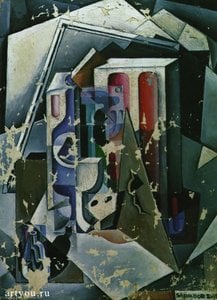
Explore Emilio Tadini’s "Untitled (547)", a chaotic Expressionist collage of fleshy pinks & reds depicting violent struggle. Layered textures, symbolic objects – death, love, & conflict. A unique, unsettling artwork.

Italian abstract expressionist Emilio Tadini captivated audiences with bold colors and textured canvases exploring themes of isolation and social observation. Discover his evocative paintings – including ‘Untitled (447)’ and ‘Viaggio in Italia’ – at WahooArt.

Konstverket som visas på denna sida skyddas av upphovsrättslagen, vilket innebär att vi inte lagligt kan skapa eller sälja en identisk reproduktion. Detta skydd upprätthålls genom internationella avtal såsom den Bernkonventionen och genom nationella lagar, inklusive de som fastställs av Amerikansk upphovsrättslag – Titel 17. Alla rättigheter förbehållna. Återgivning av konstverk är förbjuden utan skriftligt tillstånd från WahooArt.

Denna metod följer fullt ut upphovsrättsliga regler eftersom den inte innebär kopiering eller duplicering av det skyddade konstverket. Istället är det en kreativ nytolkning – en ny målning som är influerad av originalet men inte identisk med det.

Giclée / Konsttryck

Giclée- eller canvasprint av museumskvalitet med snabb produktion och flexibla ytbehandlingsalternativ. ( Beställ handmålad reproduktion Byt till digital bild)


Corner sample of the P118B picture frame: formgjuten polystyren, 5 cm wide and 3 cm thick
P118B Skr10
Corner sample of the P118H picture frame: formgjuten polystyren, 5 cm wide and 3 cm thick
P118H Skr10
Corner sample of the P118W picture frame: formgjuten polystyren, 5 cm wide and 3 cm thick
P118W Skr10
Corner sample of the P438Z picture frame: formgjuten polystyren, 5.5 cm wide and 3.5 cm thick
P438Z Skr10
Corner sample of the P508JH picture frame: formgjuten polystyren, 7 cm wide and 3.5 cm thick
P508JH Skr12
Corner sample of the P508YH picture frame: formgjuten polystyren, 7 cm wide and 3.5 cm thick
P508YH Skr12
Corner sample of the P805H picture frame: formgjuten polystyren, 5 cm wide and 3.5 cm thick
P805H Skr10
Corner sample of the P805Z picture frame: formgjuten polystyren, 5 cm wide and 3.5 cm thick
P805Z Skr10
Corner sample of the P919BZ picture frame: formgjuten polystyren, 7 cm wide and 3.5 cm thick
P919BZ Skr10
Corner sample of the P919G picture frame: formgjuten polystyren, 7 cm wide and 3.5 cm thick
P919G Skr10
Corner sample of the P919XJ picture frame: formgjuten polystyren, 7 cm wide and 3.5 cm thick
P919XJ Skr10
Corner sample of the P959ZH picture frame: formgjuten polystyren, 5 cm wide and 3 cm thick
P959ZH Skr10
Corner sample of the P968JZ picture frame: formgjuten polystyren, 6 cm wide and 4 cm thick
P968JZ Skr12
Corner sample of the W106C picture frame: massivt trä, 5 cm wide and 3 cm thick
W106C Skr8
Corner sample of the W218G picture frame: massivt trä, 5 cm wide and 3 cm thick
W218G Skr10
Corner sample of the W218JH picture frame: massivt trä, 5 cm wide and 3 cm thick
W218JH Skr8
Corner sample of the W218Y picture frame: massivt trä, 5 cm wide and 3 cm thick
W218Y Skr10
Corner sample of the W307PJ picture frame: massivt trä, 6 cm wide and 3 cm thick
W307PJ Skr10
Corner sample of the W316G picture frame: massivt trä, 6 cm wide and 3 cm thick
W316G Skr10
Corner sample of the W316PJ picture frame: massivt trä, 6 cm wide and 3 cm thick
W316PJ Skr8
Corner sample of the W316Y picture frame: massivt trä, 6 cm wide and 3 cm thick
W316Y Skr10
Corner sample of the W398PJ picture frame: massivt trä, 5 cm wide and 3 cm thick
W398PJ Skr8
Corner sample of the W4111J picture frame: massivt trä, 6.5 cm wide and 3.5 cm thick
W4111J Skr10
Corner sample of the W500HY picture frame: massivt trä, 7 cm wide and 5 cm thick
W500HY Skr15
Corner sample of the W500JH picture frame: massivt trä, 7 cm wide and 5 cm thick
W500JH Skr15
Corner sample of the W692G picture frame: massivt trä, 8 cm wide and 4 cm thick
W692G Skr12
Corner sample of the W849H picture frame: massivt trä, 5 cm wide and 3 cm thick
W849H Skr8
Corner sample of the W940BG picture frame: massivt trä, 7.5 cm wide and 4.5 cm thick
W940BG Skr15
Corner sample of the W953PJ picture frame: massivt trä, 6 cm wide and 3.5 cm thick
W953PJ Skr8

Standardstorlek
skräddarsydd
CM
INCH

Välj bland våra förinställda storlekar som motsvarar konstverkets ursprungliga proportioner.

bredd
höjd

Ange den bredd och höjd du behöver för att passa din ram eller vägg. Ett tryck kan endast beskäras, aldrig göras större än originalbilden, vilket innebär att ett format med en annan proportion leder till att en del av bilden går förlorad. Vi skickar en digital mockup för godkännande innan vi påbörjar tryckningen. Bilden som visas på denna sida visar inte den faktiska beskärningen — det är endast mockuppen som gör det.

Leverans över hela världen () på 2 veckor istället för standard 4/5 veckor. (16 november)

Fri expressfrakt över hela världen
Högkvalitativ linnecanvas
Fullständig fraktförsäkring
Garantier för återbetalning av tullavgifter
Garantier för exakt färgåtergivning
100 dagars returrätt (endast vid fel)
100% pengarna tillbaka-garanti
Mängdrabatt erbjuds

Totalt pris

Skr 684

Untitled (547)

Giclée / Konsttryck

Storlek på reproduktion

-

Slutgiltigt pris

Skr 684

Kortfakta

  • medium: Paint, collage (paper), possibly other materials
  • artist: Emilio Tadini
  • notable elements: Tombstones, arrows, rose, shoe, fragmented figures
  • movement: Expressionism

Konstquiz

Det finns endast ett korrekt svar på varje fråga.

Fråga 1:
The dominant color palette of 'Untitled (547)' is best described as:
Fråga 2:
Which artistic movement most closely aligns with the style of 'Untitled (547)'?
Fråga 3:
What symbolic element in the artwork often represents death or loss?
Fråga 4:
The composition of 'Untitled (547)' can be described as:
Fråga 5:
What technique is prominently used in the creation of this artwork?

A Visceral Struggle: Decoding Emilio Tadini’s “Untitled (547)”

Emilio Tadini's “Untitled (547)” is a powerfully unsettling work that plunges the viewer into a chaotic scene of conflict and emotional turmoil. Executed with a raw, Expressionistic energy, this collage-style painting isn’t merely *depicted*; it’s *felt*. Dominated by a fleshy palette of pinks and reds – colors typically associated with life but here imbued with a sense of violence and decay – the artwork presents two figures locked in an ambiguous struggle amidst a fragmented landscape of symbolic objects. The lack of traditional perspective or depth intensifies the claustrophobic atmosphere, drawing the viewer directly into the heart of the drama.

Technique & Style: A Layered Exploration of Emotion

Tadini masterfully employs a mixed-media technique, layering paint and collage elements – notably paper – to create a richly textured surface. This isn’t a smooth, polished composition; it's deliberately rough and fragmented, mirroring the fractured emotional state at its core. The style is deeply rooted in Expressionism, prioritizing subjective experience over objective representation. Jagged lines and angular shapes contribute to the overall sense of tension and instability, while the uneven lighting – stark contrasts between highlights and deep shadows – further heightens the dramatic effect. This approach aligns Tadini with a broader post-war Italian artistic sensibility that embraced experimentation and emotional honesty. While biographical information on Tadini is scarce, his work suggests an engagement with the anxieties and uncertainties of the mid-20th century. His style shares some thematic resonance with contemporary artists like Emilio Isgrò, who also explored themes of fragmentation and memory through innovative techniques.

Decoding the Symbols: Death, Desire & Disarray

“Untitled (547)” is laden with symbolic elements that invite interpretation. The presence of tombstones immediately evokes themes of death and loss, while arrows suggest conflict, aggression, or perhaps a sense of being targeted. A single rose, traditionally a symbol of love and beauty, appears corrupted within this violent context, hinting at a distorted or unattainable desire. Even the seemingly mundane inclusion of a shoe adds layers of meaning – representing vulnerability, abandonment, or the loss of identity. These objects aren’t simply *present* in the composition; they are actively engaged in the struggle, contributing to the overall sense of disarray and emotional chaos. The geometric shapes interspersed throughout add an element of abstraction, preventing any easy narrative reading and forcing the viewer to confront the raw emotion directly.

Emotional Resonance & Interior Impact

This artwork is not intended to be passively observed; it demands a response. “Untitled (547)” evokes feelings of unease, anxiety, and perhaps even a primal fear. Its unsettling imagery and chaotic composition make it a powerful statement about the darker aspects of human experience. For an interior space, this piece would serve as a striking focal point – a conversation starter that adds depth and complexity to any collection. While its intensity might not suit every environment, for those seeking artwork with emotional weight and intellectual substance, Tadini’s “Untitled (547)” offers a compelling and unforgettable experience. A high-quality reproduction of this work would bring a touch of raw artistic energy and thought-provoking symbolism into any home or office.

Frågor och svar

Hur hög är kontrasten i "Untitled (547)" av Emilio Tadini?

"Untitled (547)" av Emilio Tadini uppvisar en Statement kontrast mellan sina ljusa och mörka partier.

Vad föreställer "Untitled (547)" av Emilio Tadini?

Teman som återfinns i "Untitled (547)" av Emilio Tadini inkluderar violent struggle, death and decay, symbolic imagery, fragmented composition, pink & red palette, collage art style, emotional intensity. Tillsammans sammanfattar de verkets motiv.

Kan jag se "Untitled (547)" av Emilio Tadini på min egen vägg innan jag köper den?

Sidan för Förhandsvisning i AR av "Untitled (547)" av Emilio Tadini använder förstärkt verklighet (AR) för att visa konstverket i ditt eget utrymme på en kompatibel enhet.


Konstnärsbiografi

The Literary Soul of the Canvas

Emilio Tadini was far more than a painter; he was a profound architect of meaning within the Italian cultural landscape. Born in Milan in 1927, his journey began not with a brush, but with the written word. A poet, novelist, and essayist, Tadini first emerged onto the prestigious literary stage in 1947 through Elio Vittorini's magazine, Politecnico. This deep-seated connection to literature would forever inform his visual practice, leading his contemporary Umberto Eco to famously describe him as “a writer who paints, a painter who writes.” His transition into the realm of fine arts during the late 1950s was not a departure from his literary roots but an expansion of them, as he began to treat the canvas as a space for deconstructing and reconstructing text through color and form.

A Tapestry of Memory and Texture

Tadini’s technique is characterized by a restless, layered exploration of existence. He viewed painting as an act of building a text, where the superimposing of different temporal planes creates a continuous dialogue between memory and reality. His works often eschew smooth, polished surfaces in favor of a visceral, expressionistic energy. By masterfully employing mixed-media techniques—layering paint with collage elements such as paper—he achieved a richly textured surface that mirrors the fractured nature of human experience. In pieces like “Untitled (547),” one encounters a fleshy palette of pinks and reds that simultaneously evokes the vitality of life and the unsettling specter of decay, pulling the viewer into a chaotic scene of emotional turmoil and symbolic struggle.

Navigating the Human Condition

The thematic depth of Tadini’s oeuvre lies in his ability to capture the profound tensions of the post-war era: isolation, social observation, and the interplay between the tragic and the comic. His visual language is remarkably versatile, ranging from the surreal architectural blends found in “Viaggio in Italia” to the dynamic, unsettling beauty of his more abstract, line-driven compositions. Through his use of bold colors and ambiguous figures, Tadini invites a deep, introspective gaze, prompting us to question the world around us. His legacy remains that of an artist who used irony and wit to bridge the gap between reality and imagination, leaving behind a body of work that continues to stimulate curiosity and reflect the complexities of the modern soul.
Emilio Tadini

Emilio Tadini

1927 - 2002 , Italy

Kortfakta

  • Full Name: Emilio Grau Sala
  • Nationality: Spanish
  • Date Of Birth: 1927
  • Date Of Death: 2003
  • Place Of Birth: Italy
  • Notable Artworks:
    • The Poet
    • The Guitarist
  • Artistic Movement Or Style: Catalan Modernisme
  • Artists Who Influenced This Artist:
    • Gustav Klimt
    • James Abbott McNeill Whistler
  • Artists Or Movements Influenced By This Artist:
    • Cubism
    • Expressionism