Acrylic On CanvasWallArtDutch Golden Age Landscape
 33.0 x 41.0 cm
 Rijksmuseum
Köp en högupplöst, förbättrad digital bild med betydligt högre kvalitet än förhandsvisningen online.
Varje fil är noggrant förberedd av våra interna specialister med hjälp av avancerade verktyg och professionell manuell retuschering. Vi säkerställer att varje bild har exceptionell skärpa, exakt färgåtergivning och fina detaljer.
Den slutgiltiga filen levereras via e-post inom 72 timmar, optimerad för omedelbar användning i professionella sammanhang, redaktionellt bruk och tryckmiljöer. Detta är samma kvalitet som med förtroende används av ledande designstudior, förlag och gallerier.
Ladda ner en högupplöst fil för personlig visning, utskrift och kreativa projekt. ( Beställ tryck Beställ handmålad reproduktion)
När du väljer WahooArt.com får du inte bara en bild – du får ett professionellt förädlat digitalt konstverk, skapat med precision och med en garanterad tillfredsställelse. Här är allt som ingår i din beställning, automatiskt:

Din högupplösta digitala bild skickas till dig via e-post inom 72 timmar efter beställning – redo för omedelbar användning.

Ditt konstverk optimeras professionellt med hjälp av avancerade AI-verktyg och manuell redigering, vilket garanterar maximal detaljrikedom, skärpa och färgnoggrannhet.

Har du råkat radera eller tappa bort din fil? Ingen oro – vi skickar den kostnadsfritt till dig när som helst.

Njut av ditt konstverk omedelbart utan tull, importavgifter eller leveranskostnader – digitala nedladdningar är alltid skattefria.

Vi säkerställer att din digitala bild återger de ursprungliga färgerna så exakt som möjligt med hjälp av professionella verktyg och färghantering.

Om du inte är nöjd med din digitala bild kommer vi att revidera den eller återbetala 100% inom 100 dagar – utan frågor.

Inte nöjd? Få full återbetalning inom 100 dagar efter att du har tagit emot din digitala fil – utan frågor och diskussioner.

Köp 3 bilder, spara 10% – Köp 5, spara 15% – Köp 10+, spara 20%. Perfekt för kreativa projekt, gallerier och byråer.
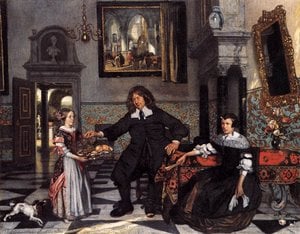
Emanuel Murant's "Dilapidated Farm," painted circa 1670, isn’t merely a depiction of a crumbling structure; it’s a poignant meditation on time, resilience, and the enduring spirit of rural life. This evocative landscape, rendered in a meticulously realistic style characteristic of the Dutch Golden Age, invites us to contemplate the passage of years and the quiet dignity found within decay. The painting immediately draws the eye to the central focus: a brick farmhouse, its once-proud facade now bearing the unmistakable marks of neglect – missing tiles revealing glimpses of weathered roof timbers, peeling plaster clinging precariously to the walls, and a thatched extension hinting at a past prosperity.
Murant’s technique is remarkably detailed. He doesn't shy away from portraying the ravages of time; instead, he embraces them, capturing every imperfection with an almost obsessive precision. The texture of the brickwork, the roughness of the timber, and the delicate layering of the thatch are rendered with a sensitivity that speaks to Murant’s profound observation skills. Notice how light plays across the scene – not in dramatic bursts, but rather in subtle gradations, illuminating the details while simultaneously suggesting the melancholy atmosphere. The overcast sky contributes to this sense of quiet contemplation, casting a soft, diffused light over the landscape.
To fully appreciate “Dilapidated Farm,” it’s crucial to understand its historical context. The late 17th century in the Netherlands was a period of significant social and economic change. While Amsterdam flourished as a center of trade and finance, rural areas faced challenges – declining agricultural yields, population shifts, and the gradual erosion of traditional ways of life. Paintings like Murant’s weren't simply documenting decay; they were reflecting a broader cultural awareness of these transformations. The depiction of ruined farmhouses served as a visual reminder of the fragility of human endeavors and the inevitable return to nature.
Interestingly, Murant’s work anticipates the later innovations of Jan van der Heyden, a master of urban panoramas who would revolutionize the representation of cityscapes. Van der Heyden's focus on capturing the dynamism and complexity of urban life owes a debt to Murant’s earlier explorations of rural decay – both artists shared a fascination with documenting the changing face of their homeland.
Beyond its technical merits, “Dilapidated Farm” is rich in symbolic meaning. The ruined farmhouse represents not just physical deterioration but also the loss of social status, economic stability, and perhaps even familial heritage. The figures – a man tending to chickens near the thatched extension and a boy engaged in manual labor – embody the enduring connection between humans and the land. Their presence suggests a continuity of tradition, a quiet determination to maintain a way of life despite adversity.
The painting evokes a complex range of emotions: melancholy, nostalgia, and perhaps even a sense of hope. It’s not a celebration of beauty in its pristine form but rather an appreciation for the dignity found within imperfection. The scene whispers of stories untold – of generations who lived and worked on this land, of joys and sorrows experienced within these weathered walls.
WahooArt’s high-quality reproduction of “Dilapidated Farm” captures the essence of Murant's original masterpiece. Printed on archival-grade canvas using a giclée printing process, this artwork offers exceptional color accuracy and detail, faithfully reproducing the nuances of light and texture that define Murant’s style. Available in various sizes to suit your space and budget, it serves as a beautiful reminder of the enduring power of art to connect us with the past and inspire contemplation about the present.
Consider framing this piece within a rustic wooden frame to further enhance its connection to the subject matter – or opt for a sleek, minimalist design to create a striking contrast. “Dilapidated Farm” is more than just a painting; it’s an invitation to slow down, reflect, and appreciate the beauty of imperfection.


1622 - 1700 , Netherlands

 Förhandsvisa
 Skicka
 Dela
Dela
 Visa detaljer

 Ladda ner
 Liknande objekt
 Röntgen
 Bildspel
 Visa mer