Förhandsvisa Förhandsgranska i AR Byt till tryck Byt till digital bild Skicka
Visa detaljer Guide Lägg till i favoriter Ladda ner Liknande objekt Röntgen Bildspel Q&A Statistik

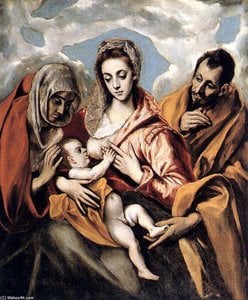
not identified Hand-painted oil painting reproduction

El Greco monochrome sketch: A study in brown & beige, showcasing his signature gestural lines & simplified forms. Explore this aged paper masterpiece!

Upptäck El Grecos dramatiska konstverk! Mästerverk från Mannerismen och religiösa scener med långa figurer. En pionjär inom expressionism och kubism – se hans ikoniska målningar!

Handgjord oljereproduktion

Handmålad olja på duk i din valda storlek och ram, tillverkad efter beställning av våra konstnärer. ( Byt till tryck Byt till digital bild)

Corner sample of the P118B picture frame: formgjuten polystyren, 5 cm wide and 3 cm thick
P118B Skr10
Corner sample of the P118H picture frame: formgjuten polystyren, 5 cm wide and 3 cm thick
P118H Skr10
Corner sample of the P118W picture frame: formgjuten polystyren, 5 cm wide and 3 cm thick
P118W Skr10
Corner sample of the P438Z picture frame: formgjuten polystyren, 5.5 cm wide and 3.5 cm thick
P438Z Skr10
Corner sample of the P508JH picture frame: formgjuten polystyren, 7 cm wide and 3.5 cm thick
P508JH Skr12
Corner sample of the P508YH picture frame: formgjuten polystyren, 7 cm wide and 3.5 cm thick
P508YH Skr12
Corner sample of the P805H picture frame: formgjuten polystyren, 5 cm wide and 3.5 cm thick
P805H Skr10
Corner sample of the P805Z picture frame: formgjuten polystyren, 5 cm wide and 3.5 cm thick
P805Z Skr10
Corner sample of the P919BZ picture frame: formgjuten polystyren, 7 cm wide and 3.5 cm thick
P919BZ Skr10
Corner sample of the P919G picture frame: formgjuten polystyren, 7 cm wide and 3.5 cm thick
P919G Skr10
Corner sample of the P919XJ picture frame: formgjuten polystyren, 7 cm wide and 3.5 cm thick
P919XJ Skr10
Corner sample of the P959ZH picture frame: formgjuten polystyren, 5 cm wide and 3 cm thick
P959ZH Skr10
Corner sample of the P968JZ picture frame: formgjuten polystyren, 6 cm wide and 4 cm thick
P968JZ Skr12
Corner sample of the W106C picture frame: massivt trä, 5 cm wide and 3 cm thick
W106C Skr8
Corner sample of the W218G picture frame: massivt trä, 5 cm wide and 3 cm thick
W218G Skr10
Corner sample of the W218JH picture frame: massivt trä, 5 cm wide and 3 cm thick
W218JH Skr8
Corner sample of the W218Y picture frame: massivt trä, 5 cm wide and 3 cm thick
W218Y Skr10
Corner sample of the W307PJ picture frame: massivt trä, 6 cm wide and 3 cm thick
W307PJ Skr10
Corner sample of the W316G picture frame: massivt trä, 6 cm wide and 3 cm thick
W316G Skr10
Corner sample of the W316PJ picture frame: massivt trä, 6 cm wide and 3 cm thick
W316PJ Skr8
Corner sample of the W316Y picture frame: massivt trä, 6 cm wide and 3 cm thick
W316Y Skr10
Corner sample of the W398PJ picture frame: massivt trä, 5 cm wide and 3 cm thick
W398PJ Skr8
Corner sample of the W4111J picture frame: massivt trä, 6.5 cm wide and 3.5 cm thick
W4111J Skr10
Corner sample of the W500HY picture frame: massivt trä, 7 cm wide and 5 cm thick
W500HY Skr15
Corner sample of the W500JH picture frame: massivt trä, 7 cm wide and 5 cm thick
W500JH Skr15
Corner sample of the W692G picture frame: massivt trä, 8 cm wide and 4 cm thick
W692G Skr12
Corner sample of the W849H picture frame: massivt trä, 5 cm wide and 3 cm thick
W849H Skr8
Corner sample of the W940BG picture frame: massivt trä, 7.5 cm wide and 4.5 cm thick
W940BG Skr15
Corner sample of the W953PJ picture frame: massivt trä, 6 cm wide and 3.5 cm thick
W953PJ Skr8

Standardstorlek
skräddarsydd
CM
INCH

Välj bland våra förinställda storlekar som motsvarar konstverkets ursprungliga proportioner.

bredd
höjd

Ange den bredd och höjd du behöver för att passa din ram eller din vägg. Eftersom detta är handmålat kan konstnären, vid ett annat format, måla lite mer runt bilden eller beskära den något – det är du som väljer. Vi skickar en digital mockup för godkännande innan målningen påbörjas. Bilden som visas på denna sida representerar inte det slutgiltiga resultatet — det är endast mockuppen som visar det.

Exempel på vad som kan anpassas: Byt ut ansiktet mot ett foto av kunden; Lägg till ett husdjur (t.ex. byt ut en katt mot en hund); Inkludera ett dolt meddelande i bakgrunden; Ändra bakgrundens landskap eller element.
Efter beställning kommer WahooArt.com team att mejla kunden för instruktioner och tillhandahålla en skissförhandsvisning

Leverans över hela världen () på 3–4 veckor istället för standard 5 veckor. (30 oktober). Inga kompromisser med kvaliteten.

Fri expressfrakt över hela världen
Högkvalitativ linnecanvas
Fullständig fraktförsäkring
Garantier för återbetalning av tullavgifter
Garantier för exakt färgåtergivning
100 dagars returrätt (endast vid fel)
100% pengarna tillbaka-garanti
Mängdrabatt erbjuds

Totalt pris

Skr 2732

not identified

Reproduktionsmetod

Storlek på reproduktion

-

Slutgiltigt pris

Skr 2732

Kortfakta

  • Location: National Gallery of Art, Washington D.C.
  • Movement: Mannerism
  • Medium: Charcoal/Graphite on Paper
  • Notable elements or techniques: Gestural lines & simplified forms
  • Artistic style: Expressionist influence

Konstquiz

Det finns endast ett korrekt svar på varje fråga.

Fråga 1:
What artistic movement is El Greco’s ‘Laocoön’ considered to be?
Fråga 2:
El Greco primarily utilized what technique in his sketches?
Fråga 3:
The sketch depicts a male figure draped in robes, reflecting which artistic tradition?
Fråga 4:
What is the predominant color palette of ‘not identified’?
Fråga 5:
El Greco’s signature name, Krḗs, signifies his origin in which location?

A Study in Monochrome: Exploring El Greco’s Quiet Intensity

Doménikos Theotokópoulos, universally known as El Greco – “The Greek” – stands apart from his contemporaries not merely through nationality but through a singular artistic vision that anticipates movements centuries ahead of its time. Born in Crete in 1541, under Venetian rule, his journey encompassed Venice and Rome before finding its definitive expression in the spiritual landscape of Spain: Toledo. El Greco wasn’t simply absorbing influences; he synthesized them into an aesthetic utterly his own—a Mannerist style characterized by elongated figures, dramatic lighting, and a palpable emotional resonance.

The Sketch's Essence: Technique and Composition

This monochrome sketch offers a glimpse into El Greco’s creative process. Rendered primarily in shades of brown and beige on aged paper—a testament to its provenance—the artwork speaks volumes about the artist’s approach. Loose, gestural lines dominate the surface, conveying immediacy rather than meticulous detail. Shapes are simplified by contour lines, minimizing shading and modeling; this deliberate restraint emphasizes form and posture above realistic representation.

  • Technique: Charcoal or graphite sketch on paper – a hallmark of Renaissance drawing practice emphasizing observation and expressive line work.
  • Composition: The figure occupies the vertical space, positioned slightly off-center to the left, creating visual balance while directing the viewer’s gaze.

Historical Context & Influences

El Greco's artistic development was profoundly shaped by Byzantine iconography and Venetian Renaissance ideals. However, he transcended these traditions, forging a path toward stylistic innovation. His signature “Krḗs” – Cretan – served as a proud declaration of his roots, mirroring the broader humanist spirit of the era.

Notably, this sketch echoes the monumental sculpture Laocoön and His Sons in Rome—a work that captivated El Greco’s imagination and influenced his compositional choices. The style anticipates Expressionism's emotive intensity and Cubism's fragmented forms, demonstrating El Greco’s visionary grasp of artistic trends.

Symbolic Resonance & Emotional Impact

At this stage, the sketch prioritizes conveying the figure’s posture and drapery—minimal symbolic elements serve to heighten the emotional impact. The aged paper texture adds depth and authenticity, inviting contemplation on themes of faith, spirituality, and human vulnerability. Like many of El Greco's paintings, it embodies a profound sense of melancholy and introspection.

Further Exploration

To delve deeper into El Greco’s artistic legacy, consider visiting the Museo de El Greco in Toledo, Spain—a meticulously recreated 16th-century home housing an impressive collection of his masterpieces. Admire ‘Christ on the Cross Adored by Donors,’ ‘Christ,’ and explore the Cathedral of Toledo, where you can witness El Greco's monumental paintings alongside Gothic grandeur.

Frågor och svar

Vilket rum föreslås för visning av "not identified", med tanke på dess färgpalett?

Med sin Neutrals-palett rekommenderas "not identified" av El Greco för ett Hotel Lobby. Färgerna är en del av anledningen till detta förslag.

Är färgerna i "not identified" klara eller dämpade?

"not identified" av El Greco återges med en Balanced Soft mättnad och en Balanced intensitet.

Vilken färgpalett används i "not identified" av El Greco?

Färgerna i "not identified" utgör en Neutrals palett. Denna klassificering beskriver de dominerande färggrupperna.


Konstnärsbiografi

Doménikos Theotokópoulos, Known As El Greco – A Life Forged in Faith and Fire

Doménikos Theotokópoulos, universally recognized as El Greco – “the Greek” – stands apart from his contemporaries as a painter whose life and artistic output defied easy categorization. Born in Crete, Greece, around 1541, during the Venetian dominion of the island, his artistic journey unfolded across Venice and Rome before ultimately finding its most profound expression within the spiritual landscape of Spain: Toledo. El Greco wasn’t merely shaped by these locations; he synthesized their diverse influences into a singular style—one that foreshadowed the emotive fervor of Expressionism and the fragmented forms characteristic of Cubism centuries ahead of time. His formative years immersed in Byzantine iconography instilled within him meticulous attention to detail and an instinctive grasp of religious symbolism, grounding his artistic endeavors. Yet, he refused to be confined by tradition; he boldly embraced innovation, propelling himself beyond established conventions. He signed his canvases with Greek lettering – “Krḗs” – signifying his Cretan heritage—a defiant assertion of identity as he ventured into uncharted artistic territories. The genesis of El Greco’s distinctive style wasn't solely rooted in technique but also nurtured by the fervent religious fervor permeating Crete and invigorated by the opulent artistry emanating from Venice.

From Venetian Influence to Roman Exposure – A Transformation

Around 1567, El Greco relocated to Venice, initiating a pivotal phase of artistic maturation. Surrounded by luminaries like Titian, Tintoretto, and Veronese—masters who perfected color palettes, compositional strategies, and dramatic illumination—he absorbed their expertise with unwavering dedication. He deliberately loosened his brushstrokes, embracing the sensual richness of oil paint and injecting dynamism into his depictions of figures. This Venetian imprint is palpable in early works such as *St. Sebastian* (1600), where anatomical precision merges seamlessly with theatrical lighting, creating a mesmerizing visual experience. Subsequently, his sojourn in Rome exposed him to Mannerism—a stylistic movement characterized by elongated proportions, distorted perspectives, and sophisticated arrangements—though he struggled to gain widespread acclaim within the competitive Roman artistic milieu. Despite encountering challenges in establishing himself as a celebrated artist, El Greco’s exploration of Mannerist principles undeniably broadened his artistic horizons.

A Singular Style – Long Lines and Intense Emotion

El Greco's artistic style is instantly recognizable—a stylistic hallmark that continues to resonate with audiences today. His figures are frequently rendered with elongated proportions, their bodies contorted in poses conveying profound spiritual ecstasy or agonizing sorrow. This isn’t mere stylistic embellishment; it’s a deliberate attempt to transcend the physical realm and portray intangible realities—the unseen forces shaping human experience. He skillfully manipulated color—often employing hues far removed from naturalistic representations—to amplify emotional impact, mirroring the fervor of his subject matter. Dramatic lighting—characterized by stark contrasts between illumination and darkness—creates a theatrical atmosphere, drawing viewers into the core of the depicted scene and intensifying its emotive power. *The Burial of the Count of Orgaz* (1586-1588), arguably El Greco’s magnum opus, exemplifies these stylistic elements flawlessly. This monumental painting portrays a miraculous event – the ascension of saints to bury a pious nobleman—with remarkable realism interwoven with ethereal figures embodying divine intervention. It stands as testament to his ability to fuse meticulous observation with visionary imagination.

Toledo and Spiritual Depth

El Greco’s artistic trajectory culminated in his relocation to Toledo in 1577, coinciding with the ascendancy of the Counter-Reformation—a period marked by fervent religious devotion within Spain. This environment fostered both patronage and an atmosphere conducive to El Greco's deeply spiritual artistic endeavors. He channeled his convictions into canvases imbued with palpable emotion and symbolic resonance, reflecting a profound detachment from conventional aesthetic norms. His oeuvre expanded considerably during this time, producing iconic works that cemented his legacy as one of the foremost artists of his era.

Legacy and Recognition – A Pioneer Ahead Of His Time

Despite encountering difficulties gaining widespread recognition during his lifetime—primarily due to stylistic divergences from prevailing artistic trends—El Greco’s genius was belatedly acknowledged in the 20th century. Artists like Picasso and Braque recognized him as a precursor to modern art, particularly Cubism, admiring his distorted forms and unconventional perspectives. His expressive style captivated Expressionists who sought to convey emotional intensity through bold colors and dramatic compositions. Today, El Greco is revered as one of the most influential figures in Western artistic history—a visionary painter whose work continues to inspire awe and provoke contemplation centuries after its creation. He remains a beacon of artistic innovation, demonstrating that true artistry transcends temporal boundaries and speaks directly to the human spirit’s yearning for transcendence.
El Greco

El Greco

1541 - 1614 , Griechenland

Kortfakta

  • Artistic Movement Or Style: Mannerism och Barock
  • Artists Who Influenced This Artist:
    • Titian
    • Tintoretto
  • Date Of Birth: 1541
  • Date Of Death: 1614
  • Full Name: Doménikos Theotokópoulos
  • Nationality: Grekisk-Spansk
  • Notable Artworks:
    • Burial av räknaren Orgaz
    • Vy över Toledo
    • El Espolio
    • Heliga Sebastian
  • Place Of Birth: Crete, Greece
Utforska konstverk sorterade efter tema, stil och egenskaper.