
Konstverket som visas på denna sida skyddas av upphovsrättslagen, vilket innebär att vi inte lagligt kan skapa eller sälja en identisk reproduktion. Detta skydd upprätthålls genom internationella avtal såsom den Bernkonventionen och genom nationella lagar, inklusive de som fastställs av Amerikansk upphovsrättslag – Titel 17. Alla rättigheter förbehållna. Återgivning av konstverk är förbjuden utan skriftligt tillstånd från WahooArt.
Denna metod följer fullt ut upphovsrättsliga regler eftersom den inte innebär kopiering eller duplicering av det skyddade konstverket. Istället är det en kreativ nytolkning – en ny målning som är influerad av originalet men inte identisk med det.
Giclée- eller canvasprint av museumskvalitet med snabb produktion och flexibla ytbehandlingsalternativ. ( Beställ handmålad reproduktion Byt till digital bild)





























Välj bland våra förinställda storlekar som motsvarar konstverkets ursprungliga proportioner.

Ange den bredd och höjd du behöver för att passa din ram eller vägg. Ett tryck kan endast beskäras, aldrig göras större än originalbilden, vilket innebär att ett format med en annan proportion leder till att en del av bilden går förlorad. Vi skickar en digital mockup för godkännande innan vi påbörjar tryckningen. Bilden som visas på denna sida visar inte den faktiska beskärningen — det är endast mockuppen som gör det.
Leverans över hela världen () på 2 veckor istället för standard 4/5 veckor. (8 november)
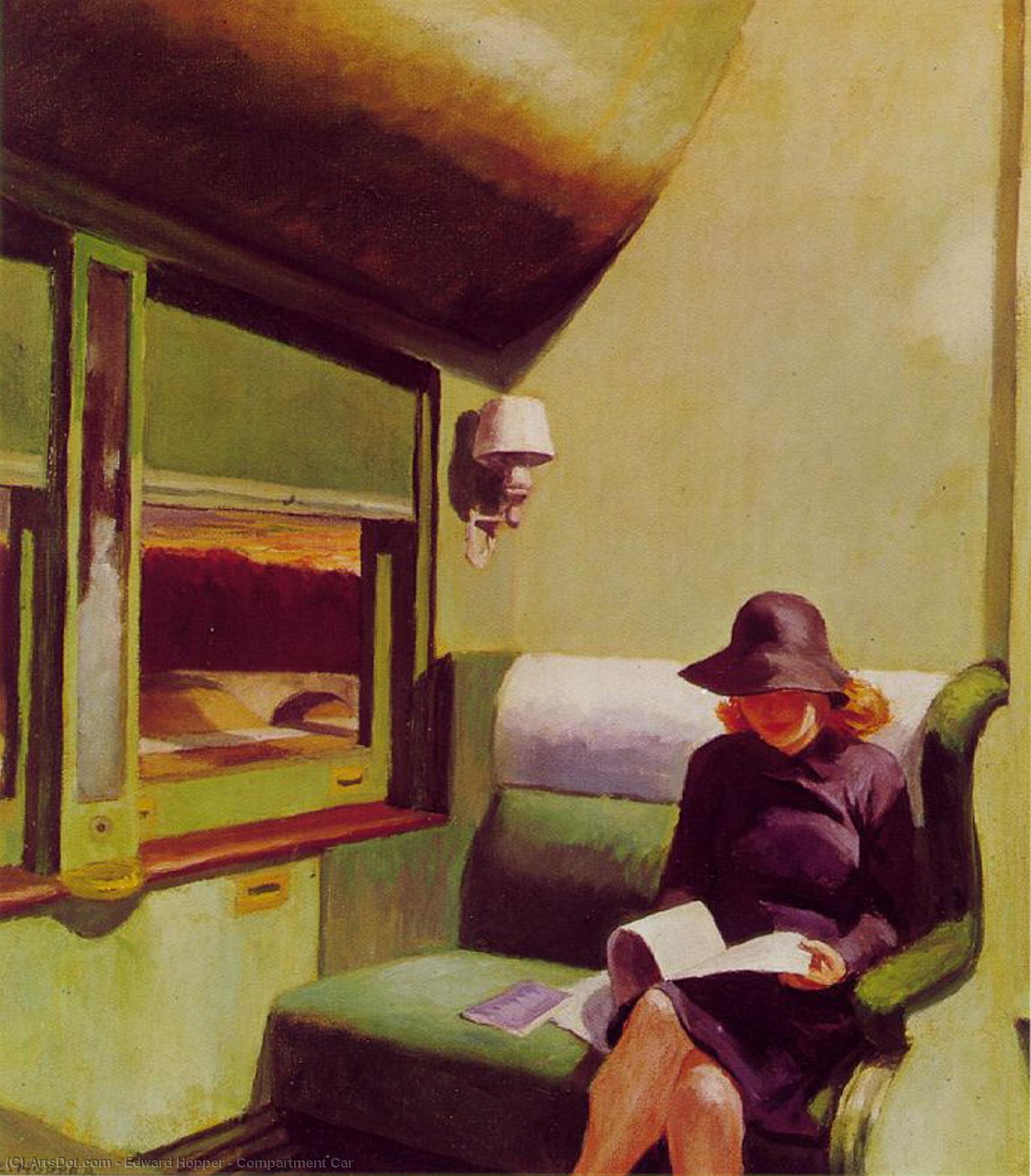
Compartment Car
Storlek på reproduktion
Edward Hopper’s “Compartment Car” (1931) is more than just a depiction of a train journey; it’s a meticulously crafted meditation on solitude, urban alienation, and the quiet dramas unfolding within the seemingly mundane moments of modern life. Painted during a period of significant social and technological change in America – the rise of railroads, increased urbanization, and the burgeoning sense of individual detachment – the painting resonates with a profound psychological depth that continues to captivate viewers nearly a century later. Hopper’s masterful use of light and shadow, combined with his precise observation of human form, elevates this scene into a powerful symbol of the anxieties and uncertainties inherent in the modern experience.
Hopper’s genius lies not merely in his technical skill but in his ability to manipulate light and shadow to evoke specific moods and emotions. The dim, diffused natural light filtering through the window creates a sense of mystery and melancholy, casting long shadows that obscure the faces of the other passengers and further emphasize the woman's isolation. This use of chiaroscuro – the dramatic contrast between light and dark – is a hallmark of Hopper’s style and contributes significantly to the painting’s evocative power. The subtle variations in tone create a sense of depth and atmosphere, drawing the viewer into the scene and inviting contemplation.
"Compartment Car" was created during a period of profound social and economic change in America. The rise of industrialization and urbanization had led to increased mobility and a growing sense of alienation, particularly among those who found themselves adrift in the impersonal landscape of modern cities. Hopper's paintings often reflected this mood of disillusionment and uncertainty, capturing the loneliness and isolation that many Americans felt despite their increasing connectedness through technological advancements. Hopper’s work aligns with the broader artistic movement of American Regionalism, which sought to depict the realities of everyday life in America, particularly in urban settings. His focus on ordinary subjects – a diner, a department store, a train compartment – elevated these scenes into powerful statements about the human condition.
“Compartment Car” continues to resonate with viewers today because it taps into universal themes of loneliness, introspection, and the search for meaning in a complex world. Hopper’s ability to capture such profound emotions through seemingly simple imagery is a testament to his artistic genius. This painting exemplifies Hopper's enduring legacy as one of America's most important 20th-century artists, whose work continues to provoke thought and inspire contemplation about the nature of modern life.
"Compartment Car" av Edward Hopper är utförd i Acrylic On Canvas. Reproduktionerna strävar efter att återge teknikens särpräglade utseende.
Röntgenvyn av "Compartment Car" av Edward Hopper finns på verkets Röntgenanalys-sida: en interaktiv undersökning av bilden genom elva optiska lager.
Handmålade kopior av "Compartment Car" av Edward Hopper finns att köpa på denna webbplats: en handmålad oljereproduktion på linneväv, via deras sida för Handmålad reproduktion.

1931 - 1967 , USA

Master the nuances of Giclée printing with our expert guide. Discover how pigment-based inks and museum-grade substrates create fade-resistant, high-fidelity art reproductions designed for discerning collectors seeking unparalleled quality and longevity.

Discover museum-quality Giclée paper prints at WahooArt. Elevate your space with archival, pigment-based reproductions of the world's greatest masterpieces. Affordable, elegant, and designed for lasting beauty. Start curating your timeless art legacy today.

Upptäck konsten att förvandla digitala verk till exklusiva Giclée-tryck av museumkvalitet. Med WahooArt får du arkivbeständiga pigmenttryck på finaste canvas som bevarar varje detalj i generationer. Skapa ett tidlöst arv för ditt hem med vår expertis inom lyxig väggkonst.
 Förhandsvisa
 Skicka
 Dela
Dela
 Visa detaljer
 Guide
Guide

 Ladda ner
 Liknande objekt
 Röntgen
 Bildspel
 Frågor och svar
 Statistik

 Visa mer









 Glasalternativet är endast tillgängligt i storlekar under 110 cm.


