

Konstverket som visas på denna sida skyddas av upphovsrättslagen, vilket innebär att vi inte lagligt kan skapa eller sälja en identisk reproduktion. Detta skydd upprätthålls genom internationella avtal såsom den Bernkonventionen och genom nationella lagar, inklusive de som fastställs av Amerikansk upphovsrättslag – Titel 17. Alla rättigheter förbehållna. Återgivning av konstverk är förbjuden utan skriftligt tillstånd från WahooArt.
Denna metod följer fullt ut upphovsrättsliga regler eftersom den inte innebär kopiering eller duplicering av det skyddade konstverket. Istället är det en kreativ nytolkning – en ny målning som är influerad av originalet men inte identisk med det.
Giclée- eller canvasprint av museumskvalitet med snabb produktion och flexibla ytbehandlingsalternativ. ( Beställ handmålad reproduktion Byt till digital bild)





























Välj bland våra förinställda storlekar som motsvarar konstverkets ursprungliga proportioner.

Ange den bredd och höjd du behöver för att passa din ram eller vägg. Ett tryck kan endast beskäras, aldrig göras större än originalbilden, vilket innebär att ett format med en annan proportion leder till att en del av bilden går förlorad. Vi skickar en digital mockup för godkännande innan vi påbörjar tryckningen. Bilden som visas på denna sida visar inte den faktiska beskärningen — det är endast mockuppen som gör det.
Leverans över hela världen () på 2 veckor istället för standard 4/5 veckor. (15 november)
Capron House
Storlek på reproduktion
In the vast landscape of American modernism, few works capture the heavy, cinematic silence of rural life as poignantly as Edward Hopper’s 1931 watercolor, Capron House. This piece is far more than a mere depiction of a farmhouse; it is a profound meditation on solitude and the unspoken narratives that dwell within the stillness of a domestic scene. As the eye wanders across the composition, one is immediately struck by the sense of contemplative calm that defines Hopper’s signature style. A modest white clapboard house, crowned with a vibrant red roof, stands in quiet dialogue with a weathered barn, anchoring the viewer to a moment frozen in time. The presence of two figures on the porch, their postures suggesting a detached observation of their surroundings, adds a layer of psychological depth, inviting us to wonder if they are contemplating the day's labor or simply absorbing the profound tranquility of the countryside.
The scene is further enriched by the subtle inclusion of everyday artifacts—a parked truck and various vehicles scattered across the lawn. These elements serve as gentle reminders of the realities of rural existence during the early 20th century, grounding the ethereal mood in a tangible, lived reality. For the collector or interior designer, this painting offers a unique window into a bygone era, providing a focal point that is both intellectually stimulating and visually soothing. It is a work that does not demand attention through loud colors or chaotic movement, but rather earns it through a steady, rhythmic grace that settles deeply into the spirit of a room.
Hopper’s technical prowess in Capron House lies in his ability to use the delicate medium of watercolor to sculpt form and atmosphere. Eschewing dramatic or jarring palettes, he favors muted, earthy hues that heighten the emotional resonance of the landscape. His technique is characterized by precise washes and subtle gradations of tone, which allow light to become a character in its own right. The diffused light bathing the farmhouse does not merely illuminate the architecture; it softens the edges of reality, casting shadows that delineate the textures of wood and stone while emphasizing the isolation of the figures. This careful rendering of light and shadow creates a palpable sense of realism, making the atmosphere feel thick with memory and stillness.
For those seeking to incorporate such mastery into their personal spaces, the beauty of this piece lies in its textural richness. The way the light falls upon the white clapboard and the weathered surfaces of the barn provides a visual depth that is incredibly captivating. It is a masterclass in how subtle tonal shifts can convey immense psychological weight, making the painting an ideal choice for those who appreciate art that speaks through nuance rather than noise.
To understand Capron House, one must consider the era from which it emerged. Painted during the Great Depression, the work carries an inherent weight of the period's economic and social uncertainties. Yet, Hopper does not lean into tragedy; instead, he explores the architecture of solitude. He presents loneliness not as a catastrophe, but as a fundamental, almost sacred, state of being. This perspective allows the viewer to find beauty in the quietude, transforming a simple rural scene into a universal symbol of introspection and peace.
The emotional impact of the piece is enduring. It evokes a sense of nostalgia for a slower pace of life, making it an evocative addition to any curated collection or sophisticated interior design project. Whether placed in a sunlit study or a quiet corner of a living space, Capron House serves as a constant reminder of the beauty found in the moments between actions—the heavy, electric tension of the stillness that exists when the world stops to breathe.
I "Capron House" möter Watercolor-tekniken Contemporary Realism-rörelsen.
"Capron House" av Edward Hopper rekommenderas för ett Living Room. Detta förslag baseras på verkets motiv, färger och stämning.
"Capron House" skapades av Edward Hopper, född i USA, inom Contemporary Realism-rörelsen. Konstnärens ursprung knyter verket till Contemporary Realism så som det utövades av konstnärer från USA.

Edward Hopper föddes i Upper Nyack, USA. Hans tidiga år präglades av ett stadigt betraktande av världen, en vana som tog sin början i barndomens skisser, noggrant daterade och signerade. Trots att hans föräldrar föreslog en mer praktisk bana inom kommersiell illustration, förblev hans fokus fäst vid den fria konsten. Han studerade vid New York School of Art under William Merritt Chase och Robert Henri. Dessa år gav honom den tekniska skicklighet som krävdes för att skildra världen osminkad och ärlig. Han sökte inte de flyktiga penseldragen hos impressionisterna som han mötte i Paris; istället utvecklade han ett sätt att se som prioriterade ett ögonblicks stillhet framför en folkmängds rörelse.
Hans verk kretsar ofta kring det vardagliga. Han betraktade hus, diners, kontor och hotellrum. Han skalade bort onödiga detaljer för att blottlägga en scenes underliggande emotionella sanning. I House by the Railroad (1925) avslöjar en enkel komposition en känsla av mysterium och isolering. Han använde ljus och skugga inte bara för att beskriva ett rum, utan för att sätta en stämning. Den exakta återgivningen av en skugga på en vägg eller hur ljuset faller genom ett fönster blev hans sätt att kommunicera sina motivs psykologiska tillstånd.
Sättet som ljuset tränger in i ett rum på är en central karaktär i hans målningar. I Nighthawks (1942) skär det skarpa lysrörsljuset från en nattöppen diner genom mörkret på en övergiven stadsgata. Figurerna där inne är fysiskt nära varandra men verkar förlorade i sina egna tankar, bortkopplade från varandra. Denna känsla av anonymitet i en trång stad blev ett återkommande tema. Han fångade spänningen i att vara ensam på en offentlig plats, en känsla som ekar i verk som Automat och Office in a Small City. Han var fascinerad av hur det artificiella ljuset interagerar med nattens naturliga mörker.
Hans hustru, Josephine Nivison Hopper, var en ständig närvaro. Som medkonstnär fungerade hon ofta som hans modell, och hennes närvaro kan förnimmas i karaktäriseringen av många av hans kvinnogestalter. Tillsammans levde de ett anspråkslöst liv och tillbringade ofta somrar i New England, vilket i sin tur påverkade de landskap han målade. Hans skildringar av det amerikanska landskapet, såväl det rurala som det urbana, betonar ofta en viss karghet eller tomhet. Oavsett om det rör sig om en bensinstation vid vägkanten i Gas (1940) eller ett tyst rum på ett hotell, är motivet alltid skärningspunkten mellan en fysisk plats och en privat, inre upplevelse.
Hoppers inflytande sträcker sig in i filmens och litteraturens visuella språk. Hans förmåga att skapa en känsla av psykologisk spänning genom komposition har noterats av många som studerar hur berättelser förmedlas genom bilder. Hans målningar finns bevarade på stora museer världen över, i samlingar som Whitney Museum of American Art och Museum of Fine Arts i Boston. Han strävade inte efter storslagna historiska narrativ. Istället fann han sitt motiv i vardagslivets tysta hörn, där han förvandlade ett enkelt fönster eller en förbipasserande främling till en studie i det mänskliga tillståndet. Hans arbete förblir en studie i den tystnad som existerar mellan människor.

1931 - 1967 , USA

Step into the evocative world of American Realism with our curated guide to the 25 most iconic Edward Hopper paintings. Explore the profound beauty of light, shadow, and urban solitude through museum-quality art stories and decor inspiration. Discover all masterpieces on WahooArt.com.

Explore iconic works by Hopper and Bacon that capture profound solitude. Discover museum-quality masterpieces on WahooArt.com.

Explore the profound emotional landscapes of Mark Rothko. An expert editorial on Color Field painting, decoding the spiritual depth, technique, and enduring legacy of these abstract masterpieces for the discerning global collector.
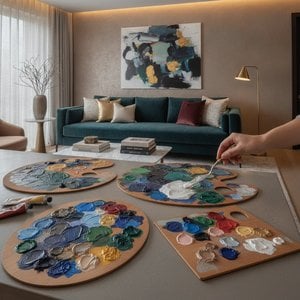
Elevate your interiors with expert guidance on color theory and art selection. Discover how to achieve chromatic equilibrium using hand-painted oil reproductions and bespoke commissions from WahooArt.com, the global authority in museum-quality fine art for luxury spaces.

Discover the ethereal beauty of watercolor through an art-historical lens. Master the delicate balance of light, fluidity, and pigment to capture the luminous essence of nature, inspired by the legendary techniques of the Old Masters and Impressionist greats.
 Förhandsvisa
 Skicka
 Dela
Dela
 Visa detaljer
 Guide
Guide

 Ladda ner
 Liknande objekt
 Röntgen
 Bildspel
 Frågor och svar
 Statistik

 Visa mer









 Glasalternativet är endast tillgängligt i storlekar under 110 cm.


