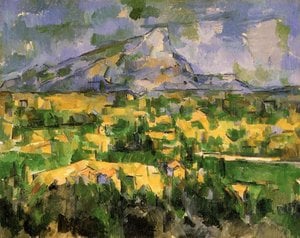
Diana Armfield: A Quiet Observer of Rural England
Diana Maxwell Armfield, born in Ringwood, Hampshire, in 1920, wasn’t a flamboyant figure in the art world; she was, instead, a meticulous and deeply observant painter who quietly captured the essence of rural England. Her work, often described as Impressionistic yet rooted in a distinctly British sensibility, reveals a profound connection to the land and its inhabitants – a connection forged through years spent immersed in the rhythms of village life and a keen eye for detail. Armfield’s legacy isn't one of grand gestures or revolutionary techniques, but rather a collection of exquisitely rendered landscapes that evoke a sense of serenity, nostalgia, and timeless beauty.
Her early artistic education was shaped by her Quaker background and the influence of her uncle, Maxwell Armfield, a fellow artist and illustrator. He instilled in her a love for observation and a respect for traditional techniques. Armfield’s formal training at the Slade School of Fine Art and the Central School of Arts and Crafts provided a solid foundation, but it was her independent study and travels – particularly to the Soviet Union – that truly shaped her artistic vision. The stark beauty of the Ukrainian countryside ignited within her a desire to capture the subtle shifts in light and atmosphere, the textures of weathered stone walls, and the quiet dignity of rural life.
Armfield’s early career saw her collaborating with her husband, Bernard Dunstan, on textile and wallpaper designs for the Armfield-Passano Partnership. This experience honed her eye for color and pattern, skills that would later inform her painting style. During World War II, she demonstrated a remarkable commitment to community, organizing cultural events and providing solace to soldiers and factory workers – activities that undoubtedly deepened her understanding of human nature and its connection to the land.
The Language of Light and Texture
Armfield’s paintings are characterized by their luminous quality and meticulous attention to detail. She rarely employed bold, dramatic brushstrokes; instead, she favored a delicate layering technique, building up color gradually to create a sense of depth and atmosphere. Her palette was predominantly muted – soft greens, blues, browns, and ochres – reflecting the natural tones of the English countryside. She was particularly adept at capturing the effects of light on surfaces: the shimmering reflections in water, the dappled shade beneath trees, and the golden glow of a setting sun.
Her subjects—farmhouses nestled amongst rolling hills, fields of wildflowers bathed in sunlight, and glimpses of village life—were often painted en plein air, allowing her to directly observe and record the nuances of the landscape. She wasn’t interested in creating idealized representations; rather, she sought to capture the authentic character of these places – their imperfections, their weathered beauty, and their quiet dignity.
Armfield's work is often compared to that of J.M.W. Turner and John Constable, artists who similarly celebrated the beauty of the English countryside. However, Armfield’s style possesses a unique intimacy and emotional resonance, reflecting her own deep connection to the land and its people.
Key Works and Recognition
Among her most notable works are “The Vaucluse Seen over Oak Saplings,” a stunning depiction of the rolling hills of Hampshire, and "Farmhouse, near Pienza," which captures the timeless charm of a rural Italian farmhouse. “Voeterra Thro’ Olive Branches” showcases her ability to convey both the beauty and the austerity of the Mediterranean landscape. These paintings, along with numerous others, are held in prestigious collections including The British Museum, the Contemporary Art Society for Wales, and the Government Art Collection.
In 1991, Armfield was elected as a Royal Academician – a testament to her enduring contribution to British art. Her work has been exhibited widely throughout England and internationally, and she continues to be celebrated for her quiet brilliance and her profound understanding of the English landscape.
A Legacy of Observation
Diana Armfield’s legacy extends beyond her individual paintings; it lies in her unwavering commitment to observation and her ability to capture the essence of a place through subtle details and evocative light. She wasn't striving for fame or recognition, but rather seeking to document and celebrate the beauty of the rural world around her. Her work serves as a poignant reminder of the importance of slowing down, paying attention, and appreciating the quiet wonders that often go unnoticed.
Her influence can be seen in subsequent generations of landscape artists who continue to draw inspiration from her meticulous approach and her deep respect for the natural world. Diana Armfield’s paintings are not merely representations of landscapes; they are invitations to contemplate the beauty, serenity, and enduring spirit of rural England.



 Förhandsvisa
 Switch to Print
 Skicka
 Dela
Dela
 Visa detaljer

 Ladda ner
 Liknande objekt
 Röntgen
 Bildspel
 Stats
Stats

 Visa mer