


Konstverket som visas på denna sida skyddas av upphovsrättslagen, vilket innebär att vi inte lagligt kan skapa eller sälja en identisk reproduktion. Detta skydd upprätthålls genom internationella avtal såsom den Bernkonventionen och genom nationella lagar, inklusive de som fastställs av Amerikansk upphovsrättslag – Titel 17. Alla rättigheter förbehållna. Återgivning av konstverk är förbjuden utan skriftligt tillstånd från WahooArt.
Denna metod följer fullt ut upphovsrättsliga regler eftersom den inte innebär kopiering eller duplicering av det skyddade konstverket. Istället är det en kreativ nytolkning – en ny målning som är influerad av originalet men inte identisk med det.
Giclée- eller canvasprint av museumskvalitet med snabb produktion och flexibla ytbehandlingsalternativ. ( Beställ handmålad reproduktion Byt till digital bild)





























Välj bland våra förinställda storlekar som motsvarar konstverkets ursprungliga proportioner.

Ange den bredd och höjd du behöver för att passa din ram eller vägg. Ett tryck kan endast beskäras, aldrig göras större än originalbilden, vilket innebär att ett format med en annan proportion leder till att en del av bilden går förlorad. Vi skickar en digital mockup för godkännande innan vi påbörjar tryckningen. Bilden som visas på denna sida visar inte den faktiska beskärningen — det är endast mockuppen som gör det.
Leverans över hela världen () på 2 veckor istället för standard 4/5 veckor. (14 november)
Diana
Storlek på reproduktion
David Bomberg’s Diana, painted in 1943, immediately draws the viewer into a moment of profound introspection. The central figure, clad in a striking red jacket, commands attention against a warm, almost incandescent orange background. Her posture—hand delicately placed near her face, suggesting contemplation or perhaps a momentary veil over deep thought—lends an air of enigmatic grace to the composition. Bomberg, a key member of the vibrant 'Whitechapel Boys,' captures not just a likeness, but a palpable state of being. The interplay between the vivid red garment and the surrounding autumnal glow creates an immediate visual tension, anchoring the viewer's gaze to the woman’s downward, thoughtful expression.
To appreciate Diana is to understand the trajectory of early 20th-century British modernism. While Bomberg’s training exposed him to the structured lessons of Cézanne and the dynamism of avant-garde movements, this piece retains a raw, emotional immediacy characteristic of his later work. His technique here suggests a masterful handling of paint, where form is suggested through bold planes of color rather than minute detail. The presence of other figures—one subtly placed in the upper left and another near the bottom right—suggests that the central subject exists within a larger social or psychological tableau. These secondary elements do not distract; rather, they frame the primary emotion, giving the scene depth beyond a simple portrait.
The title, Diana, evokes classical associations with the huntress and the goddess of the moon—figures often linked to mystery, independence, and feminine power. Yet, Bomberg grounds this mythological echo in a very human moment. The red jacket can be interpreted as passion or vitality against the backdrop of the fading orange light, perhaps symbolizing memory or the passage of time itself. The woman’s gesture is universally understood: it speaks of secrets held close, of beauty observed from within. For the collector or designer, this painting offers more than mere decoration; it offers a conversation piece—a meditation on introspection that resonates deeply in contemporary life.
Reproducing the power of Diana allows one to integrate a piece steeped in artistic history and emotional weight into any interior space. The rich palette, dominated by the fiery contrast of red and orange, makes it an exceptional focal point for rooms seeking depth and character. Whether displayed above a console table or as a centerpiece in a gallery wall, this reproduction captures Bomberg’s unique ability to infuse everyday subjects with monumental feeling. It is a piece that demands a pause, inviting quiet contemplation amidst the bustle of modern living.
Inom Modernism-rörelsen är "Diana" präglad av en Reflective ton.
"Diana" har en förhandsvisning med förstärkt verklighet: konstverkets Förhandsvisning i AR-sida visar det i ditt eget utrymme på en kompatibel enhet.
Originalet "Diana" av David Bomberg är ett verk i Oil On Canvas med måtten 41 x 36 cm. Teknik och storlek beskriver det ursprungliga objektet.

Bomberg föddes i Birmingham som son till de polsk-judiska immigrantföräldrarna Abraham och Rebecca Bomberg. Hans konstnärliga resa tog sin början vid City and Guilds Technical Art School, innan han vidareutbildade sig till litograf i Birmingham.
Under åren 1908–1910 studerade han för Walter Sickert vid Westminster School of Art, där han påverkades djupt av Sickers fokus på form och det urbana livet. Ett avgörande möte med Paul Cézanne skedde genom Roger Fryts utställning "Manet and the Post-Impressionists" år 1910. Vid Slade School of Art (1911) belönades han med Tonks Prize för sin teckning av medstudenten Isaac Rosenberg.
Erfarenheterna som menig soldat under första världskriget fick en genomgripande inverkan på hans konstnärliga vision och ledde till en rörelse bort från abstraktionen.
Under 1920-talet antog Bomberg en mer figurativ stil, med fokus på porträtt och landskap hämtade direkt från naturen. Han utvecklade en alltmer expressionistisk teknik, präglad av texturerad impasto och emotionell intensitet.
Omfattande resor genom Mellanöstern (särsk vare sig Palestina) och Europa influerade hans senare verk i betydande grad. Hans skildringar av Jerusalem är särskilt anmärkningsvärda.

1890 - 1957 , Storbritannien

Decode the profound symbolism of hands in masterworks from Van Gogh to Hindu mudras. Explore the silent language of art with our expert guide.

Discover the profound beauty of Contemporary Impressionism. Explore how masters capture light and emotion through textured brushwork and vibrant color, perfect for discerning collectors seeking timeless elegance and museum-quality artistry for luxury interiors.
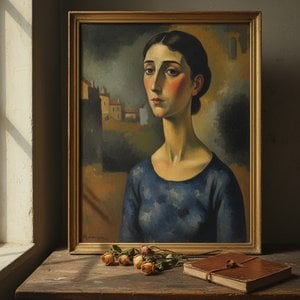
Delve into the haunting beauty of Amedeo Modigliani's portraits. Explore the intersection of Expressionism and Modernism through an expert analysis of his iconic elongated forms, melancholic gazes, and profound influence on art history.

Explore the profound symbolism of red hair through iconic masterpieces. Discover the fiery allure of art history with our expert guide.
 Förhandsvisa
 Skicka
 Dela
Dela
 Visa detaljer
 Guide
Guide

 Ladda ner
 Liknande objekt
 Röntgen
 Bildspel
 Frågor och svar
 Statistik


 Visa mer









 Glasalternativet är endast tillgängligt i storlekar under 110 cm.


