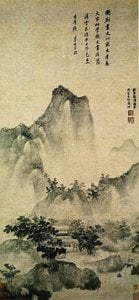
Returning Late from a Spring Outing (1644) av Dai Jin, handmålad oljemålning i reproduktion utförd av en mästare
Förhandsvisa Förhandsgranska i AR Byt till tryck Byt till digital bild Skicka
Visa detaljer Guide Lägg till i favoriter Ladda ner Liknande objekt Röntgen Bildspel Frågor och svar Presentation Statistik

Returning Late from a Spring Outing Handmålad oljemålning i reproduktion

Mått
167.0 x 83.0 cm

Discover "Returning Late from a Spring Outing" by Dai Jin (1644). A serene Ming Dynasty landscape painting in ink & color, showcasing Zhe School style & tranquil beauty. #ChineseArt #LandscapePainting

Upptäck Dai Jin, en mästare inom kinesiskt landskapsmåleri från Mingdynastin. Utforska hans innovativa Zhe-stil och ikoniska verk.

Handgjord oljereproduktion

Handmålad olja på duk i din valda storlek och ram, tillverkad efter beställning av våra konstnärer. ( Byt till tryck Byt till digital bild)

Corner sample of the P118B picture frame: formgjuten polystyren, 5 cm wide and 3 cm thick
P118B Skr10
Corner sample of the P118H picture frame: formgjuten polystyren, 5 cm wide and 3 cm thick
P118H Skr10
Corner sample of the P118W picture frame: formgjuten polystyren, 5 cm wide and 3 cm thick
P118W Skr10
Corner sample of the P438Z picture frame: formgjuten polystyren, 5.5 cm wide and 3.5 cm thick
P438Z Skr10
Corner sample of the P508JH picture frame: formgjuten polystyren, 7 cm wide and 3.5 cm thick
P508JH Skr12
Corner sample of the P508YH picture frame: formgjuten polystyren, 7 cm wide and 3.5 cm thick
P508YH Skr12
Corner sample of the P805H picture frame: formgjuten polystyren, 5 cm wide and 3.5 cm thick
P805H Skr10
Corner sample of the P805Z picture frame: formgjuten polystyren, 5 cm wide and 3.5 cm thick
P805Z Skr10
Corner sample of the P919BZ picture frame: formgjuten polystyren, 7 cm wide and 3.5 cm thick
P919BZ Skr10
Corner sample of the P919G picture frame: formgjuten polystyren, 7 cm wide and 3.5 cm thick
P919G Skr10
Corner sample of the P919XJ picture frame: formgjuten polystyren, 7 cm wide and 3.5 cm thick
P919XJ Skr10
Corner sample of the P959ZH picture frame: formgjuten polystyren, 5 cm wide and 3 cm thick
P959ZH Skr10
Corner sample of the P968JZ picture frame: formgjuten polystyren, 6 cm wide and 4 cm thick
P968JZ Skr12
Corner sample of the W106C picture frame: massivt trä, 5 cm wide and 3 cm thick
W106C Skr8
Corner sample of the W218G picture frame: massivt trä, 5 cm wide and 3 cm thick
W218G Skr10
Corner sample of the W218JH picture frame: massivt trä, 5 cm wide and 3 cm thick
W218JH Skr8
Corner sample of the W218Y picture frame: massivt trä, 5 cm wide and 3 cm thick
W218Y Skr10
Corner sample of the W307PJ picture frame: massivt trä, 6 cm wide and 3 cm thick
W307PJ Skr10
Corner sample of the W316G picture frame: massivt trä, 6 cm wide and 3 cm thick
W316G Skr10
Corner sample of the W316PJ picture frame: massivt trä, 6 cm wide and 3 cm thick
W316PJ Skr8
Corner sample of the W316Y picture frame: massivt trä, 6 cm wide and 3 cm thick
W316Y Skr10
Corner sample of the W398PJ picture frame: massivt trä, 5 cm wide and 3 cm thick
W398PJ Skr8
Corner sample of the W4111J picture frame: massivt trä, 6.5 cm wide and 3.5 cm thick
W4111J Skr10
Corner sample of the W500HY picture frame: massivt trä, 7 cm wide and 5 cm thick
W500HY Skr15
Corner sample of the W500JH picture frame: massivt trä, 7 cm wide and 5 cm thick
W500JH Skr15
Corner sample of the W692G picture frame: massivt trä, 8 cm wide and 4 cm thick
W692G Skr12
Corner sample of the W849H picture frame: massivt trä, 5 cm wide and 3 cm thick
W849H Skr8
Corner sample of the W940BG picture frame: massivt trä, 7.5 cm wide and 4.5 cm thick
W940BG Skr15
Corner sample of the W953PJ picture frame: massivt trä, 6 cm wide and 3.5 cm thick
W953PJ Skr8

Standardstorlek
skräddarsydd
CM
INCH

Välj bland våra förinställda storlekar som motsvarar konstverkets ursprungliga proportioner.

bredd
höjd

Ange den bredd och höjd du behöver för att passa din ram eller din vägg. Eftersom detta är handmålat kan konstnären, vid ett annat format, måla lite mer runt bilden eller beskära den något – det är du som väljer. Vi skickar en digital mockup för godkännande innan målningen påbörjas. Bilden som visas på denna sida representerar inte det slutgiltiga resultatet — det är endast mockuppen som visar det.

Exempel på vad som kan anpassas: Byt ut ansiktet mot ett foto av kunden; Lägg till ett husdjur (t.ex. byt ut en katt mot en hund); Inkludera ett dolt meddelande i bakgrunden; Ändra bakgrundens landskap eller element.
Efter beställning kommer WahooArt.com team att mejla kunden för instruktioner och tillhandahålla en skissförhandsvisning

Leverans över hela världen () på 3–4 veckor istället för standard 5 veckor. (6 november). Inga kompromisser med kvaliteten.

Fri expressfrakt över hela världen
Högkvalitativ linnecanvas
Fullständig fraktförsäkring
Garantier för återbetalning av tullavgifter
Garantier för exakt färgåtergivning
100 dagars returrätt (endast vid fel)
100% pengarna tillbaka-garanti
Mängdrabatt erbjuds

Totalt pris

Skr 2717

Returning Late from a Spring Outing

Reproduktionsmetod

Storlek på reproduktion

-

Slutgiltigt pris

Skr 2717

Kortfakta

  • Notable elements: Atmospheric perspective, Calligraphic brushwork
  • Influences: Song Dynasty
  • Medium: Ink & Color on Silk
  • Movement: Ma-Xia (Zhe School)
  • Artist: Dai Jin

A Moment of Serene Reflection: Returning Late from a Spring Outing by Dai Jin

Dai Jin’s “Returning Late from a Spring Outing,” painted in 1644, offers a profound glimpse into the heart of Chinese literati aesthetics – a world where landscape painting transcended mere representation to become a vehicle for spiritual contemplation. This exquisite silk hand-painting, measuring 167 x 83 cm, captures a quintessential Shanshui scene, a hallmark of the Song Dynasty’s influence on Chinese art, and embodies the spirit of the Ma-Xia style, also known as the Zhe School, which flourished during Dai Jin's lifetime. The artwork isn't simply a depiction of mountains and water; it is an invitation to experience tranquility, harmony, and a deep connection with the natural world – core tenets of Confucian philosophy.

Masterful Technique: The Language of Ink and Color

  • Brushwork and Composition: Dai Jin’s loose, expressive brushstrokes are central to the painting's power. They create a dynamic sense of atmospheric perspective, drawing the viewer into the scene with a fluidity that mimics the movement of water and wind. The vertical format emphasizes height and depth, reinforcing the grandeur of the mountainous landscape.
  • Ink Wash Technique (Sumi): The painting’s foundation lies in the meticulous layering of ink washes – *sumi*. This technique, perfected over centuries, allows for a subtle manipulation of tonal values, building up volume and creating an illusion of three-dimensionality. Notice how the artist uses varying densities of ink to define the contours of rocks, trees, and distant peaks.
  • Color Palette: The muted color palette – browns, grays, ochre, with delicate washes of blue and green – contributes significantly to the painting’s contemplative mood. These colors evoke the subtle shifts in light and shadow found within a natural landscape, enhancing the sense of realism while maintaining an ethereal quality.

Symbolism and Context: A Window into Ming Dynasty Thought

Painted in 1644, during Dai Jin’s career, this artwork reflects the artistic currents of the early Ming dynasty. Dai Jin was a pivotal figure in reviving the Ma-Xia style, which prioritized capturing the essence of nature over strict adherence to traditional representation. The pavilions depicted within the scene symbolize human dwellings nestled within the vastness of the landscape – a reminder of humanity’s place within the natural order. The mountains themselves represent strength, permanence, and spiritual aspiration, echoing Confucian ideals of virtue and longevity. Dai Jin's work was often influenced by political considerations, as evidenced by his early career attempts to gain favor with the emperor, though he ultimately developed a distinctive style that prioritized artistic integrity.

Emotional Resonance: A Legacy of Tranquility

“Returning Late from a Spring Outing” possesses an enduring emotional resonance. The diffused lighting and serene composition evoke a sense of quiet contemplation, inviting the viewer to escape the pressures of daily life and find solace in the beauty of nature. This painting is more than just a visual representation; it’s a portal to a timeless landscape, reflecting the profound connection between humanity and the natural world – a connection that continues to inspire awe and wonder centuries later. This hand-painted reproduction captures not only Dai Jin's artistic skill but also the very spirit of this iconic work.

Frågor och svar

Var bör en reproduktion av "Returning Late from a Spring Outing" av Dai Jin hängas?

Med sin Tall-form rekommenderas en reproduktion av "Returning Late from a Spring Outing" för ett Living Room.

Vilket format och vilken orientering rekommenderas för tryck av "Returning Late from a Spring Outing"?

Ett tryck av "Returning Late from a Spring Outing" av Dai Jin rekommenderas i storleken Large med Tall orientering.

Använder "Returning Late from a Spring Outing" av Dai Jin starka kontraster eller mjuka harmonier?

I "Returning Late from a Spring Outing" förenas en Serene kontrast med en Unified Palette harmoni.


Konstnärsbiografi

Tidigt liv och karriär

Dai Jin, en hyllad kinesisk konstnär, föddes år 1388 och gick bort 1462. Han var en central gestalt i den tidiga Ming-dynastins återupplivning av Ma-Xia-stilen, även känd som Zhe-skolan, vilken har sina rötter i de landskapsmåleri-traditioner som växte fram under den södra Song-dynastin. Som ung man reste Dai Jin till huvudstaden Nanjing tillsammans med sin far, som innehade en officiell tjänst. Trots att han inte lyckades etablera sig i huvudstaden, återvände han till Qiantang för att fortsätta sina studier inom måleriet, sannolikt under ledning av en lokal hantverkare från Zhejiang.

Vägen till berömmelse

Dai Jins rykte växte avsevärt omkring år 1425, då han rekommenderades till Xuande-kejsaren. Han reste till Peking i hopp om att säkra en tjänst vid akademien. Hans ambitioner motarbetades dock av etablerade konstnärer, i synnerhet Xie Huan, som hävdade att de kunde ana en regeringsfientlig underton i Dai Jins verk. Ett anmärkningsvärt exempel på detta är Dai Jins målning, Seven Worthies Passing the Barrier (ca 1425–35), som baserades på en gammal legend om sju mäns flykt från en orolig stat. Detta verk, tillsammans med en annan målning som föreställde en fiskare i en röd kappa, blev början på Dai Jins fall.

Milstolpar och arv


Dai Jins landskap, som skildrar de fyra årstiderna, togs initialt emot väl av Xuande-kejsaren.
Seven Worthies Passing the Barrier (ca 1425–35) förblir dock det verk som ledde till hans förföljelse.

Avslutning

Trots att han tvingades möta både motgångar och förföljelse, förblir Dai Jins bidrag till Zhe-skolan och det kinesiska landskapsmåleriet av enorm betydelse. Hans verk fortsätter att hyllas för sin unika stil och sina innovativa tekniker. Viktigt: För att lära dig mer om Dai Jin och hans konstverk, besök Dai Jins sida på WahooArt.com.
Dai Jin

Dai Jin

1388 - 1462 , Kina

Kortfakta

  • Artistic Movement Or Style: Tusjmålning av bambu
  • Artists Who Influenced This Artist: ['Wang Fu']
  • Date Of Birth: 1388
  • Date Of Death: 1462
  • Full Name: Dai Jin
  • Nationality: Kinesisk
  • Notable Artworks: ['Bambumålningar']
  • Place Of Birth: Quzhou, Kina