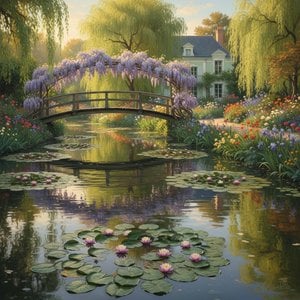
A Pathway to Serenity: Exploring Monet’s Giverny
Claude Monet's *The Main Path at Giverny* is more than just a landscape; it’s an invitation into the heart of Impressionism and a testament to the artist’s lifelong fascination with light, color, and the ephemeral beauty of nature. This captivating oil on canvas transports viewers to Monet’s beloved garden in Giverny, France, offering a glimpse into his personal sanctuary and artistic inspiration.
Decoding the Composition
The painting is skillfully structured around a winding dirt path that serves as both a physical and visual guide. Flanked by towering pine trees and lush foliage, this pathway draws the eye deep into the composition, creating a sense of depth and inviting exploration. The dappled sunlight filtering through the leaves casts dancing shadows on the ground, adding to the painting’s dynamic quality. In the background, subtle glimpses of houses hint at human presence without disrupting the overall tranquility. A strategically placed bench suggests a moment of respite, encouraging viewers to imagine themselves pausing amidst this idyllic scene.
The Poetry of Light and Color
Monet's mastery of light is undeniably central to *The Main Path at Giverny*. He doesn’t simply depict light; he *captures* its fleeting effects – the way it transforms colors, creates atmosphere, and evokes emotion. The palette is vibrant yet muted, reflecting the natural hues of the forest environment. Greens, purples, reds, and oranges blend harmoniously, creating a sense of visual richness and depth. This skillful manipulation of color isn’t about precise representation; it's about conveying the *impression* of light and atmosphere.
Impressionism in Full Bloom
As a pivotal figure in the Impressionist movement, Monet revolutionized painting by rejecting traditional academic conventions. He embraced
plein air painting – working outdoors directly from nature – to capture the immediacy of his perceptions. *The Main Path at Giverny* exemplifies this philosophy; it’s not about meticulous detail but rather about conveying the sensory experience of being present in that moment, surrounded by light and color. The loose brushstrokes and broken color technique are hallmarks of Impressionism, creating a sense of movement and vibrancy.
Historical Context & Artistic Lineage
Landscape painting has a rich history, evolving through various artistic movements. Monet built upon this tradition while simultaneously breaking new ground. He was influenced by earlier landscape artists like J.M.W. Turner and the Barbizon School, but he ultimately forged his own unique style that paved the way for modern art. His focus on light and color profoundly impacted subsequent generations of artists, influencing movements such as Post-Impressionism and Fauvism.
Symbolism & Emotional Resonance
The path itself can be interpreted symbolically – representing a journey, transition, or the passage of time. The garden setting evokes themes of nature, growth, and renewal. More broadly, *The Main Path at Giverny* embodies a sense of peace, tranquility, and harmony with nature. It’s a painting that invites contemplation and offers a respite from the stresses of modern life.
A Timeless Masterpiece for Today
*The Main Path at Giverny* remains a beloved masterpiece, captivating audiences with its beauty and emotional depth. Its enduring appeal makes it an ideal addition to any art collection or interior space. Whether you’re an avid art lover, a seasoned collector, or an interior designer seeking inspiration, this painting offers a timeless aesthetic that will enhance any environment.
- Explore more of Claude Monet's work, including his iconic Water Lilies series.
- Consider the interplay of light and color in your own spaces to create a similar sense of tranquility.
- Discover high-quality reproductions that capture the essence of this masterpiece, bringing a touch of Giverny into your home.



 Förhandsvisa
 Beställ handmålad reproduktion
 Skicka
 Dela
Dela
 Visa detaljer

 Ladda ner
 Liknande objekt
 Röntgen
 Bildspel

 Visa mer






































 Glasalternativet är endast tillgängligt i storlekar under 110 cm.