Konstnärsbiografi
The Florentine Dawn: Cimabue and the Transition from Byzantium
Giovanni Cimabue, född Cenni di Pepo omkring 1240 i Florens, står som enormt viktig figur – en bro mellan den etablerade konsttraditionen från det bysantinska världen och de växande innovationerna som skulle definiera den italienska renässansen. Hans liv, om än delvis skymtande bakom tidens slöja och romantiserade berättelser – framför allt de skrivna av Giorgio Vasari århundraden senare – markerar ett obestridligt vändpunkt i västerländsk konsthistoria. Cimabue var inte bara en målare; han var en modig innovatör som vågade utmana etablerade konventioner, och lade grunden för de revolutionära förändringar som snart skulle sprida sig över Italien. Även hans smeknamn, tros betyda “nötkreatur”, antyder en stark vilja och kanske ett rebelliskt sinne – kvaliteter som tydligt visar sig i hans villighet att experimentera med form och uttryck. Han representerar en kritisk punkt där konsten började flytta sig från att vara rent andlig konst till något mer mänskligt och emotionellt resonansfullt.
Early Influences and Artistic Development
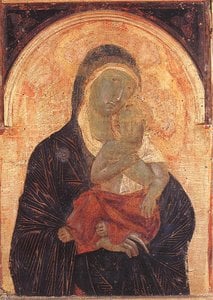
Initialt djupt rotad i den Italo-byskytinska stilen som rådde i Florens, präglades Cimabues tidiga verk av strikta etablerade principer: flattade figurer dekorerade med skimrande guldblad, symboliska snarare än realistiska representationer av utrymme och en djupgående fokus på religiösa ikoner. Men även inom dessa begränsningar började en nyfikenhet på naturalism att växa fram. Han var inte nöjd med att bara kopiera befintliga former; han sökte att infusa sina målningar med en större känsla av liv och emotionell djup. Den exakta karaktären av hans tidiga utbildning är fortfarande debatterad, men det är troligt att han finslipade sina färdigheter i florentinska verkstäder, absorberade teknikerna och influenserna från tiden samtidigt som han utvecklade sin egen unika konstnärliga röst. Den bysantinska stilen, präglad av formellt och andligt fokus, gav honom en solid grund, men Cimabue började subtilt att introducera element som skulle förutse renässansens framstormning – större uppmärksamhet på volym, mer uttrycksfulla ansiktsdrag och en nyfikenhet på rumsliga relationer. Detta var inte en plötslig brytning med traditionen, utan snarare en gradvis utveckling, en delikat balans mellan att hedra det förflutna och att omfamna nya möjligheter.
Major Works and Artistic Innovations
Cimabues arv är fastställt genom en rad fantastiska verk som visar hans utvecklande stil. *Maestà* (Louvre), ursprungligen skapad för kyrkan San Francesco i Pisa, står som ett av hans mest berömda mästerverk. Denna monumentala altarepränt exemplifierar hans behärskning av komposition och användning av färg, samtidigt som den antyder en flytt från strikta bysantinska konventioner. Figurerna, även om de fortfarande bär på en viss formellhet, uppvisar en nyfunnen känsla av volym och närvaro. *Kristus på korset* (San Domenico, Arezzo), daterad omkring 1270, är särskilt betydelsefull som ett tidigt exempel på hans avvikelse från strikta bysantinska normer. Här är proportionerna mer realistiska, och scenens emotionella tyngd är uppenbar – en markant kontrast till de ofta avlägsna representationerna som fanns i tidigare religiös konst. Vidare bevis på Cimabues innovativa anda kan ses i verk som *Kristus förkunnelsen* (Frick Collection), vanligtvis tillskrivet hans verkstad. Denna komplexa komposition visar en utvecklad förståelse för perspektiv och rumsliga relationer, vilket framhäver ett växande intresse för att skapa mer immersiva och trovärdiga scener. Hans bidrag var inte begränsade till panelmålningar; Cimabue utmärkte sig också som mosaikist, och bidrog betydelsefullt till dekorationen av Florens Baptisterium – även om dessa mosaiker tyvärr har lidit av nedbrytning över tid.
A Pivotal Teacher: Giotto and Beyond
Kanske Cimabues mest bestående arv ligger i hans roll som lärare för Giotto di Bondone. Även om historiska berättelser varierar kring den exakta karaktären av deras relation, är det allmänt accepterat att Giotto fick avgörande träning under Cimabue’s vägledning. Trots att historiska beräkningar har visat sig vara felaktiga, så kan man säga att Cimabue var en mästare som inspirerade och formade den framtida generationen av italienska konstnärer. Han utmanade de konstnärliga normerna i sin tid, och visade att konsten kunde vara mer än bara religiös symbolik; den kunde också återspegla mänskliga känslor och erfarenheter. Hans vilja att experimentera med form, proportioner och uttryck lade grunden för renässansens innovationer, och etablerade honom som en kritisk övergångsfigur i västerländsk konsthistoria.
Historical Significance
Cimabue dog 1302 i Pisa, lämnande efter sig ett verk som fortfarande fångar och inspirerar. Trots sina betydande bidrag är detaljerna kring hans senare liv svårt att få tag på. Men hans konstnärliga arv resonerar kraftfullt genom sina elever och utvecklingen av italiensk konst. Han representerar ett kritiskt steg i utvecklingen av västerländsk målning, som flyttar sig från de stiliserade konventionerna i den bysantinska eran mot en mer mänsklig och naturalistisk approach. Hans målningar är inte bara historiska artefakter; de är fönster in i en kritisk punkt i konsthistorien – en tid då konstnärer började ifrågasätta etablerade normer och utforska nya möjligheter. Han var en pionjär, en visionär som vågade utmana det rådande, och lade grunden för den konstnärliga briljans som skulle definiera renässansen. **Cimabue’s verk påminner oss om att även inom tradition finns alltid utrymme för innovation, och att sann konstnärlighet ligger i modet att bryta gränserna och utforska nya horisonter.**



 Förhandsvisa
 Beställ handmålad reproduktion
 Skicka
 Dela
Dela
 Visa detaljer

 Ladda ner
 Liknande objekt
 Röntgen
 Bildspel
 Stats
Stats

 Visa mer






































 Glasalternativet är endast tillgängligt i storlekar under 110 cm.