


Giclée- eller canvasprint av museumskvalitet med snabb produktion och flexibla ytbehandlingsalternativ. ( Beställ handmålad reproduktion Byt till digital bild)





























Välj bland våra förinställda storlekar som motsvarar konstverkets ursprungliga proportioner.

Ange den bredd och höjd du behöver för att passa din ram eller vägg. Ett tryck kan endast beskäras, aldrig göras större än originalbilden, vilket innebär att ett format med en annan proportion leder till att en del av bilden går förlorad. Vi skickar en digital mockup för godkännande innan vi påbörjar tryckningen. Bilden som visas på denna sida visar inte den faktiska beskärningen — det är endast mockuppen som gör det.
Leverans över hela världen () på 2 veckor istället för standard 4/5 veckor. (8 november)
Angels Pity
Storlek på reproduktion
In the quiet, hallowed atmosphere of the Early Renaissance, few works capture the intersection of human sorrow and divine grace as poignantly as Carlo Crivelli’s "Angels Pity." Painted in 1470, this masterpiece serves as a profound meditation on tenderness and spiritual devotion. The scene unfolds with an intimate warmth, presenting Jesus cradling two children within his arms—a gesture that transcends mere historical depiction to become a universal symbol of protection and innocence. Surrounded by a celestial assembly of angels and watchful figures, the composition draws the viewer into a sacred circle of empathy. Even the subtle presence of a solitary bird in the upper corner acts as a silent witness, lending an air of tranquility to a moment heavy with emotional significance.
The artistry of Crivelli is on full display through his masterful command of color and light. Utilizing soft, luminous hues and delicate brushstrokes, the artist creates a sense of palpable intimacy that makes the divine feel reachable. The painting is a triumph of the Early Renaissance style, where every detail is rendered with an almost obsessive realism. Crivelli’s technique involves the meticulous application of oil glazes on wood panel, building layers of color to achieve a radiant depth. This method allows light to appear as if it is emanating from within the figures themselves, highlighting the soft textures of skin and the intricate folds of drapery, thereby inviting the observer to linger on the subtle nuances of the composition.
Beyond its visual splendor, "Angels Pity" is a rich tapestry of Christian iconography designed to provoke deep reflection. The arrangement of the figures within an arched niche creates a sense of sacred enclosure, separating the holy event from the mundane world. Every element serves a symbolic purpose: the tender way Jesus holds the children reflects the theological concept of divine mercy, while the surrounding angels represent the bridge between heaven and earth. Crivelli’s use of trompe l'oeil—a technique intended to trick the eye into perceiving three-dimensional reality—adds a layer of tactile presence to the work, making the spiritual themes feel grounded in a tangible, physical reality.
For the discerning collector or interior designer, this painting offers more than mere decoration; it provides an emotional anchor for any space. The somber yet serene mood makes it an ideal centerpiece for rooms dedicated to contemplation, study, or quiet luxury. Whether one is drawn to its historical significance as a product of the Venetian-influenced March of Ancona or moved by its profound expression of compassion, "Angels Pity" remains a timeless testament to the power of art to evoke the sublime. Owning a high-quality reproduction of this work allows for the preservation of this Renaissance spirit, bringing a sense of historical weight and aesthetic harmony into the modern home.
"Angels Pity" av Carlo Crivelli kan förhandsvisas på din egen vägg via konstverkets Förhandsvisning i AR-sida med hjälp av förstärkt verklighet (AR) på en kompatibel enhet.
Hitta verk som liknar "Angels Pity" på verkets sida Liknande verk.
"Angels Pity" av Carlo Crivelli härstammar från Renaissance-perioden, vilket ger verket dess historiska sammanhang.

Den italienske renässansmålaren Carlo Crivelli föddes i Venedig omkring 1430–35. Han kom från en familj av konstnärer och fick sin konstnärliga skolning i både Venedig och Padua. Det antas att Crivellis tidiga utbildning skedde under Jacobello del Fiore, som fortfarande var verksam år 1436, och han studerade även vid Vivarini-skolan i Venedig.
Crivelli tillbringade sina tidiga år i Veneto-regionen, där han sög åt sig influenser från mästare som Vivarini, Squarcione och Mantegna. År 1458 lämnade han dock Veneto och tillbringade större delen av sin karriär i Marche-regionen kring Ancona. Här utvecklade han en särpräglad personlig stil som står i skarp kontrast till den hos hans venetianska samtida, Giovanni Bellini. Crivellis verk kännetecknas av en konservativ, sengotisk dekorativ känsla, präglad av en linjär kvalitet, en närmast besatt uppmärksamhet på detaljer och ett skickligt användande av "trompe l'oeil"-tekniker som lurar ögat.
* Carlo Crivellis målning "Madonna och barnet på tronen" (106 x 55 cm, Museum of Fine Arts, Budapest, Ungern) är ett enastående exempel på hans stil. * Han samarbetade med sin yngre bror Vittorio Crivelli i flera projekt. * Pietro Alemanno, en målare som emigrerade till Marche-regionen från Tyskland/Österrike, var både hans elev och samarbetspartner.
* Pinacoteca di Brera i Milano, Italien, rymmer flera av Crivellis verk, däribland "Pietà" (128 x 241 cm). * Museo San Giovanni in Bragora i Venedig, Italien, besitter en samling konstverk från olika perioder och stilar, inklusive verk som tillskrivs Crivelli.
Crivellis arv fortsätter att inspirera både konstentusiaster och forskare, och hans arbete förblir ett vittnesbörd om den bestående kraften i en konservativ, sengotisk dekorativ estetik.

1435 - 1495 , Italien

Discover the enduring legacy of oil on board painting. Explore how historical techniques, rich impasto textures, and structural durability create timeless masterpieces that bridge Renaissance grandeur with modern art collecting excellence.

Discover the profound allure of oil on canvas. Explore the mastery of impasto textures, the science of pigment longevity, and expert guides to selecting museum-quality reproductions that elevate your collection with timeless elegance and tactile depth.

Discover the enduring allure of oil on canvas. Explore how master techniques like impasto and glazing create the depth, texture, and emotional resonance found in the world's greatest masterpieces. An essential guide for fine art enthusiasts and discerning collectors.

Discover the enduring allure of hand-painted oil reproductions. WahooArt offers museum-quality, archival masterpieces designed for discerning collectors seeking timeless beauty and a lasting legacy. Invest in fine art that transcends generations with our expert craftsmanship.
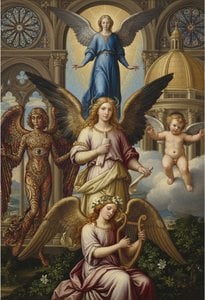
Explore the profound beauty of angelic figures in art history. From Renaissance masterpieces to celestial symbolism, our expert guide offers a sophisticated journey through the divine imagery of the Old Masters for discerning collectors and art enthusiasts.
 Förhandsvisa
 Skicka
 Dela
Dela
 Visa detaljer
 Guide
Guide

 Ladda ner
 Liknande objekt
 Röntgen
 Bildspel
 Frågor och svar
 Statistik

 Visa mer









 Glasalternativet är endast tillgängligt i storlekar under 110 cm.


