A Life Rooted in Observation: The World of Camille Pissarro
Camille Pissarro, ett namn synonymt med både födelsen och utvecklingen av impressionismen, var en konstnär vars liv speglade de föränderliga landskap han så ömtidigt fångade på duken. Född Jacob Abraham Camille Pissarro den 10 juli 1830 i Charlotte Amalie, St. Thomas – då en del av det danska Västindien, nu USA:s territorier – var hans ursprung lika mångfacetterat och levande som de scener som senare skulle definiera hans konstnärliga vision. Hans far, en portugisisk judisk handelsman med fransk nationalitet, och hans mor, från en fransk-judisk familj på ön, lade grunden för en unik kulturell bakgrund – en ovanlig uppväxt som präglades av familjehemligheter men också av en tidig känslighet för världen omkring honom, en kvalitet som skulle bli grundstenen i hans konstnärliga praktik. Hans initiala formella utbildning vid Savary Academy nära Paris gav honom en solid grund i traditionella tekniker, men det var hans återkomst till St. Thomas och efterföljande arbete som lastbilsförman som verkligen tände hans passion för observation. Hamnens livliga rörelse, den rika lokala befolkningen och de råa skönheterna i den karibiska landskapet blev hans första motiv, formande en blick skarpt inställd på de små detaljerna i vardagen.
From Realism to Revolution: Artistic Development
Pissarros konstnärliga resa var en ständig utforskning och förfining. Efter en period av assistans till den danska målaren Anton Melbye i Paris, djupt begåvade sig han i mästarnas verk som Gustave Courbet, Jean-Baptiste-Camille Corot och Honoré Daumier – konstnärer som förespråkade realism och samhällskommentarer. I början sökte han acceptans inom den etablerade konstvärlden genom att utställas på Salon de Paris, men snart kände han sig instängd av dess begränsningar. Ett avgörande ögonblick kom med hans omfamning av *plein air* -måla direkt utomhus i naturen – en praktik som uppmuntrades av Corot och som skulle bli central för impressionismen. Detta skifte var inte bara tekniskt; det representerade ett filosofiskt paradigmskift, en önskan att fånga ljusets flyktiga effekter och atmosfären snarare än en exakt representation. Han började experimentera med mer lösa penseldrag och ljusare färger, bort från akademiska konventioner mot en mer subjektiv och uttrycksfull stil. Hans tidiga landskap, fortfarande grundade i realism, antydde den revolutionära väg han var på väg att vandra. Denna period präglades av ett ständigt sökande efter sin egen röst mitt i den konstnärliga virvelvind som rådde i Paris – en stad i ständig förändring som erbjöd oändligt med inspiration.
The Father Figure of Impressionism
Camille Pissarro var inte bara *en* impressionist; han var snarare dess mest konsekventa och förenande kraft. Unikt deltog han i alla åtta Paris Impressionistutställningar mellan 1874 och 1886, agerade som en stabiliserande kraft inom en grupp ofta präglad av interna konflikter och individuella ambitioner. Han var inte bara närvarande – han uppmuntrade aktivt sina kollegor, erbjöd stöd, vägledning och en välbehövlig känsla av gemenskap. Detta vann honom den älskade benämningen ”fadern” för rörelsen. Hans engagemang för konstfrihet och innovation var obönhörligt, även inför kritisk hån och allmän ointresse. Han trodde på kraften i kollektiv handling och förespråkade idén om att konstnärer utställde oberoende av Salons restriktiva regler. Utöver sin egen konst hade Pissarros inflytande en yngre generation av konstnärer, inklusive Paul Cézanne, Vincent van Gogh och Paul Gauguin, som han vägledde och djupt påverkade. Han gav dem inte bara tekniska råd utan också ett filosofiskt ramverk för sina konstnärliga utforskningar. Hans vilja att experimentera ledde honom till en kort period av Neo-Impressionism, influerad av Georges Seurats punktistiska teknik, innan han slutligen återvände till en mer personlig stil som blandade hans tidigare inflytanden med nya upptäckter.
Landscapes of Life: Themes and Legacy
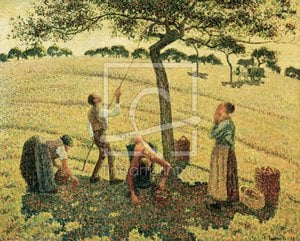
Pissarros konstnärliga produktion var otroligt mångsidig, men fokuserad på världen omkring honom. Han är berömd för sina skildringar av både landsbygds- och stadslandskap, ofta porträtterande scener från vardagen – bönder som arbetar i fälten, livliga paris gatans gator, tysta bykvarter. Hans målningar var inte bara pittoreska vyer; de var samhällskommentarer, återspeglande hans djupa empati för den arbetande klassen och hans engagemang för att porträttera deras liv med värdighet och respekt.
- Landskap: Känd för att fånga skönheten i både landsbygd och stadsliv.
- Scener från Paris liv: Livfulla porträtt av en snabbt föränderlig metropol.
- Böndeliv: Återspeglade hans sociala medvetenhet och empati för den arbetande klassen.
Hans senare verk, särskilt de skapade under politiska orostider eller personliga svårigheter, bär ofta en känsla av melankoli och samhällskritik. Pissarros arv sträcker sig bortom hans vackra målningar. Han var en förespråkare för konstfrihet, en mentor för generationer av konstnärer och en pionjär inom utvecklingen av modern konst. Hans engagemang för *plein air* -måla revolutionerade landskapskonsten, medan hans vilja att experimentera med olika stilar visade på hans intellektuella nyfikenhet och hans outtröttliga dedikation till sitt hantverk. Han är en hyllad figur vars bidrag fortsätter att studeras och uppskattas för sin bestående relevans.
Camille Pissarros konst är inte bara en skildring av världen som den var; det är ett testamente till kraften i observation, empati och konstnärlig innovation.



 Förhandsvisa
 Beställ handmålad reproduktion
 Skicka
 Dela
Dela
 Visa detaljer

 Ladda ner
 Liknande objekt
 Röntgen
 Bildspel
 Statistik

 Visa mer






































 Glasalternativet är endast tillgängligt i storlekar under 110 cm.