x
Beställ handmålad reproduktion Beställ handmålad reproduktionKöp högupplöst bild Köp högupplöst bild SkickaSkicka
Visa detaljerVisa detaljer Lägg till i favoriter Lägg till i favoriter Ladda nerLadda ner Liknande objektLiknande objekt BildspelBildspel

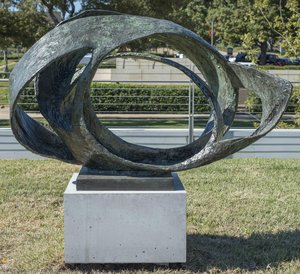
Shaft and Circle

Admire Barbara Hepworth's iconic 'Shaft and Circle' sculpture – a striking abstract form embodying balance & harmony through clean lines and organic shapes, reflecting modernist principles.

Utforska den moderna skulpturen av Dame Barbara Hepworth (1903–1975). En pionjär inom abstrakt konst, Hepworths verk – inklusive 'Oval Form' & 'Two Forms' – blandar surrealism och abstraktion. Upptäck hennes arv på Hepworth Wakefield.

Giclée / Konsttryck

Giclée- eller canvasprint av museumskvalitet med snabb produktion och flexibla ytbehandlingsalternativ. (Beställ handmålad reproduktion Beställ handmålad reproduktionKöp högupplöst bild Köp högupplöst bild)

Standardstorlek
skräddarsydd
CM
INCH

Välj bland våra förinställda storlekar som motsvarar konstverkets ursprungliga proportioner.

bredd
höjd

Du kan ange egna mått för att passa en specifik ram eller yta. Om det valda måttet inte överensstämmer med originalbildens proportioner kommer vi antingen att beskära konstverket eller utöka bilden med en speglad eller enfärgad kant. En digital mockup skickas för ditt godkännande innan produktionen påbörjas.
Vänligen notera att förhandsvisningen på skärmen inte återspeglar den faktiska beskärningen eller utökningen. Endast mockuppen visar den slutgiltiga kompositionen korrekt.
Även om anpassade storlekar är möjliga, rekommenderar vi att du väljer ett mått från den fördefinierade listan för att bevara de ursprungliga proportionerna.

Leverans över hela världen () på 2 veckor istället för standard 4/5 veckor. (5 september)

why_choose_icon
Fri expressfrakt över hela världen
why_choose_icon
Högkvalitativ linnecanvas
why_choose_icon
Fullständig fraktförsäkring
why_choose_icon
Garantier för återbetalning av tullavgifter
why_choose_icon
Garantier för exakt färgåtergivning
why_choose_icon
60 dagars returrätt (endast vid fabrikationsfel)
why_choose_icon
100% pengarna tillbaka-garanti
why_choose_icon
Mängdrabatt erbjuds

Totalpris

$ 68

reproduction

Shaft and Circle

Giclée / Konsttryck

Storlek på reproduktion

-

Slutgiltigt pris

$ 68

Snabbfakta

  • Movement: Modernism
  • Influences:
    • Surrealism
    • Abstraction
  • Subject or theme: Balance, Harmony
  • Notable elements: Circular opening, shaft form
  • Location: Google Arts & Culture
  • Year: 1972
  • Artistic style: Abstract, Geometric

Konstquiz

Det finns endast ett korrekt svar på varje fråga.

Fråga 1:
What is the primary material used in Barbara Hepworth’s sculpture, ‘Shaft and Circle’?
Fråga 2:
The circular opening in 'Shaft and Circle' is most likely intended to represent:
Fråga 3:
In what decade was ‘Shaft and Circle’ created?
Fråga 4:
Barbara Hepworth was a prominent figure in which art movement?
Fråga 5:
What is the background color of the photograph depicting ‘Shaft and Circle’?

A Vertical Echo: Barbara Hepworth’s “Shaft and Circle”

Barbara Hepworth's "Shaft and Circle," created in 1972, isn’t merely a sculpture; it’s an invitation to quiet contemplation. Standing before this arresting form – a towering shaft of polished concrete punctuated by a perfectly circular aperture – is akin to entering a sacred space. The piece immediately commands attention with its stark simplicity and the profound sense of upward movement it evokes. Hepworth, a pivotal figure in 20th-century British sculpture, masterfully distilled her signature style into this work: an exploration of form’s inherent qualities, divorced from representational concerns. It's a testament to her belief that sculpture could be experienced not just visually, but through touch and the subtle shifts in light and shadow.

The material itself – likely cast concrete, though Hepworth often worked with stone as well – is treated with an almost reverent attention. The surface is flawlessly smooth, reflecting the surrounding environment while simultaneously maintaining a sense of contained solidity. This deliberate contrast between smoothness and mass speaks to the core of Hepworth’s philosophy: she sought to capture the essence of materials themselves, revealing their inherent textures and geometries. The scale of the sculpture – approximately six feet tall – further amplifies this effect, drawing the viewer upwards into its embrace.

Roots in Epirus and Mycenaean Tradition

To fully appreciate “Shaft and Circle,” it’s crucial to understand Hepworth's artistic lineage. Her early influences stemmed from her travels through Italy and Greece, particularly a deep immersion in the archaeological sites of Mycenae. The shaft tomb tradition prevalent in Bronze Age Greece – elaborate burial chambers dug vertically into the earth, often containing grave goods – provided a foundational inspiration for her work. These tombs, built by elite societies, weren’t simply markers of death; they were statements of power and belief, reflecting a complex cosmology centered around ancestry and the afterlife. Hepworth's sculpture echoes this spirit, suggesting an upward journey towards something beyond the material world.

Interestingly, similar shaft tombs have been found in Bronze Age China, demonstrating a surprisingly widespread cultural practice across Eurasia. This shared heritage underscores the universal human impulse to create enduring monuments and explore questions of mortality and transcendence. Hepworth’s work can be seen as a contemporary reimagining of these ancient traditions, translated into the language of abstract form.

The Language of Form: Circularity and Verticality

The composition of “Shaft and Circle” is meticulously balanced between two fundamental principles: verticality and circularity. The shaft itself rises directly upwards, creating a powerful sense of momentum and aspiration. This upward thrust is counterbalanced by the perfectly formed circle cut into its midsection – an element that introduces ambiguity and invites interpretation. The circle can be seen as representing wholeness, continuity, or perhaps even a portal to another dimension. It’s a subtle yet potent symbol that adds layers of meaning to the sculpture's overall impact.

Hepworth was deeply interested in exploring the relationship between form and space. She believed that sculpture should not simply occupy physical space but also create an emotional resonance within the viewer. “Shaft and Circle” achieves this beautifully, prompting a sense of stillness and introspection. The negative space created by the circular aperture is just as important as the solid mass of the shaft itself, contributing to the sculpture’s dynamic balance.

A Legacy of Minimalism and Emotional Resonance

“Shaft and Circle” exemplifies Hepworth's commitment to minimalism and her profound understanding of materials. It’s a work that rewards careful observation and invites repeated contemplation. Her sculptures, often described as “non-objective,” are nonetheless deeply expressive, communicating complex ideas about form, space, and the human condition. Today, "Shaft and Circle" remains a powerful testament to Hepworth's artistic vision – a timeless exploration of fundamental geometric principles and their capacity to evoke profound emotional responses.


Konstnärsbiografi

Barbara Hepworth: Pioneer of Abstract Sculpture

Barbara Hepworth (1903–1975) stands as one of the most influential figures in twentieth-century British art, recognized for her groundbreaking contributions to modern sculpture and her unwavering dedication to exploring the relationship between form and space. Born Jocelyn Barbara Hepworth in Wakefield, Yorkshire, she possessed an innate fascination with natural forms—particularly pebbles and seashells—which would profoundly shape her artistic vision throughout her prolific career. Her formative years were marked by a deep connection to the rugged landscape of West Yorkshire, fostering a sensitivity for texture and materiality that would become central to her sculptural practice.
  • Early Influences: Hepworth’s artistic journey began with studies at Leeds School of Art in 1920, where she encountered Henry Moore, establishing a collaborative spirit that would endure throughout their lives. This formative period instilled in her an appreciation for geometric abstraction and the exploration of fundamental visual principles.
  • Royal College of Art & Surrealism: Continuing her education at the Royal College of Art from 1921 until she graduated in 1924, Hepworth embraced the burgeoning avant-garde movement of Surrealism, collaborating with Ben Nicholson and Paul Nash. This exposure to surrealist ideas fueled her experimentation with unconventional materials and techniques.

The Unit One Movement & Early Sculptural Innovations

Hepworth’s artistic breakthrough arrived in 1933 with the formation of Unit One, alongside Nicholson, Nash, and others—a collective dedicated to uniting Surrealism and abstraction. This movement championed a radical departure from representational art, prioritizing pure form and exploring its inherent dynamism. Hepworth's early sculptures – notably *Oval Form* (Trezion) – exemplify this aesthetic ethos, characterized by smooth surfaces and subtly curving shapes that defy easy categorization.
  • Material Exploration: Hepworth’s mastery lay in her ability to transform raw materials—primarily stone and bronze—into evocative forms. She meticulously honed her craft, mastering techniques of carving and casting to achieve unparalleled precision and expressive power.
  • Influence of Moore & Nicholson: Hepworth's artistic dialogue with Henry Moore and Ben Nicholson proved invaluable in shaping her aesthetic sensibilities. Their shared commitment to exploring the interplay between organic and geometric forms propelled her creative endeavors forward.

Mature Style & Monumental Commissions

Throughout the 1940s and 1950s, Hepworth’s sculptural output intensified, reflecting a deepening engagement with both landscape and human figure. Her distinctive style—characterized by concentric circles and voids—became synonymous with modern sculpture.
  • Landscape as Inspiration: Hepworth drew inspiration from the Yorkshire countryside, translating its contours and textures into monumental sculptures that captured the essence of natural forms. Pieces like *Two Forms* and *Totem* stand as testament to her ability to convey profound emotional resonance.
  • Public Recognition & Legacy: Hepworth’s work garnered international acclaim, securing prestigious commissions—including Winged Figure for John Lewis—and cementing her place among the foremost sculptors of her time. Her enduring influence continues to inspire artists today.

The Hepworth Wakefield & Continuing Artistic Exploration

Today, Barbara Hepworth’s legacy resides prominently at The Hepworth Wakefield, where a comprehensive collection showcases her oeuvre—spanning from early explorations of abstraction to monumental sculptures that redefine the boundaries of artistic expression.
  • A Singular Vision: Hepworth's unwavering dedication to exploring form and space—coupled with her profound sensitivity for materials—established her as an unparalleled innovator in modern sculpture. Her work remains a beacon of creativity, inviting viewers to contemplate the fundamental questions of art and existence.
Barbara Hepworth

Barbara Hepworth

1903 - 1975 , Storbritannien

Kortfakta

  • Artistic Movement Or Style: Modernism
  • Artists Or Movements Influenced By This Artist: ['Abstraction']
  • Artists Who Influenced This Artist: ['Henry Moore']
  • Date Of Birth: 10 januari 1903
  • Full Name: Barbara Hepworth
  • Nationality: Brittisk
  • Notable Artworks:
    • Oval Form
    • Two Forms
    • Totem
  • Place Of Birth: Wakefield, England
Utforska konstverk sorterade efter tema, stil och egenskaper.