


Få en utskriftsfärdig fil som vida överträffar webbförhandsvisningen. Varje digital bild vi säljer kommer från en högupplöst master i vår bilddatabas – vanligtvis mellan 5 000 och 15 000 pixlar bred – så att du med trygghet kan göra stora utskrifter, beskära tätt eller återge fina detaljer.
Ingen fil lämnar vår studio utan att ha bearbetats. En digital expert kontrollerar färgerna mot originalmålningen och korrigerar dem vid behov, för att sedan förbättra skärpa och detaljrikedom med professionella retuscheringsverktyg — alltid med full respekt för konstnärens penseldrag och stil. Resultatet är en bild som ser ut som målningen, inte som en filtrerad skanning.
Du godkänner innan arbetet slutförs: vår expert skickar bilden via e-post inom 72 timmar för din granskning. Inte nöjd? Be om förbättringar eller korrigeringar, eller begär återbetalning om kvaliteten inte lever upp till förväntningarna.
Detta är den kvalitet som förlag, designstudior, gallerier och tryckerier litar på.
Ladda ner en högupplöst fil för personlig visning, utskrift och kreativa projekt. ( Byt till tryck Beställ handmålad reproduktion)
När du väljer WahooArt.com får du inte bara en bild – du får ett professionellt förädlat digitalt konstverk, skapat med precision och med en garanterad tillfredsställelse. Här är allt som ingår i din beställning, automatiskt:
Din högupplösta digitala bild skickas till dig via e-post inom 72 timmar efter beställning – redo för omedelbar användning.
Ditt konstverk optimeras professionellt med hjälp av avancerade AI-verktyg och manuell redigering, vilket garanterar maximal detaljrikedom, skärpa och färgnoggrannhet.
Har du råkat radera eller tappa bort din fil? Ingen oro – vi skickar den kostnadsfritt till dig när som helst.
Njut av ditt konstverk omedelbart utan tull, importavgifter eller leveranskostnader – digitala nedladdningar är alltid skattefria.
Vi säkerställer att din digitala bild återger de ursprungliga färgerna så exakt som möjligt med hjälp av professionella verktyg och färghantering.
Om du inte är nöjd med din digitala bild kommer vi att revidera den eller återbetala 100% inom 100 dagar – utan frågor.
Inte nöjd? Få full återbetalning inom 100 dagar efter att du mottagit din digitala fil – utan frågor.
Köp 3 bilder, spara 10% – Köp 5, spara 15% – Köp 10+, spara 20%. Perfekt för kreativa projekt, gallerier och byråer.
Augustus Edwin John’s “David and Caspar,” painted in 1912, isn't merely a portrait; it’s a carefully constructed tableau of youthful camaraderie and profound introspection. The canvas immediately draws the viewer into a quiet, sun-drenched meadow, dominated by two figures – a young boy, identified as David, and a slightly older youth, Caspar – standing in relaxed contemplation. Their postures are remarkably naturalistic, suggesting an easy familiarity born from shared experience and mutual respect. John masterfully captures the fleeting expressions of their faces, hinting at unspoken thoughts and a deep connection that transcends mere friendship. The scene is imbued with a palpable sense of serenity, yet beneath this surface tranquility lies a subtle current of melancholy, reflecting perhaps the transient nature of youth and beauty.
John’s style during this period leaned heavily into Post-Impressionism, characterized by bold brushstrokes, vibrant color palettes, and an emphasis on capturing subjective experience rather than photographic realism. He eschewed meticulous detail in favor of conveying mood and atmosphere. Notice the loose application of paint, particularly in the rendering of the sky – a wash of blues and purples that evokes both warmth and a hint of foreboding. The figures themselves are painted with a slightly flattened perspective, contributing to the overall sense of intimacy and immediacy. The choice of medium—oil on panel—allowed John to build up layers of color and texture, creating a rich and luminous surface.
The pairing of “David” and “Caspar” is deliberately evocative, immediately conjuring associations with the biblical story of David and Jonathan. While not a direct illustration of that famous tale, John clearly intended to tap into its powerful themes of loyalty, brotherhood, and sacrifice. The names themselves—David, after the shepherd king, and Caspar, referencing the biblical figure known for his wisdom—suggest a deliberate layering of symbolism. Furthermore, the painting resonates with the spirit of Romanticism, a movement that prized emotion, individualism, and the sublime beauty of nature. The meadow setting, bathed in golden light, embodies this ideal – a space of tranquility and spiritual reflection.
The inclusion of Caspar adds an intriguing layer to the composition. He’s not simply a companion; he possesses a certain gravitas, a quiet intensity that contrasts with David's youthful exuberance. Some art historians have suggested that Caspar represents the older generation, offering guidance and wisdom to the younger boy. The subtle shift in gaze between the two figures—David looking slightly upwards, as if contemplating something beyond the immediate scene—further reinforces this interpretation. The painting invites us to ponder the complexities of human relationships and the enduring power of youthful bonds.
Augustus Edwin John was a complex and often enigmatic figure, known for his bohemian lifestyle and unconventional artistic practices. Born in Wales, he spent much of his life traveling throughout Europe, immersing himself in diverse cultures and artistic traditions. His work is deeply personal, reflecting his own experiences and emotions. “David and Caspar” offers a glimpse into this world—a world of passionate friendships, spiritual quests, and a profound appreciation for the beauty of the natural world. The painting’s enduring appeal lies not only in its technical skill but also in its ability to evoke a sense of nostalgia and wonder.
Further research reveals that John was particularly fascinated by the Romani people, whom he often depicted in his paintings. His interest in their culture led him to travel extensively throughout Europe, documenting their lives and customs. The painting’s composition—with its emphasis on natural light and simple forms—can be seen as a reflection of this fascination with the beauty of everyday life. The inclusion of Caspar, a figure who appears to be of Romani descent, adds another layer of complexity to the painting's symbolism.
Useful Links:
Augustus Edwin Johns återkommande teman inkluderar influenced by friedrich, john, romanticism, brotherhood, friendship, wales, bohemian life, travel; "David and Caspar" fokuserar på david, caspar, portrait, cowboy, landscape, victorian, brotherhood.
De Earthy färgerna i "David and Caspar" av Augustus Edwin John harmonierar med det rekommenderade rummet: ett Living Room.
"David and Caspar" av Augustus Edwin John har ett Portrait-format. Formatet beskriver kompositionens proportioner.

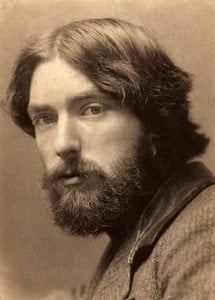
1878 - 1961 , Wales
 Förhandsvisa
 Skicka
 Dela
Dela
 Visa detaljer
 Guide
Guide

 Ladda ner
 Liknande objekt
 Röntgen
 Bildspel
 Frågor och svar
 Statistik


 Visa mer


