Om konstnären
A Renaissance Forged in Antiquity: The Life and Art of Andrea Mantegna
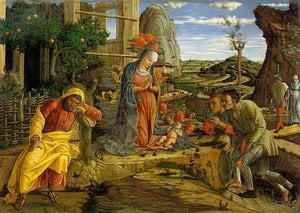
Andrea Mantegna, född omkring 1431 i Isola di Carturo nära Padua, representerar en fascinerande brygga mellan den tidiga och högre renässansen. Hans konstnärliga resa var inte bara att enkelt anta klassiska former; det var en djupdykning i antiken, ett passionerat försök att återuppliva Romens anda inom den blomstrande italienska renässansen. Till skillnad från många av sina samtida som hämtade inspiration från klassiska modeller, besatt Mantegna en unik brinnande fascination för arkeologisk noggrannhet. Denna besatthet härröt från hans tidiga år under Francesco Squarcione, en målare och samlare vars verkstad fungerade mindre som ett traditionellt atelie och mer som en akademi dedikerad till studiet av romerska ruiner, skulpturer och inskriptioner. Det var inom dessa väggar, omgiven av fragment från ett förlorat imperium, att Mantegnas konstnärliga vision började ta form – en vision präglad av skulpturala former, dramatiskt perspektiv och en nästan besatt uppmärksamhet på detaljer. Hans tidiga liv förblir något grumligt; berättelser tyder på att han upptäcktes som en lovande lärling, hans inneboende talang erkänd och fostrad av Squarcione trots enkla början. Detta ovana början kan ha bidragit till Mantegnas obevekliga strävan efter konstnärlig mästare och hans bestämda vilja att forma en stil som var distinkt för honom själv.
The Gonzaga Court and the Illusion of Reality
Mantegnas karriär blomstrade verkligen när han ingick i tjänst hos Gonzaga-familjen i Mantua, där han blev hovmålare år 1488. Denna beskydd gav honom en aldrig tidigare skådad grad av konstnärlig frihet och en plattform att realisera sina mest ambitiösa projekt. Gonzaga var inte bara beskyddare; de var samarbetspartners, beställde verk som pressade gränserna för konstnärliga innovationer. Det var under denna period som Mantegna skapade vad som ärvisats som hans mästerverk: *Camera degli Sposi* (Brudkammaren) fresker i Palazzo Ducale. Detta banbrytande verk överskrider bara enkel dekoration; det är en komplett illusionistisk miljö, som sömlöst integrerar arkitektur och målning för att skapa en utvidgad känsla av rum. Freskerna skildrar scener från Gonzaga-familjens liv, porträtt som är otroligt livsliknande och engagerande, och ett betagande *di sotto in sù* (sett från under) takpanel som skapar illusionen av en öppen himmel. Denna mästarmässiga manipulation av perspektiv var inte bara ett uttryck för teknisk skicklighet; det handlade om att skapa en värld inom ett rum, suddar ut gränserna mellan verklighet och representation. Utöver *Camera degli Sposi* fortsatte Mantegna att producera verk av exceptionell kvalitet för Gonzaga-hovet, inklusive den monumentala serien *Triumphs of Caesar*. Dessa målningar, inspirerade av romerska triumfer, är inte bara historiska skildringar; de är komplexa allegorier som hyllar Gonzaga-familjens makt och prestige, presenterade med en prakt som rivalerar det antika imperiets ambitioner.
A Master of Perspective and Anatomical Precision
Mantegnas konstnärliga innovationer sträckte sig bortom illusionistiska miljöer. Han var pionjär inom användningen av perspektiv, ofta genom att använda tekniker som gick emot konventionella metoder för att uppnå dramatiska effekter. Ofta justerade han horisontlinjen, vilket skapade en känsla av monumentalitet och imponerande skala. Denna teknik, i kombination med hans noggranna uppmärksamhet på anatomi, gav hans figurer en otrolig vikt och närvaro. Han var inte nöjd med bara att representera den mänskliga kroppen; han dissekade den, studerade dess muskulatur och skildrade den med en precision som var revolutionerande för sin tid. Hans mätning av *trompe-l'oeil* – att skapa illusioner så övertygande att de lurar ögat – förstärkte detta ytterligare. Detta engagemang för anatomisk precision var inte bara ett uttryck för teknisk skicklighet; det återspeglar hans djupa engagemang med klassiska skulpturer och hans önskan att efterlikna den idealiserade formen av antiken. Han sökte inte bara att representera den mänskliga kroppen utan att fånga dess inneboende värdighet och kraft. Hans inflytande på efterföljande generationer konstnärer, inklusive Rafael och Michelangelo, är obestridligt, eftersom de byggde vidare på hans grunder inom perspektiv, anatomi och komposition.
Legacy and Enduring Influence
Andrea Mantegna dog i Mantua år 1506, lämnade efter sig ett arv som fortsätter att resonera hos konsthistoriker och entusiaster. Hans verk representerar en nyckelpunkt i konsthistoriens historia, som bryter ner barriären mellan den tidiga och högre renässansens stilar. Han var inte bara en imitator av klassiska former; han var en tolkare, anpassade antika motiv och tekniker för att skapa något helt nytt och unikt för honom själv. Hans uppmärksamhet på detaljer, hans mätning av perspektiv och hans djupa engagemang med antiken etablerade honom som en ledande figur under sin tid. *Mantegnas utforskning av klassiska teman hjälpte till att återuppliva intresset för antik konst och kultur*, vilket banade väg för de konstnärliga prestationerna i den högre renässansen. Hans inflytande kan ses i verk från många konstnärer, från Rafael's graciösa kompositioner till Michelangelos kraftfulla figurer. Idag är hans målningar utställda i stora museer runt om i världen, inklusive National Gallery i London och Pinacoteca di Brera i Milano, där de fortsätter att inspirera beundran och uppskattning.



 Visa i rummet
 Köp handmålat konstverk
 Skicka
 Dela
Dela
 Detaljer

 Ladda ner
 Liknande objekt
 Röntgen
 Bildspel
 Besökstatistik
 Läs mer






































 Glasalternativet är endast tillgängligt i storlekar under 110 cm.