FörhandsvisaFörhandsvisa Förhandsgranska i ARFörhandsgranska i AR Byt till tryck Byt till tryckBeställ handmålad reproduktion Beställ handmålad reproduktion SkickaSkicka
Visa detaljerVisa detaljer Lägg till i favoriter Lägg till i favoriter Ladda nerLadda ner Liknande objektLiknande objekt RöntgenRöntgen BildspelBildspel StatistikStatistik

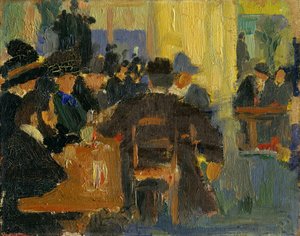
Study A

Discover 'Study A' by Amadeo de Souza-Cardoso (1913), a vibrant abstract masterpiece showcasing dynamic circles and bold colors from early Portuguese modernism.

Upptäck Amadeo de Souza-Cardoso (1887–1918), en pionjär inom portugisisk modern konst. Utforska hans vibranta, abstrakta kompositioner influerade av Kubism & Futurism och hans bestående konstnärliga arv.

Köp en högupplöst, förbättrad digital bild med betydligt högre kvalitet än förhandsvisningen online.

Varje fil är noggrant förberedd av våra interna specialister med hjälp av avancerade verktyg och professionell manuell retuschering. Vi säkerställer att varje bild har exceptionell skärpa, exakt färgåtergivning och fina detaljer.

Den slutgiltiga filen levereras via e-post inom 72 timmar, optimerad för omedelbar användning i professionella sammanhang, redaktionellt bruk och tryckmiljöer. Detta är samma kvalitet som med förtroende används av ledande designstudior, förlag och gallerier.

Digital bild

Ladda ner en högupplöst fil för personlig visning, utskrift och kreativa projekt. (Byt till tryck Byt till tryckBeställ handmålad reproduktion Beställ handmålad reproduktion)

Totalpris

$ 24,90

Ingår i varje beställning av digital bild

Professionell digital leverans, garanterad

När du väljer WahooArt.com får du inte bara en bild – du får ett professionellt förädlat digitalt konstverk, skapat med precision och med en garanterad tillfredsställelse. Här är allt som ingår i din beställning, automatiskt:

shipping_icon
Snabb leverans via e-post

Din högupplösta digitala bild skickas till dig via e-post inom 72 timmar efter beställning – redo för omedelbar användning.

canvas_icon
AI-förbättrad digital bild

Ditt konstverk optimeras professionellt med hjälp av avancerade AI-verktyg och manuell redigering, vilket garanterar maximal detaljrikedom, skärpa och färgnoggrannhet.

insurance_icon
Gratis livstidsåterutskick

Har du råkat radera eller tappa bort din fil? Ingen oro – vi skickar den kostnadsfritt till dig när som helst.

tax_icon
Inga importavgifter – någonsin

Njut av ditt konstverk omedelbart utan tull, importavgifter eller leveranskostnader – digitala nedladdningar är alltid skattefria.

color_icon
Garanterad färgåtergivning

Vi säkerställer att din digitala bild återger de ursprungliga färgerna så exakt som möjligt med hjälp av professionella verktyg och färghantering.

return_icon
100 dagars nöjdhetsgaranti

Om du inte är nöjd med din digitala bild kommer vi att revidera den eller återbetala 100% inom 100 dagar – utan frågor.

guarantee_icon
100% pengarna-tillbaka-garanti

Inte nöjd? Få full återbetalning inom 100 dagar efter att du mottagit din digitala fil – utan frågor.

discount_icon
Rabatt vid storköp

Köp 3 bilder, spara 10% – Köp 5, spara 15% – Köp 10+, spara 20%. Perfekt för kreativa projekt, gallerier och byråer.

Snabbfakta

  • Location: Private Collection
  • Movement: Modernism
  • Notable elements: Circles, dynamic forms
  • Medium: Oil on canvas
  • Year: 1913
  • Artistic style: Abstract
  • Dimensions: 46 x 61 cm

Konstquiz

Det finns endast ett korrekt svar på varje fråga.

Fråga 1:
What artistic movement is most closely associated with Amadeo de Souza-Cardoso’s ‘Study A’?
Fråga 2:
The painting 'Study A' prominently features which of the following shapes?
Fråga 3:
In what year was ‘Study A’ created, according to the provided information?
Fråga 4:
Amadeo de Souza-Cardoso was a key figure in which country’s early modern art movement?
Fråga 5:
The painting's color palette primarily consists of:

A Dance of Circles and Emotion: Unveiling Amadeo de Souza-Cardoso’s “Study A”

Amadeo de Souza-Cardoso's "Study A," painted in 1913, isn’t merely a composition of shapes; it’s a vibrant distillation of the artist’s embrace of early modernism and his deep connection to both Portuguese heritage and Parisian avant-garde influences. This captivating work, rendered in oil on canvas, immediately draws the eye with its dynamic interplay of circles – large, dominant forms that command attention alongside a constellation of smaller, intricately arranged shapes. It's a piece brimming with energy, hinting at a restless spirit and a profound engagement with the visual world.

Souza-Cardoso, born in 1887 in Manhufe, Portugal, was a pivotal figure in Portuguese modernism. His artistic journey began with architectural studies but swiftly pivoted to painting, fueled by an innate desire for expressive innovation. He spent formative years in Paris, immersing himself in the revolutionary currents of Cubism, Futurism, and the vibrant experimentation of movements like Orphism – all of which profoundly shaped his distinctive style. “Study A” stands as a testament to this influence; it’s a synthesis of these diverse sources, filtered through Souza-Cardoso's unique vision.

Decoding the Language of Form: Composition and Technique

The painting’s composition is deliberately unbalanced, creating a sense of controlled chaos. The central circle, a dominant presence, acts as an anchor, while surrounding it are a multitude of smaller circles – some overlapping, others positioned at sharp angles. This arrangement isn't random; it suggests a dynamic tension between order and disorder, stability and movement. Souza-Cardoso masterfully employs color to heighten this effect. Bold blues and reds dominate the palette, injecting an emotional intensity into the work. These colors aren’t blended smoothly; instead, they are applied with visible brushstrokes, adding texture and reinforcing the painting's sense of immediacy.

Souza-Cardoso’s technique is characterized by a loose, expressive application of paint – a hallmark of his engagement with modernism. He eschews meticulous detail in favor of capturing the essence of form and color. The brushwork itself becomes an integral part of the composition, contributing to the painting's overall dynamism. The use of layering and overlapping creates depth and visual interest, inviting the viewer to explore the intricate details within the larger design.

Symbolism and Emotional Resonance

While Souza-Cardoso himself offered little in the way of explicit interpretation, “Study A” resonates with themes of dynamism, transformation, and perhaps even a hint of anxiety. The circles themselves can be interpreted as representing cycles, movement, or interconnectedness – mirroring the artist’s own restless spirit and his fascination with the ever-changing nature of modern life. The bold colors evoke strong emotions: blue suggesting contemplation and depth, while red conveys passion and energy.

Considering Souza-Cardoso's background in caricature, it is not surprising that this work contains a sense of playful experimentation. It’s a visual puzzle, inviting the viewer to engage with its complexities and discover their own interpretations. “Study A” isn’t simply a painting; it’s an invitation to contemplate the beauty and complexity of the modern world.

A Legacy in Reproduction: Bringing "Study A" Home

Reproductions of “Study A” offer a remarkable opportunity to bring this captivating artwork into your home or office. High-quality reproductions capture the painting’s vibrant colors, dynamic composition, and expressive brushwork with stunning accuracy. Whether you choose a canvas print, an acrylic print, or a fine art paper reproduction, you'll be able to appreciate the artistry of Amadeo de Souza-Cardoso for years to come. Consider framing your chosen reproduction in a manner that complements its bold colors and dynamic composition – a simple black frame will allow the artwork to truly shine.


Konstnärsbiografi

Amadeo de Souza-Cardoso, A Pioneer of Portuguese Modernism: The Life and Art of Amadeo de Souza-Cardoso

Amadeo de Souza-Cardoso, a name resonating with the vibrant energy of early 20th-century modernism, remains a somewhat enigmatic figure despite his pivotal role in bridging Portuguese art to the international avant-garde. Born on November 14, 1887, in Manhufe, Portugal, his brief but intensely creative life was marked by a restless spirit and an unwavering dedication to artistic innovation. From humble beginnings rooted in the rural landscapes of his homeland, Souza-Cardoso embarked on a journey that would lead him to the heart of Parisian modernism, where he forged connections with some of the most influential artists of his time – Modigliani, Brancusi, Delaunay, and Gris among them. His early education began with architectural studies in Lisbon, but it was the allure of painting, particularly the expressive power of caricature, that truly captured his imagination and set him on a path toward artistic exploration. This initial foray into art wasn’t merely technical training; it was an awakening to the potential of visual language as a means of commentary and self-expression.
  • Early Life: Amadeo was born in Manhufe, Portugal, the son of José Emygdio de Souza-Cardoso, rural landowner and Emília Cândida Ferreira Cardoso. His maternal uncle, Francisco José Ferreira Lopes Cardoso, affectionately nicknamed “Uncle Chico”, supports him on his artistic vocation since he was young.
  • Parisian Encounters: In 1906, Souza-Cardoso relocated to Paris, immersing himself in the city’s thriving artistic milieu. Initially continuing his architectural pursuits, he soon gravitated towards painting, quickly absorbing the radical ideas that were reshaping the art world. The influence of Cubism and Futurism became increasingly apparent in his work around 1910, establishing him as one of Portugal's first true modern painters.
  • Artistic Style: Souza-Cardoso didn’t simply mimic these movements; he synthesized them with his own unique sensibility, creating a style characterized by bold forms, vibrant colors, and dynamic compositions. His paintings weren’t merely representations of reality but rather explorations of perception, emotion, and the very essence of form itself.
  • Cultural Synthesis: Souza Cardoso’s artistic journey wasn't a complete severance from his Portuguese roots. Despite embracing the avant-garde spirit of Paris, he maintained a strong connection to his homeland, frequently returning to Manhufe. This duality is reflected in his art, where themes and motifs drawn from Portuguese culture – religious processions, rural landscapes, folk traditions – are interwoven with modernist techniques.

Key Characteristics of Souza-Cardoso’s Work

  • Innovative Style: A pioneering approach to modern Portuguese art, blending Cubism, Futurism, and his own unique sensibility.
  • Vivid Color Palette: Characterized by aggressive and vibrant use of color, creating dynamic and emotionally resonant compositions.
  • Dynamic Composition: Often employing fragmented perspectives and seemingly chaotic arrangements that are, in fact, carefully balanced and structured.
  • Cultural Synthesis: A unique ability to reconcile Portuguese themes and motifs with modernist techniques, creating a dialogue between cultures.
  • Early Abstraction: Exploration of abstraction, particularly in his later works, pushing the boundaries of representational art.

Legacy and Remembrance: A Lasting Impact

Tragically, Amadeo de Souza-Cardoso’s promising career was cut short by his untimely death on October 25, 1918, at the age of just thirty. He succumbed to pneumonia during the Spanish Flu pandemic, leaving behind a relatively small but remarkably impactful body of work. For many years, his contributions were overlooked, overshadowed by more prominent figures in the modernist movement. However, in recent decades, there has been a growing recognition of his significance as a pioneer of Portuguese modernism and an important voice within the broader European avant-garde. Two major retrospectives – one in 1958 and another at the Grand Palais in Paris in 2016 – have helped to reintroduce his work to a wider audience, solidifying his place in art history. Today, his paintings can be found in museums around the world, including the Plymouth City Museum and Art Gallery, alongside works by other notable artists. His legacy continues to inspire contemporary artists, serving as a reminder of the power of artistic innovation and the enduring importance of cultural exchange.

Useful Links

  • Wikipedia: This article includes a list of...
  • Swedish Wikipedia: Amadeo de Souza-Cardoso, född 14 november 1887 in Amarante – död 25 oktober 1918 in Espinho, var en portugisisk målare, en pionjär inom modern konst.

Additional Information

  • Souza Cardoso’s paintings can be found in museums around the world.
Amadeo de Souza-Cardoso

Amadeo de Souza-Cardoso

1887 - 1918 , Portugal

Snabbfakta

  • Artistic Movement Or Style: Modernism; Cubism; Futurism
  • Artists Or Movements Influenced By This Artist:
    • Cubism
    • Futurism
  • Artists Who Influenced This Artist:
    • Modigliani
    • Brancusi
    • Delaunay
    • Gris
  • Date Of Birth: 14 november 1887
  • Date Of Death: 25 oktober 1918
  • Full Name: Amadeo de Souza-Cardoso Ferreira
  • Nationality: Portugisisk
  • Notable Artworks:
    • Saut du Lapin
    • Cabeça
  • Place Of Birth: Manhufe, Portugal