

Umelecké dielo zobrazené na tejto stránke je chránené autorským zákonom, čo znamená, že nemôžeme legálne vytvárať ani predávať jeho identickú reprodukciu. Táto ochrana je vymáhaná na základe medzinárodných dohôd, ako napríklad Bernská konvencia a národnými zákonmi, vrátane tých, ktoré sú stanovené v Autorské právo USA – Title 17. Všetky práva vyhradené.
Táto metóda plne dodržiava autorské práva, pretože nezahŕňa kopírovanie ani duplikovanie chráneného diela. Ide skôr o kreatívnu reinterpretáciu – nový obraz, ktorý je ovplybnený originálom, no nie je s ním identický.
Giclée tlač alebo plátno múzeálnej kvality s rýchlou výrobou a rôznymi možnosťami povrchovej úpravy. ( Kúpiť ručne maľovaný obraz Prepnúť na digitálny obraz)
Vyberte si z našich preddefinovaných rozmerov, ktoré zodpovedajú pôvodným pomeroḿ diela.

Zadajte šírku a výšku, ktoré potrebujete, aby sa reprodukcia hodila k vášmu rámu alebo stene. Print možno len orezávať, nikdy však nemennú veľkosť zvětšiť oproti pôvodnému obrázku, preto pri inom formáte stráca časť obrazu. Pred samotným vytlačiacím procesom vám pošleme digitálny náhľad na schválenie. Obrázok zobrazený na tejto stránke nezobrazuje reálny rez — len digitálny náhľad ukazuje presný výsledok.
Celosvetová doprava () do 2 týždňov namiesto štandardných 4 až 5 týždňov. (11 november)
Untitled
Veľkosť reprodukcie

Born in São Paulo in 1986, Thiago Mundano began finding his voice through street art in the early 2000s. His early work was marked by a directness that sought to engage with the city's public spaces and its political realities. One of his first notable moments of friction with authority occurred in 2007, when he painted graffiti on the legislative assembly plaque located in Ibirap_uera Park. This concrete block, usually a plain grey, became a site of quiet struggle; as the São Paulo prefeitura repainted the block grey to cover his work, Mundano returned to repaint it again. This cycle of painting and covering repeated twenty-five times, turning a simple piece of urban infrastructure into a persistent dialogue about visibility.
His approach to art has always been closely tied to the people who inhabit the margins of Brazilian society. In 2012, he started the Pimp My Carroca movement, an initiative that brought artists together to decorate the carts used by Brazilian trash collectors. By applying art to these working tools, he sought to improve the visibility and working conditions of those often overlooked in the urban landscape.
Mundano's work frequently moves beyond simple graffiti to address deep-seated social and environmental wounds. In São Paulo, he created the mural Workers of Brumadinho, a piece that acts as a memorial to the 270 miners who lost their lives during the dam burst in Minas Gerais. Through this work, the tragedy of the disaster is brought into the public eye, ensuring the loss is not forgotten by the city.
The artist also uses the very elements of environmental crisis to create his imagery. In 2021, he produced a large-scale mural titled The Forest Brigade, covering 1000 square metres in São Paulo. To make this work, he used ash collected from fires in the Amazon rainforest. This choice of medium allowed him to use the physical remains of deforestation to draw attention to the destruction of the forest. His practice demonstrates a commitment to using art as a way to confront the reality of ecological change.
Some of his notable works and movements include:

1986 - , Brazil

Elevate your hospitality projects with our expert trend forecast on luxury murals. From biophilic botanical jungles to opulent gold leaf geometry, discover how bespoke large-scale wall art and custom frescoes can transform hotel interiors into unforgettable architectural statements.
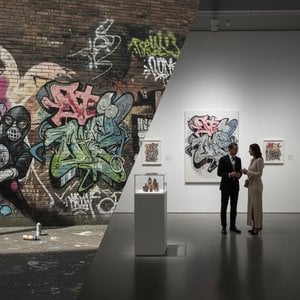
Explore the captivating journey of street art from urban walls to prestigious galleries. Discover how contemporary graffiti has evolved into a high-end collectible movement, redefining modern interior design and global art culture.
 Náhľad v interiéri
 Odoslať ako digitálnu kartu
 Zdieľať
 Podrobnosti o dielo
 Príručka

 Stiahnuť obraz
 Podobné položky
 RTG skúška
 Prehliadanie diapozoje
 Otázky a odpovede
 Štatistiky


 Zobraziť viac






































 Možnosť skla je dostupná len pri rozmeroch pod 110 cm


