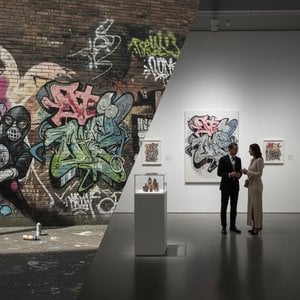
The Dreamweavers: Exploring the Surreal World of Otavio and Gustavo Pandolfo
Otavio and Gustavo Pandolfo, collectively known as OSGEMEOS – “the twins” in Portuguese – represent a singular force within contemporary street art. Born in São Paulo, Brazil, in 1974, these identical brothers have spent decades transforming urban landscapes with their vibrant, dreamlike murals and installations, earning them international recognition and solidifying their place among the most influential figures in the global street art scene. Their work isn’t merely graffiti; it's a carefully constructed universe of symbols, folklore, and personal mythology, inviting viewers into a realm where reality bends and imagination reigns supreme.
Their journey began not with spray cans but with breakdancing in their youth. This early movement instilled a sense of rhythm and physicality that would later translate into the dynamic composition of their murals. It was through a pivotal encounter with Barry McGee, a San Francisco-based street artist, in 1993 that their artistic trajectory truly shifted. McGee’s influence introduced them to American graffiti techniques and broadened their perspective beyond the confines of São Paulo's urban sprawl. This connection also led to collaborations on murals within Brazil, blending hip-hop aesthetics with the rich tapestry of Brazilian culture – a fusion that would become a defining characteristic of their style.
A Palette of Dreams: Style and Technique
OSGEMEOS’ distinctive visual language is immediately recognizable. Their work is dominated by a striking yellow palette—a color they associate with recurring dreams, offering a subconscious link between their personal experiences and the imagery they create. This vibrant hue isn't merely decorative; it serves as a beacon, drawing attention to their intricate compositions and guiding the viewer’s eye through layers of symbolism. Their figures are often elongated and stylized, possessing simplified features—large eyes, thin limbs—that contribute to an almost otherworldly quality.
Beyond color, OSGEMEOS masterfully employ texture and pattern. Murals frequently incorporate geometric shapes, layered textures reminiscent of mosaics, and intricate repeating motifs. This meticulous attention to detail elevates their work beyond simple graffiti, transforming it into complex visual narratives. They’ve also embraced unconventional materials – incorporating discarded doors, mirrors, and other urban detritus—into their murals, blurring the lines between street art and installation art.
Brazilian Folklore and Social Commentary
While initially influenced by American hip-hop culture, OSGEMEOS quickly integrated elements of Brazilian folklore and social commentary into their work. Their murals often depict fantastical characters drawn from Brazilian myths and legends, alongside scenes that subtly critique the realities of urban life in São Paulo. These figures—often presented with a melancholic beauty—seem to embody both the hopes and anxieties of contemporary Brazil.
The recurring motif of “Tritez,” a fictional world born from their shared dreams, provides a framework for much of their imagery. This internal landscape serves as a conduit for exploring themes of identity, memory, and the subconscious. Through Tritez, they create a space where personal narratives intertwine with broader social and cultural concerns.
Recognition and Legacy
OSGEMEOS’ impact on the street art world is undeniable. Their work has been exhibited in numerous solo and group shows around the globe, including prestigious venues like The Hirshhorn Museum and Sculpture Garden in Washington D.C., Prism in Los Angeles, and institutions across Europe. They've also undertaken significant public commissions, transforming iconic landmarks into vibrant canvases.
Their work has been featured in several books and documentaries, solidifying their status as leading figures in the field. More than just street artists, OSGEMEOS have become cultural ambassadors, showcasing the creativity and dynamism of Brazil to a global audience. Their unique blend of surrealism, symbolism, and social commentary ensures that their legacy will continue to inspire and captivate for years to come.