Zobraziť v interiéri Náhľad v AR Prepnúť na tlač Prepnúť na digitálnu verziu obrazu Odoslať
Podrobnosti Príručkovo Pridať do obľúbených Stiahnuť Podobné položky RTG skúška Prehliadanie diapo\] Štatistiky

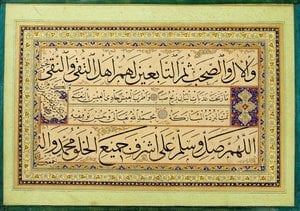
Karalama (calligraphy exercise)

Intricate Arabic calligraphy with shimmering gold accents defines this 1500s masterpiece by the legendary Ottoman master Ahmed Karahisari, offering a timeless window into Islamic artistry for your collection.

Ahmed Karahisari (1468-1566) was a pivotal Ottoman calligrapher renowned for revitalizing the Yaqut al-Musta'simi style in Thuluth & Naskh scripts. Explore his masterpieces at Topkapi Palace and discover his legacy alongside Sheikh Hamdullah & Hafiz

Ručne maľovaná olejová reprodukcia

Ručne maľovaný olej na plátne vo vašej zvolenej veľkosti a v ráme, vyrobený na mieru našimi umelcami. ( Prepnúť na tlač Prepnúť na digitálnu verziu obrazu)

P118B $10
P118H $10
P118W $10
P438Z $10
P508JH $12
P508YH $12
P805H $10
P805Z $10
P919BZ $10
P919G $10
P919XJ $10
P959ZH $10
P968JZ $12
W106C $8
W218G $10
W218JH $8
W218Y $10
W307PJ $10
W316G $10
W316PJ $8
W316Y $10
W398PJ $8
W4111J $10
W500HY $15
W500JH $15
W692G $12
W849H $8
W940BG $15
W953PJ $8

Štandardné rozmery
na mieru
CM
INCH

Vyberte si z našich preddefinovaných rozmerov, ktoré zodpovedajú pôvodným pomeroḿ diela.

šírka
výška

Môžete zadať vlastné rozmery tak, aby sa hodili do konkrétneho rámu alebo priestoru. Ak sa váš zvolený rozmer nezhoduje s pôvodnými proporciami obrazu, dielo buď orezáme, alebo ho doplníme ručne maľovanými prvkami. Pred začiatkom výroby vám zašleme digitálny náhľad na schválenie.
Upozorňujeme, že ukážka na obrazovke neodráža skutočné orezanie ani doplnenie. Skutočnú finálnu kompozíciu zobrazuje iba digitálny náhľad.
Hoci sú k dispozícii vlastné rozmery, odporúčame vybrať rozmer z preddefinovaného zoznamu, aby sme zachovali pôvodné proporcie.

Príklady možných zmien: nahradiť tvár fotografiou zákazníka; pridať domáce zviera (napr. nahradiť mačku psom); vložiť skryté posolstvo do pozadia; zmeniť krajinu alebo prvky pozadia.
Po odoslaní objednávky vám tím WahooArt.com pošle e-mail s pokynmi a poskytne náhľad na návrh

Celosvetová doprava () za 3 až 4 týždne namiesto štandardných 5 týždňov. (23 september). Bez kompromisov v kvalite.

why_choose_icon
Bezplatná expresná doprava po celom svete
why_choose_icon
Vysokokvalitné lnianske plátno
why_choose_icon
Úplné poistenie prepravy
why_choose_icon
Záruka vrátenia colného poplatku
why_choose_icon
Záruka presného farebného zhodnutia
why_choose_icon
100-dená politika vrátenia tovaru (iba pri vadách)
why_choose_icon
100% záruka vrátenia peňazí
why_choose_icon
Ponuka množstevnej zľavy

Celková cena

$ 272

reproduction

Karalama (calligraphy exercise)

Spôsob reprodukcie

Veľkosť reprodukcie

-

Celková cena

$ 272

Rýchle fakty

  • Year: 1500
  • Artist: Ahmed Karahisari
  • Dimensions: 26 x 35 cm
  • Artistic style: Ottoman Calligraphy
  • Subject or theme: Arabic calligraphy exercise

The Dance of Ink and Spirit

In the delicate interplay of ink and parchment, Karalama (calligraphy exercise) offers a profound window into the soul of Ottoman mastery. This exquisite piece, dating back to the year 1500, is far more than a mere practice sheet; it is a rhythmic meditation captured in motion. The artwork features the fluid, sweeping curves of Arabic script, where each stroke carries the weight of intention and the grace of a dancer. As the eye wanders across the yellowish, aged surface, one feels the passage of centuries, as if peering through a veil into the very heart of the 16th-century workshop. The cursive script possesses an organic complexity, creating a sense of depth that draws the viewer into a labyrinth of linguistic beauty and spiritual devotion.

The technique employed by the legendary Ahmed Karahisari reveals a sophisticated command over the medium. Beyond the primary calligraphic flow, the composition is punctuated by ethereal decorative elements that elevate the work from exercise to ornament. Tiny, shimmering gold dots are scattered across the page like celestial dust, catching the light and providing a rhythmic counterpoint to the dark ink. Small, delicate circles are interspersed throughout, adding structural visual interest and guiding the viewer's gaze through the intricate web of characters. This meticulous application of gold and ink demonstrates a mastery of balance, where the spontaneity of a "sketch" meets the precision of high art.

A Legacy Written in Gold

To understand this work is to understand the era of the Sun of Calligraphy himself. Ahmed Karahisari, a titan of the Ottoman Golden Age, lived during the transformative reign of Sultan Suleyman the Magnificent. His life was deeply rooted in Sufi scholarship, and this spiritual foundation is palpable in every loop and ligature of his writing. The piece embodies the revitalization of the Thuluth and Naskh scripts, showcasing a style that sought to harmonize the mathematical precision of Islamic geometry with the emotional fluidity of divine praise. For the collector or the lover of history, this artwork serves as a tangible connection to the intellectual and artistic zenith of the Ottoman Empire.

For those looking to integrate such profound beauty into a contemporary space, Karalama offers an unparalleled emotional impact. Its warm, antique palette makes it a versatile centerpiece for sophisticated interior design, providing a sense of timelessness and quiet contemplation. Whether placed in a sunlit library or a modern gallery setting, the piece radiates an aura of wisdom and tranquility. Owning a high-quality reproduction of this masterpiece is not merely about acquiring decor; it is about inviting the rhythmic, golden legacy of Karahisari into one's personal sanctuary, ensuring that the echoes of 1500 continue to resonate in the modern world.


Biografia umelca

Ahmed Karahisari: The Sun of Calligraphy

Ahmed Şemseddîn Karahisârî (1468–1566), often referred to as Karahisari, stands as one of the titans of Ottoman calligraphy—a figure whose influence reverberates through centuries of Islamic art and scholarship. Born in Afyonkarahisar, Turkey, his exact birthdate remains elusive, shrouded in the mists of Ottoman archival records. Yet, what is undeniably certain is that he ascended to unparalleled renown during the reign of Sultan Suleyman I (1520–1566), earning the moniker *Shams al-Khatt*, “The Sun of Calligraphy,” a testament to his mastery and transformative vision for the art form.
  • Early Life & Education: Karahisari’s formative years unfolded in Istanbul, where he pursued rigorous Sufi scholarship—a cornerstone of Ottoman intellectual life—laying the groundwork for his lifelong dedication to Islamic calligraphy. Precise details regarding his teacher remain debated amongst scholars; sources cite Yahyâ Sufî and Esadullah-ı Kirmânî as potential mentors, reflecting the diverse influences shaping Ottoman artistic sensibilities.
  • Stylistic Innovation: Unlike many of his contemporaries who adhered to Sheikh Hamdullah’s established style—characterized by elegant curves and meticulous ornamentation—Karahisari embarked on a daring quest to revive the aesthetic principles championed by Yaqut al-Musta'simi, an Abbasid calligrapher whose work predated Hamdullah’s innovations. This deliberate divergence signaled a pivotal moment in Ottoman calligraphy history.

A Revolutionary Approach to Script

Karahisari didn’t merely replicate existing styles; he fundamentally reimagined them, elevating the best examples of Thuluth and Naskh scripts to new heights of artistic excellence. His distinctive style—characterized by a bold confidence and an unwavering commitment to precision—was initially met with resistance within Ottoman circles. However, his legacy endured through the teachings of Hasan Çelebi, Karahisari’s adoptive son, who became himself a celebrated calligrapher, perpetuating the master's influence for generations. This stylistic breakthrough cemented Karahisari’s position as one of the “Three Great Calligraphers” alongside Sheikh Hamdullah and Hafiz Osman—a trio whose contributions irrevocably shaped the trajectory of Islamic calligraphy.

The Magnificent Mus'haf: A Testament to Artistic Achievement

Perhaps Karahisari’s most enduring achievement resides in his monumental mus'haf—a meticulously crafted copy of the Qurʾan commissioned by Suleyman I—which now graces the Topkapi Palace Museum Library. This masterpiece exemplifies Karahisari’s unparalleled skill and embodies the zenith of Ottoman calligraphy during Suleyman’s reign. Beyond this singular work, numerous other Qurʾanic manuscripts bearing his signature are housed in Istanbul's museum collections, demonstrating the breadth of his artistic output.

Influence & Legacy

Karahisari’s influence extended far beyond his immediate disciples; he profoundly impacted Ottoman art and culture as a whole. His work aligns seamlessly with the broader aesthetic currents of the Ottoman Period—particularly the vibrant artistic movement spearheaded by Osman Hamdi Bey and Şeker Ahmed Paşa—artists who similarly embraced innovation and sought to elevate Islamic art to new levels of grandeur. The enduring fascination with Karahisari’s style underscores his indelible mark on Islamic calligraphy history, securing his place as a visionary artist whose legacy continues to inspire scholars and practitioners alike. His contribution solidified the importance of reviving classical artistic traditions while simultaneously pushing boundaries.
ahmed karahisari

ahmed karahisari

1468 - , Turkey

Rýchle fakty

  • Artistic Movement Or Style: Ottoman Period (before 1600), Süleyman the Magnificent Period (1520–1566)
  • Artists Or Movements Influenced By This Artist: ['Osman Hamdi Bey']
  • Artists Who Influenced This Artist:
    • Yaqut al-Musta’simi
    • Sheikh Hamdullah
  • Date Of Birth: Around 1468
  • Date Of Death: 1566
  • Full Name: Ahmed Şemseddîn Karahisârî
  • Nationality: Turkish
  • Notable Artworks: ["The Mus'haf for Suleiman the Magnificent"]
  • Place Of Birth: Karahisar, Turkey