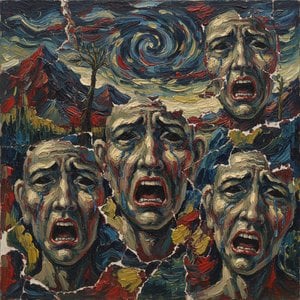
Stanley Pinker: A Namibian Visionary Embracing Fauvist Color
Stanley Faraday Pinker (1924-2012) stands as a pivotal figure in Namibian art history and a prominent voice within the international Fauvist movement. Born in Windhoek, Namibia—then South West Africa—his formative years instilled an enduring fascination with the dramatic landscapes of his homeland, influencing his artistic vision throughout his prolific career. Pinker’s journey from youthful exploration to celebrated artist exemplifies dedication to craft and unwavering commitment to capturing the essence of visual experience.Early Life & Education
Pinker's upbringing in Windhoek exposed him to the rugged beauty of Namibia, shaping his artistic sensibilities early on. He pursued formal art training at the Continental Art School of Cape Town under Maurice van Essche—a formative encounter that instilled a deep appreciation for Impressionistic techniques and compositional considerations—and later honed his skills at Hammersmith School of Art in London with Alistair Grant, broadening his artistic horizons beyond Namibian borders. This dual exposure to European artistic traditions would prove instrumental in shaping Pinker’s distinctive style and worldview.Fauvist Influence & Artistic Style
Pinker’s artistic style is undeniably rooted in Fauvism—a movement characterized by bold, unrestrained color palettes and expressive brushstrokes—which emerged in France during the early 20th century. He embraced this revolutionary approach, prioritizing emotional impact over realistic representation, resulting in canvases brimming with vibrant hues that convey a palpable sense of energy and immediacy. Artists like Henri Matisse served as inspiration for Pinker's daring use of color, pushing boundaries and challenging conventional artistic conventions. His paintings often depict Namibian flora—particularly “Sun and Moon Flower”—rendered in luminous shades of orange, yellow, and magenta, capturing the vibrancy of his native landscape with unparalleled fervor.Notable Works & Exhibitions
Pinker’s oeuvre encompasses a diverse range of subjects—primarily landscapes—executed with meticulous attention to detail and infused with Fauvist fervor. Among his most celebrated pieces are “Sun and Moon Flower,” a captivating depiction of Namibian flora rendered in luminous shades, and “The Wheel of Life,” which embodies the artist's exploration of spiritual themes through color and gesture. His work has graced prestigious galleries internationally, including The Stanley & Audrey Burton Gallery in Leeds and the University of Iowa Museum of Art, cementing his reputation as a respected artistic innovator. Furthermore, Grahams Gallery hosted a retrospective exhibition highlighting his artistic evolution and showcasing the breadth of his oeuvre.Legacy & Recognition
Pinker’s contribution to Namibian art history extends beyond his individual artworks; he represents a cornerstone of the movement and embodies the spirit of Fauvist experimentation. His unwavering devotion to capturing the beauty and dynamism of the natural world—combined with his masterful command of color and expressive brushstrokes—continues to inspire artists today, ensuring that Stanley Pinker's vision persists as a testament to artistic innovation and enduring aesthetic power. He achieved remarkable success at auction houses globally, reflecting their considerable artistic merit and collector demand. A landmark sale in March 2014 saw “Love,” a vibrant depiction of a woman lounging with a cigarette—a quintessential example of Fauvist style—fetch R3.4 million at Strauss & Co., establishing a world record for the artist. Subsequent auctions confirmed Pinker’s position as one of Namibia's most valuable artistic treasures, demonstrating his ability to capture and convey profound emotional resonance through color and form.Întrebări și răspunsuri
Unde pot fi găsite operele lui Stanley Faraday Pinker organizate pe culori?
Indice Spectral lui Stanley Faraday Pinker este o pagină care organizează operele de artă ale artistului în funcție de culorile acestora.
Pot studia utilizarea culorii de către Stanley Faraday Pinker în toate lucrările sale?
Genoma Paletei lui Stanley Faraday Pinker este o pagină care prezintă profilul cromatic al întregii creații a artistului.
În ce perioadă istorică a activat Stanley Faraday Pinker?
Stanley Faraday Pinker a activat în perioada Era modernă. Această perioadă situează activitatea artistului în istorie.
Câte opere de artă ale lui Stanley Faraday Pinker pot fi vizualizate?
Puteți vizualiza 1 opere de artă de opere ale lui Stanley Faraday Pinker pe pagina Toate operele de artă.
În ce oraș și țară s-a născut Stanley Faraday Pinker?
Stanley Faraday Pinker s-a născut în Windhoek, în Namibia.
Pot explora operele lui Stanley Faraday Pinker pe baza unor cuvinte cheie?
Operele lui Stanley Faraday Pinker pot fi explorate pe baza cuvintelor cheie, în pagina de După cuvinte cheie a artistului. Fiecare cuvânt cheie grupează operele aferente.
Unde pot vizualiza operele lui Stanley Faraday Pinker într-o galerie 3D?
O vizită virtuală este posibilă: pagina Muzeu 3D lui Stanley Faraday Pinker prezintă lucrările artistului într-o galerie tridimensională.
Care sunt locul și anul nașterii lui Stanley Faraday Pinker?
Stanley Faraday Pinker s-a născut în Windhoek, în anul 1924.