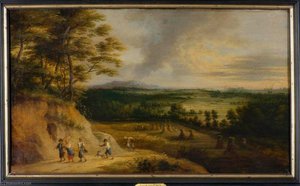
The Master of Antwerp Landscapes: The Life of Lucas van Uden
In the heart of the 17th-century Flemish art scene, few names evoke the atmospheric serenity of the Baroque landscape as effectively as Lucas van Uണ്ടen. Born in Antwerp in 1595, van Uden emerged from a lineage deeply rooted in the city's artistic fabric. As the son of Artus van Uden, the esteemed city painter responsible for the gilded splendor of Antwerp’s civic monuments, Lucas was immersed in the aesthetics of grandeur and detail from his earliest years. While he did not follow the traditional path of a registered pupil under the Guild of Saint Luke, his mastery suggests an intimate apprenticeship within his father's workshop. By 1626, he had established himself as a master in his own right, navigating the complex social and professional hierarchies of Antwerp with remarkable success.
The life of van Uden was as textured and complex as the landscapes he painted. His personal history was marked by both devotion and scandal, including an extramarital relationship that produced a son, and a later marriage to Anna van Woelput, a union that brought eight children into his world. This domestic stability provided the foundation for a prolific career that saw him become a cornerstone of the Antwerp school. Beyond his own brush, his legacy lived on through his pupils—including Jan Baptist Bonnecroy and Gillis Neyts—and his children, such as his daughter Maria, who followed in his footsteps as a painter. His ability to maintain a comfortable lifestyle in central Antwerp speaks to a profound demand for his vision of the natural world.
A Vision of Nature: Technique and Artistic Influence
Van Uden’s artistry is characterized by an exquisite attention to detail and a profound sensitivity to light and atmosphere. While he was a versatile creator, his true soul resided in the landscape. His works often capture the fleeting moments of the seasons, most notably in his celebrated winter scenes. In pieces such as Winter Landscape with Hunters, one can almost feel the biting chill of the air and the crunch of frost beneathfoot. These compositions are not merely topographical records but emotional evocations of the Flemish countryside, where the interplay of shadow and light creates a sense of depth and movement.
Though he never formally entered the studio of the legendary Peter Paul Rubens, the influence of the great master is undeniably woven into the fabric of van Uden's technique. He adopted a certain rhythmic vitality and a sophisticated approach to color that echoed the Rubensian tradition, yet he maintained a distinct identity through his meticulous draughtsmanship. His drawings, in particular, are regarded by historians as some of his most original and poignant achievements, showcasing a raw, expressive quality that complements the polished finish of his oil paintings. He frequently collaborated with figure painters of his era, seamlessly integrating human narratives into his sprawling vistas, thereby creating a holistic experience of the Baroque world.
Legacy and Historical Significance
The historical significance of Lucas van Uden lies in his role as a bridge between the detailed traditions of the early Flemish masters and the more dynamic, sweeping landscapes of the later Baroque period. He helped define the aesthetic of the Antwerp landscape, moving away from rigid compositions toward scenes that felt lived-in and breathing. His ability to capture both the pastoral tranquility of summer and the stark, dramatic beauty of winter ensured his relevance across a changing artistic landscape.
Today, van Uden is remembered not just as a painter of scenery, but as a master of atmosphere. His contributions to the development of the Flemish landscape genre remain vital for understanding the evolution of European art during the 17th century. Through his meticulous brushwork and his ability to find the sublime in the everyday, he left an indelible mark on the history of Antwerp, ensuring that his vision of the natural world would endure long after his death in 1672.