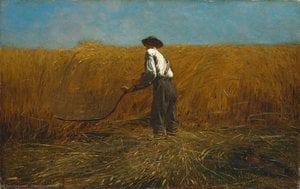
Fallen Deer (1892) de Winslow Homer, reproducere pictură în ulei pictată manual de un maestru artist
Previzualizare Previzualizare AR Comută pe versiunea Print Comută pe Imagine Digitală Trimite prin felicitare
Detalii despre lucrare Ghid Adaugă la favorite Descarcă imaginea Produse similare Radiografie Galerie foto Întrebări și răspunsuri Prezentare PowerPoint Statistici

Fallen Deer Reproducere pictură în ulei pictată manual

A tranquil watercolor scene of a deer drinking amidst nature captures the essence of American Romanticism by Winslow Homer from 1892, offering a serene window into the wild that you can bring to your own collection.

Descoperă operele impresionante ale lui Winslow Homer! Pictorul american realist celebru pentru scene marine și peisaje evocatoare, Homer rămâne unul dintre cei mai influenți artiști ai Secolului XIX.

Reproducere pictată manual în ulei

Pictură în ulei pe pânză, pictată manual de artiștii noștri la dimensiunea și ramele dorite de dumneavoastră, pe comandă. ( Comută pe versiunea Print Comută pe Imagine Digitală)

Corner sample of the P118B picture frame: polistiren turnat, 5 cm wide and 3 cm thick
P118B lei10
Corner sample of the P118H picture frame: polistiren turnat, 5 cm wide and 3 cm thick
P118H lei10
Corner sample of the P118W picture frame: polistiren turnat, 5 cm wide and 3 cm thick
P118W lei10
Corner sample of the P438Z picture frame: polistiren turnat, 5.5 cm wide and 3.5 cm thick
P438Z lei10
Corner sample of the P508JH picture frame: polistiren turnat, 7 cm wide and 3.5 cm thick
P508JH lei12
Corner sample of the P508YH picture frame: polistiren turnat, 7 cm wide and 3.5 cm thick
P508YH lei12
Corner sample of the P805H picture frame: polistiren turnat, 5 cm wide and 3.5 cm thick
P805H lei10
Corner sample of the P805Z picture frame: polistiren turnat, 5 cm wide and 3.5 cm thick
P805Z lei10
Corner sample of the P919BZ picture frame: polistiren turnat, 7 cm wide and 3.5 cm thick
P919BZ lei10
Corner sample of the P919G picture frame: polistiren turnat, 7 cm wide and 3.5 cm thick
P919G lei10
Corner sample of the P919XJ picture frame: polistiren turnat, 7 cm wide and 3.5 cm thick
P919XJ lei10
Corner sample of the P959ZH picture frame: polistiren turnat, 5 cm wide and 3 cm thick
P959ZH lei10
Corner sample of the P968JZ picture frame: polistiren turnat, 6 cm wide and 4 cm thick
P968JZ lei12
Corner sample of the W106C picture frame: lemn masiv, 5 cm wide and 3 cm thick
W106C lei8
Corner sample of the W218G picture frame: lemn masiv, 5 cm wide and 3 cm thick
W218G lei10
Corner sample of the W218JH picture frame: lemn masiv, 5 cm wide and 3 cm thick
W218JH lei8
Corner sample of the W218Y picture frame: lemn masiv, 5 cm wide and 3 cm thick
W218Y lei10
Corner sample of the W307PJ picture frame: lemn masiv, 6 cm wide and 3 cm thick
W307PJ lei10
Corner sample of the W316G picture frame: lemn masiv, 6 cm wide and 3 cm thick
W316G lei10
Corner sample of the W316PJ picture frame: lemn masiv, 6 cm wide and 3 cm thick
W316PJ lei8
Corner sample of the W316Y picture frame: lemn masiv, 6 cm wide and 3 cm thick
W316Y lei10
Corner sample of the W398PJ picture frame: lemn masiv, 5 cm wide and 3 cm thick
W398PJ lei8
Corner sample of the W4111J picture frame: lemn masiv, 6.5 cm wide and 3.5 cm thick
W4111J lei10
Corner sample of the W500HY picture frame: lemn masiv, 7 cm wide and 5 cm thick
W500HY lei15
Corner sample of the W500JH picture frame: lemn masiv, 7 cm wide and 5 cm thick
W500JH lei15
Corner sample of the W692G picture frame: lemn masiv, 8 cm wide and 4 cm thick
W692G lei12
Corner sample of the W849H picture frame: lemn masiv, 5 cm wide and 3 cm thick
W849H lei8
Corner sample of the W940BG picture frame: lemn masiv, 7.5 cm wide and 4.5 cm thick
W940BG lei15
Corner sample of the W953PJ picture frame: lemn masiv, 6 cm wide and 3.5 cm thick
W953PJ lei8

Standard
personalizat
CM
INCH

Alegeți dintre dimensiunile noastre prestabilite, care respectă proporțiile originale ale operei de artă.

lățime
înălțime

Introduceți lățimea și înălțimea necesare pentru a se potrivi ramei sau peretelui dumneavoastră. Această lucrare este pictată manual, așa că, pentru o dimensiune cu o formă diferită, artistul poate picta puțin mai mult în jurul imaginii sau poate tăia puțin din margini — dumneavoastră decideți. Vă vom trimite o simulare digitală pentru aprobare înainte de a începe pictarea. Imaginea afișată pe această pagină nu reprezintă rezultatul real — doar simularea este reprezentativă.

Exemple de elemente ce pot fi personalizate: Înlocuiți fața cu fotografia clientului; Adăugați un animal de companie (de exemplu, înlocuiți pisica cu un câine); Includeți un mesaj ascuns în fundal; Schimbați peisajul sau elementele din fundal.
După plasarea comenzii, echipa WahooArt.com va contacta clientul prin e-mail pentru instrucțiuni și îi va furniza o previzualizare a machetei

Livrare în întreaga lume () în 3-4 săptămâni, în loc de cele 5 săptămâni standard. (9 Noiembrie). Fără compromisuri în ceea ce privește calitatea.

Livrare expres gratuită la nivel mondial
Pânză de in de înaltă calitate
Asigurare completă pentru transport
Garanție de rambursare a taxelor vamale
Garanția fidelității culorilor
Politica de retur în 100 de zile (doar pentru defecte de fabricație)
Garanție de rambursare 100%
Ofertă pentru comenzi multiple

Preț total

lei 1296

Fallen Deer

Tehnică de reproducere

Dimensiune reproducere

-

Preț total calculat

lei 1296

Informații rapide

  • Artistic style: Naturalistic
  • Notable elements or techniques: Detailed depiction of deer drinking
  • Title: Fallen Deer
  • Movement: American Impressionism
  • Year: 1892

Test de cunoștințe despre artă

Fiecare întrebare are un singur răspuns corect.

Întrebare 1:
What medium did Winslow Homer use to create 'Fallen Deer'?
Întrebare 2:
In which year was 'Fallen Deer' painted?
Întrebare 3:
Which artistic movement is embodied in this artwork?
Întrebare 4:
Where is the 'Fallen Deer' currently located?
Întrebare 5:
What detail can be observed in the sky within the painting?

A Moment Frozen in Watercolor: The Ethereal Grace of Fallen Deer

In the delicate medium of watercolor, Winslow Homer achieved something truly extraordinary with his 1892 masterpiece, Fallen Deer. This painting is far more than a mere wildlife study; it is an embodiment of American Romanticism captured through a lens of profound tranquility. As the viewer gazates upon the scene, they are drawn into a world where time seems to suspend itself. The composition is masterfully balanced, with the deer positioned horizontally across the canvas, its form dominating the frame while being grounded by the textured presence of surrounding rocks and trees. There is a subtle animation provided by two birds circling in the sky above, which introduces a sense of natural movement that never disrupts the deep, meditative stillness at the heart of the work. Through his understated technique, Homer utilizes the ethereal qualities of watercolor to capture the most nuanced shifts in light and shadow, creating a scene that feels both physically present and dreamlike.

The technical brilliance of Fallen Deer lies in its ability to find harmony within simplicity. Homer’s meticulous attention to detail does not strive for grand spectacle; instead, it seeks the essence of a single, fleeting moment—a deer pausing for refreshment amidst the quiet beauty of the wilderness. The soft, muted hues of greens and blues promote an immediate sense of calm, making this piece an ideal inspiration for those seeking to introduce serenity into a living space. For the collector or interior designer, the painting offers a window into a pristine natural world, where the water symbolizes purity and renewal, mirroring the deer's act of drinking as a gesture of sustenance and acceptance of the natural order.

Symbolism and the Spirit of the American Wilderness

Beyond its aesthetic allure, Fallen Deer carries a profound symbolic weight that resonates with the intellectual currents of its era. Created during the rise of the Transcendentalist movement in America, the painting reflects a deep-seated desire for communion with nature as a pathway to spiritual enlightenment. The deer itself serves as a poignant metaphor; its prone position suggests a certain vulnerability and fragility amidst the powerful forces of the wild, yet its upward gaze signifies an unwavering resilience and a steadfast connection to life’s rhythms. This duality creates a visual meditation on mortality and rebirth that is both haunting and hopeful.

To encounter this work is to experience the restorative power of the unspoiled wilderness. Homer captures a sense of escape from urban pressures, inviting the observer to reflect on our fundamental relationship with the environment. The painting does not merely depict a landscape; it evokes an emotional truth about the human condition—our shared need for solace, reflection, and connection to the earth. Whether viewed as a historical document of American Romanticism or as a timeless piece of fine art, Fallen Deer remains a cornerstone of beauty, offering a lasting impression of peace that continues to captivate audiences across generations.

Întrebări și răspunsuri

Ce ton emoțional transmite stilul American Romanticism din "Fallen Deer"?

Emoția Tranquil din "Fallen Deer" însoțește stilul său American Romanticism.

În ce încăpere din casă s-ar potrivi o reproducere a operei "Fallen Deer"?

O reproducere a „Fallen Deer” se potrivește de minune într-un Living Room.

Din ce curent artistic face parte "Fallen Deer" de Winslow Homer?

Mișcarea asociată cu "Fallen Deer" de Winslow Homer este American Romanticism. Această clasificare plasează lucrarea printre artiști și opere de artă conexe.


Biografie artist

A Brush with the American Spirit: The Life and Art of Winslow Homer

Winslow Homer, born in Boston in 1836, wasn’t sculpted by the traditional European art academies that shaped so many of his contemporaries. Instead, he emerged from a distinctly American experience, one rooted in practicality and observation. His journey began not with grand historical canvases, but as a commercial illustrator at the tender age of twelve for Harper's Weekly. This early apprenticeship was formative, honing an exceptional ability to capture scenes with clarity and detail – skills that would become hallmarks of his mature work. He wasn’t learning perspective in Paris; he was learning to *see* America, its people, and its unfolding story. The bustling streets of Boston, the quiet dignity of rural New England life, these were his first subjects, rendered with a precision born of necessity for the demands of print media. This foundation allowed him to transition into painting, initially in watercolor, before fully embracing the expressive potential of oil paints.

From Pastoral Scenes to the Raw Power of Nature

Homer’s early paintings often depicted idyllic scenes – children playing, farmers tending their fields, quiet moments of domesticity. These works, while charming, hinted at a deeper artistic sensibility waiting to be unleashed. The catalyst for this transformation was undoubtedly the Civil War. As a war correspondent for Harper's Weekly, Homer witnessed firsthand the brutal realities of conflict. He didn’t focus on heroic battles or grand strategies; instead, he documented the everyday lives of soldiers and civilians, the quiet moments of grief and resilience amidst chaos. This experience profoundly altered his artistic vision. The pastoral scenes gave way to more challenging subjects: veterans grappling with trauma, freed slaves navigating a new world, and the stark beauty of landscapes touched by hardship. He began to explore themes of struggle, isolation, and humanity’s precar He wasn't interested in imitating European styles; he wanted to create an art that was uniquely American, reflecting its landscapes, its people, and its challenges. His style also evolved, becoming bolder and more direct, reflecting the raw emotional impact of what he had witnessed. Breezing Up (A Fair Wind), painted in 1876, exemplifies this skill – a quintessential depiction of American maritime life, brimming with energy and movement. The Gulf Stream, created decades later, is perhaps his most iconic work, a powerful and symbolic portrayal of a lone man battling the forces of nature, a metaphor for human struggle against overwhelming odds. He possessed an extraordinary ability to capture light, whether it was the dazzling glare of the sun on the ocean or the soft glow of twilight over a rural landscape. This mastery extended to his watercolors, where he achieved remarkable atmospheric effects through vibrant colors and delicate washes. Innocence, a poignant portrayal of childhood set against the backdrop of nature, and **Man of Science** demonstrate this commitment.

Mastering Light, Texture, and the American Landscape

Winslow Homer's artistic technique is immediately recognizable for its solidity and texture. He wasn’t interested in fleeting impressions; he wanted to build up a sense of tangible reality on the canvas. His oil paintings are characterized by a direct painting approach – layers of paint applied with confidence, creating depth and luminosity. He possessed an extraordinary ability to capture light, whether it was the dazzling glare of the sun on the ocean or the soft glow of twilight over a rural landscape. This mastery extended to his watercolors, where he achieved remarkable atmospheric effects through vibrant colors and delicate washes. His unwavering dedication to observation—a cornerstone of American Realism—allowed him to translate the visual world onto canvas with unparalleled accuracy and emotional resonance.

A Legacy Forged in American Realism

Winslow Homer's art offers a profound window into 19th-century America, providing invaluable insights into the social, political, and cultural landscape of his time. His paintings are not merely beautiful representations; they are powerful statements about human resilience, the beauty and power of nature, and the complexities of the American experience. He died in 1910, leaving behind a prolific body of work that continues to resonate with audiences today. His ability to depict America with honesty and authenticity—rejecting romantic idealism for gritty realism—established him as one of America’s most important and enduring artists. He wasn't just painting pictures; he was documenting a moment in time, preserving it for generations to come.
  • His work continues to inspire contemporary artists.
  • Homer remains a pivotal figure in the development of American Realism.
Winslow Homer

Winslow Homer

1836 - 1910 , Statele Unite ale Americii

Detalii rapide

  • Artistic Movement Or Style: Realism american
  • Artists Or Movements Influenced By This Artist: ['Pictori americani']
  • Artists Who Influenced This Artist:
    • Barbizon
    • Courbet
    • Millet
  • Date Of Birth: 3 octombrie 1836
  • Date Of Death: 1910
  • Full Name: Winslow Homer
  • Nationality: American
  • Notable Artworks:
    • Breezing Up
    • Gulf Stream
    • Inocență
  • Place Of Birth: Boston, SUA
Explorați opere de artă organizate pe teme, stiluri și caracteristici.