Vezi în context Previzualizare AR Comandă pictură realizată manual Treci la imagine digitală Trimite
Detalii Ghid Adaugă la favorite Descarcă Produse similare Radiografie Diaporama Statistici

Fruit and a White Rose

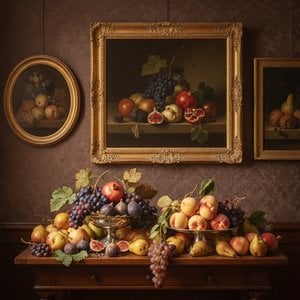
William James Glackens’ ‘Fruit and a White Rose’ (1930) captures a vibrant still life in the Ashcan School style, showcasing apples, grapes, and oranges on a table. Admire this realistic depiction of everyday beauty by a pioneering American artist – explore owning a piece of art history.

Descoperă operele impresionante ale lui William James Glackens (1870-1938), pionierul Școlii Ashcan și maestru al realismului american! Admirați scene urbane vibrante și detalii captivante în picturile sale emblematice, precum „The Shoppers” și „View of Haarlem with bleaching grounds”, opere considerate adevărate simboluri ale artei începutului de secol XX.

Giclée / Imprimare artistică

Printuri giclée sau pe canvas de calitate muzeală, cu proces de producție rapid și opțiuni flexibile de finisare. ( Comandă pictură realizată manual Treci la imagine digitală)

P118B $10
P118H $10
P118W $10
P438Z $10
P508JH $12
P508YH $12
P805H $10
P805Z $10
P919BZ $10
P919G $10
P919XJ $10
P959ZH $10
P968JZ $12
W106C $8
W218G $10
W218JH $8
W218Y $10
W307PJ $10
W316G $10
W316PJ $8
W316Y $10
W398PJ $8
W4111J $10
W500HY $15
W500JH $15
W692G $12
W849H $8
W940BG $15
W953PJ $8

Dimensiuni standard
personalizat
CM
INCH

Alegeți dintre dimensiunile noastre prestabilite, care respectă proporțiile originale ale operei de artă.

lățime
înălțime

Puteți introduce propriile dimensiuni pentru a se potrivi unui anumit cadru sau spațiu. Dacă dimensiunea selectată nu corespunde proporțiilor imaginii originale, vom decupa lucrarea de artă sau vom extinde imaginea cu margini oglindite sau cu o culoare uniformă. Un mockup digital va fi trimis pentru aprobarea dumneavoastră înainte de începerea producției.
Vă rugăm să rețineți că previzualizarea de pe ecran nu reflectă decuparea sau extinderea reală. Doar mockup-ul va arăta cu exactitate compoziția finală.
Deși dimensiunile personalizate sunt disponibile, vă recomandăm să selectați o dimensiune din lista predefinită pentru a păstra proporțiile originale.

Livrare în întreaga lume () în 2 săptămâni, în loc de cele 4/5 săptămâni standard. (22 Septembrie)

why_choose_icon
Livrare expres gratuită la nivel mondial
why_choose_icon
Pânză de in premium
why_choose_icon
Asigurare completă pentru transport
why_choose_icon
Garanție de rambursare a taxelor vamale
why_choose_icon
Garanția fidelității culorilor
why_choose_icon
Politica de retur în 100 de zile (doar pentru defecte)
why_choose_icon
Garanție de rambursare 100%
why_choose_icon
Reducere pentru comenzi multiple

Preț total

$ 68

reproduction

Fruit and a White Rose

Giclée / Imprimare artistică

Dimensiune reproducere

-

Preț total

$ 68

Detalii rapide

  • Notable elements: Fruit, rose, detail
  • Location: Fort Lauderdale Museum
  • Artist: William Glackens
  • Subject or theme: Still life
  • Influences: Renoir
  • Title: Fruit and a White Rose
  • Medium: Oil on panel

Introduction to William James Glackens and ‘Fruit and a White Rose’

William James Glackens stands as a pivotal figure in American art, inextricably linked to the rise of the Ashcan School. This movement, born from a desire to depict unfiltered reality rather than idealized visions, sought to capture the pulse of urban life – its grit, its beauty, and its inherent contradictions. ‘Fruit and a White Rose,’ painted in 1930, exemplifies Glackens’ commitment to this aesthetic, offering a deceptively simple still life that resonates with profound historical and artistic significance. The painting, currently residing within the Museum of Art in Fort Lauderdale, United States, is more than just a depiction of fruit; it's a window into the sensibilities of an era grappling with modernity.

Composition and Technique: A Masterclass in Realism

Glackens’ masterful handling of oil on panel immediately draws the viewer into the scene. The composition is anchored by a prominent table, acting as both stage and backdrop to the vibrant arrangement of fruit. The artist's meticulous attention to detail is evident in the layering of textures – the smooth skin of the apples, the plumpness of the grapes, and the subtle variations in the oranges’ surfaces. Multiple apples are strategically placed, creating a sense of depth and inviting the eye to wander across the bowl. The use of color is particularly noteworthy; Glackens employs a restrained palette—muted reds, yellows, and browns—that enhances the realism rather than overwhelming it. This technique reflects a conscious decision to prioritize observation and direct representation over purely expressive gestures, aligning him with the core tenets of the Ashcan School.

Historical Context: The Ashcan School and the Spirit of New York

'Fruit and a White Rose' was created during a transformative period in American history. The 1930s witnessed rapid urbanization, industrial growth, and social change in New York City – themes frequently explored by Glackens and his contemporaries. The Ashcan School emerged as a reaction against the academic traditions of the time, seeking to portray the lives of ordinary people—immigrants, laborers, and artists—within the city’s bustling streets. The painting's subject matter – everyday objects arranged in a still life – subtly reflects this concern with the mundane, elevating it through Glackens’ skilled execution. The Burton Art Gallery’s founding in 1930 further underscores the artistic climate of the time, highlighting a dedication to showcasing contemporary art and historical artifacts.

Symbolism and Emotional Impact

Beyond its technical brilliance, ‘Fruit and a White Rose’ possesses a quiet emotional resonance. The inclusion of a white rose adds an element of delicate beauty to the otherwise robust scene, perhaps representing fleeting moments of grace or contemplation amidst the chaos of urban life. The arrangement itself – a collection of fruits ripe for consumption – can be interpreted as a symbol of abundance and nourishment, yet also hints at the transient nature of pleasure. Glackens’ ability to evoke such subtle emotions through seemingly simple imagery is a testament to his artistic vision and his profound understanding of human experience. The painting's enduring appeal lies in its capacity to connect with viewers on an intuitive level, prompting reflection on themes of beauty, mortality, and the everyday wonders of the world.


Biografie artist

William James Glackens

A pioneer of the Ashcan School, William James Glackens (1870-1938) stands as a pivotal figure in American art history—a champion of realism and an unflinching observer of urban life’s gritty realities. His artistic journey began in Philadelphia, where he absorbed the influence of Thomas Anshutz, a fellow Ashcan School founder, shaping his distinctive style and worldview.

Early Life and Influences

Glackens' formative years instilled within him a profound appreciation for detail and observation—qualities that would become hallmarks of his oeuvre. Studying at the Pennsylvania Academy of Fine Arts under Anshutz’s guidance, he honed his skills in capturing the essence of human experience with uncompromising honesty. This dedication to realism was further solidified by exposure to European art movements, notably Impressionism, which subtly informed his later works.

Artistic Career: Capturing the Soul of New York

Glackens' artistic output primarily focused on depicting scenes from early 20th-century New York City and Paris—subjects that resonated deeply with the Ashcan School’s ethos. His canvases pulsated with vibrant hues, reflecting not idealized beauty but rather the palpable energy of urban existence. Notable among his achievements was “The Shoppers,” a masterpiece housed in the Chrysler Museum of Art, which exemplifies his masterful technique in conveying atmosphere and emotion. Simultaneously, he diligently documented daily life through illustrations for newspapers and magazines, cementing his reputation as a chronicler of his time. Furthermore, Glackens played an instrumental role in bolstering Albert C. Barnes’ collection—a cornerstone of American art history—by facilitating the acquisition of European paintings.

Notable Works and Collections

Glackens' artistic legacy extends beyond individual pieces; it resides in his contribution to establishing a distinct aesthetic tradition. His most celebrated work, “The Shoppers,” exemplifies his ability to distill complex emotions into visual form and is currently displayed at WahooArt.com’s New Realism Collection. Another significant piece—"View of Haarlem with Bleaching Grounds"—a collaboration with Jacob Isaakszoon van Ruysdael—demonstrates Glackens' meticulous attention to detail and his understanding of artistic craftsmanship, residing in the Forzaza Castle collection in Milan.

Legacy and Impact

Glackens’ unwavering commitment to realism challenged prevailing artistic conventions and elevated the depiction of ordinary life as a worthy subject for artistic exploration. His influence can be discerned in subsequent generations of American artists who embraced similar stylistic approaches—a testament to his enduring contribution to the visual arts.
William James Glackens

William James Glackens

1870 - 1938 , Statele Unite ale Americii

Informații rapide

  • Artistic Movement Or Style: Ashcan School
  • Artists Or Movements Influenced By This Artist: ['Pierre Auguste Renoir']
  • Artists Who Influenced This Artist: ['Thomas Anshutz']
  • Date Of Birth: Philadelphia, SUA 1870
  • Date Of Death: Westport, CT 1938
  • Full Name: William James Glackens
  • Nationality: American
  • Notable Artworks:
    • The Shoppers
    • View of Haarlem with bleaching grounds
  • Place Of Birth: Philadelphia, Pennsylvania
Explorați opere de artă organizate pe teme, stiluri și caracteristici.