PrevizualizarePrevizualizare Previzualizare ARPrevizualizare AR Comută pe Print Comută pe PrintComandă pictură lucrată manual Comandă pictură lucrată manual TrimiteTrimite
Detalii despre lucrareDetalii despre lucrare Adaugă la favorite Adaugă la favorite DescarcăDescarcă Produse similareProduse similare RadiografieRadiografie Diapozitive automateDiapozitive automate StatisticiStatistici

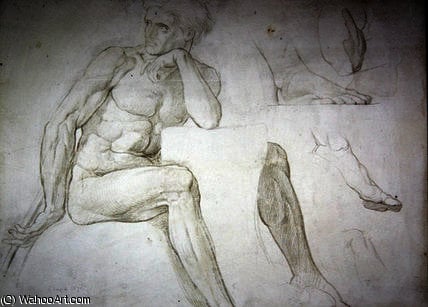
Male nude studies

Descoperă operele fascinante ale lui William Blake! Poet și pictor romantic inovator, cunoscut pentru simbolism puternic și ilustrații impresionante precum „Job și Familia Sa Restaurată la Prosperitate”. Explorează mitologia britanică!

Achiziționați o imagine digitală de înaltă rezoluție, îmbunătățită, mult superioară previzualizării online.

Fiecare fișier este pregătit cu meticulozitate de specialiștii noștri interni, utilizând instrumente avansate și retușare manuală expertă. Ne asigurăm că fiecare imagine beneficiază de o claritate excepțională, o acuratețe precisă a culorilor și detalii fine.

Fișierul final este livrat prin e-mail în termen de 72 de ore, optimizat pentru utilizare imediată în medii profesionale, editoriale și de imprimare. Aceasta este aceeași calitate în care au încredere studiouri de design, edituri și galerii de top.

Imagine Digitală

Descărcați un fișier la rezoluție înaltă pentru afișare personală, imprimare și proiecte creative. (Comută pe Print Comută pe PrintComandă pictură lucrată manual Comandă pictură lucrată manual)

Preț total

$ 24,90

Inclus în fiecare comandă de imagini digitale

Livrare digitală de expertiză, garantată

Când alegeți WahooArt.com, nu primiți doar o simplă imagine – primiți o operă de artă digitală îmbunătățită profesional, creată cu precizie și susținută de o garanție de satisfacție. Iată tot ceea ce primești odată cu comanda ta, în mod automat:

shipping_icon
Livrare rapidă prin e-mail

Fișierul imaginii digitale la rezoluție înaltă vă va fi trimis prin e-mail în termen de 72 de ore de la finalizarea comenzii – gata pentru utilizare imediată.

canvas_icon
Fișier digital optimizat prin IA

Opera ta de artă este optimizată profesional prin intermediul unor instrumente AI avansate și al editării manuale, asigurând un nivel maxim de detalii, claritate și acuratețe a culorilor.

insurance_icon
Retransmitere gratuită pe viață

Ai șters sau ai pierdut din greșeală fișierul? Nu îți face griji – ți-l vom retrimite oricând, gratuit.

tax_icon
Fără taxe de import – Întotdeauna

Bucură-te instant de noua ta operă de artă, fără taxe vamale, taxe de import sau costuri de livrare – descărcările digitale sunt întotdeauna fără taxe.

color_icon
Garanția acurateții culorilor

Asigurăm o reflectare cât mai fidelă a culorilor originale în imaginea ta digitală, prin utilizarea unor instrumente profesionale și a proceselor de gestionare a culorii.

return_icon
Garanție de satisfacție de 100 de zile

Dacă nu sunteți mulțumit de imaginea digitală achiziționată, o vom revizui sau vă vom returna 100% în termen de 100 de zile - fără nicio întrebare.

guarantee_icon
Garanție de returnare 100% a banilor

Nu ești mulțumit? Primești rambursarea integrală în termen de 100 de zile de la primirea fișierului digital – fără nicio întrebare.

discount_icon
Reduceri pentru comenzi în volum

Cumpără 3 imagini, economisește 10% - Cumpără 5, economisește 15% - Cumpără 10+, economisește 20%. Ideal pentru proiecte creative, galerii și agenții.

Informații rapide

  • Medium: Charcoal on paper
  • Title: Male nude studies
  • Artist: William Blake
  • Notable elements or techniques: Sketchy lines, hatching, cross-hatching
  • Artistic style: Expressive
  • Location: Private Collection

Test de cultură artistică

Fiecare întrebare are un singur răspuns corect.

Întrebare 1:
What artistic technique is predominantly used in William Blake’s ‘Male nude studies’?
Întrebare 2:
The photograph depicts a drawing on paper. What is the dominant tonal range achieved through charcoal layering?
Întrebare 3:
Blake’s style in these studies aligns with Romantic artistic ideals. Which characteristic best describes this alignment?
Întrebare 4:
The image shows multiple poses of the male nude figure. What is the overall impression conveyed by this compositional arrangement?
Întrebare 5:
What contributes to the dynamic feel of the artwork’s lines?

A Window into Blake’s Anatomical Exploration

William Blake's "Male Nude Studies" stand as a testament to the Romantic artist’s unwavering dedication to observation and artistic experimentation. Captured in charcoal on paper, this series of drawings represents more than just depictions of the human form; they embody Blake’s profound engagement with anatomy, spirituality, and the very essence of creative impulse. The photograph itself conveys an immediacy—a glimpse into a working process rather than a polished final product—reflecting Blake's belief that true artistic insight emerges from spontaneous exploration.

The Anatomy of Vision

Blake’s meticulous anatomical studies are rooted in his conviction that understanding the human body was crucial to unlocking spiritual truths. Unlike many artists of his era who prioritized idealized beauty, Blake approached the nude figure with a scientist’s curiosity alongside an artist's sensitivity. The drawings showcase remarkable accuracy, capturing subtle musculature and bone structure—a feat achieved through painstaking sketching and shading techniques. Each pose is carefully considered, inviting viewers to contemplate not only physical form but also the underlying principles of existence.

Technique: Charcoal – A Language of Line

The technique employed in these studies exemplifies Blake’s mastery of charcoal drawing. The artist utilized hatching and cross-hatching with remarkable precision, layering tones to build up volume and create a palpable sense of depth. Energetic lines define the contours of the body, conveying movement and dynamism—a characteristic that distinguishes Blake's work from more static representations. Variations in line thickness contribute to the overall textural quality of the drawings, mirroring the artist’s desire to capture both form and feeling. The paper surface itself bears witness to this process, retaining subtle marks that speak to the immediacy of Blake’s creative vision.

Historical Context: Romantic Reverie

Created during the height of the Romantic movement—a period characterized by an intense fascination with emotion, imagination, and individualism—Blake's "Male Nude Studies" resonate deeply within the broader artistic landscape of his time. The Romantic preoccupation with exploring the sublime—the awe-inspiring grandeur of nature and the mysteries of consciousness—finds expression in Blake’s unflinching portrayal of human anatomy. These drawings stand apart from prevailing academic conventions, prioritizing expressive gesture and tonal nuance over formal perfection. They represent a bold assertion of artistic freedom and a celebration of the artist's ability to perceive beauty beyond conventional standards.

Symbolic Resonance: Beyond Representation

While ostensibly depicting nude figures, Blake’s studies transcend mere anatomical representation. The poses themselves are imbued with symbolic significance—suggesting contemplation, vulnerability, and an openness to spiritual revelation. Blake’s drawings invite viewers to consider the human body as a microcosm of the universe, mirroring the Romantic belief in interconnectedness between humanity and nature. They represent not just physical form but also psychological depth and moral aspiration—elements that elevate these studies beyond simple visual observation into profound meditations on the human condition.

Biografie artist

A Visionary’s Journey: The Life and Art of William Blake

William Blake, born in London on November 28, 1757, was a figure perpetually out of step with his time, yet destined to become one of the most celebrated artists and poets of the Romantic Age. His life unfolded against the backdrop of a rapidly changing England—a world grappling with industrialization, political upheaval, and shifting spiritual beliefs. From humble beginnings as the son of a hosier, Blake’s early years were marked by an intensely vivid imagination and a propensity for visionary experiences that would profoundly shape his artistic trajectory. Though largely self-taught in formal academics, he received drawing instruction at a young age, quickly revealing a talent that hinted at the extraordinary path ahead. His apprenticeship with engraver James Basire proved pivotal, providing him not only with technical mastery but also an understanding of printmaking techniques he would later revolutionize. These early influences—the Gothic grandeur of Westminster Abbey, the classical forms of Raphael and Michelangelo—served as foundational elements in his developing aesthetic, though Blake was never one to remain bound by convention.

Early Influences and Artistic Training

Blake’s formative years instilled within him a deep appreciation for both beauty and terror – sensations he would translate into his art with unparalleled sensitivity. The architectural majesty of Westminster Abbey captivated his youthful imagination, exposing him to the grandeur of classical sculpture and inspiring a fascination with artistic ideals. Simultaneously, he absorbed the stylistic innovations of Raphael and Michelangelo, recognizing their mastery of form and composition as benchmarks for excellence. Despite lacking formal training in traditional academic disciplines—a rarity for artists of his era—Blake possessed an innate aptitude for drawing that quickly surpassed expectations. Encouraged by Basire’s guidance, he honed his skills in engraving, mastering techniques that would become integral to his groundbreaking artistic process. This apprenticeship wasn't merely about acquiring technical proficiency; it was about immersing himself in the world of printmaking and gaining firsthand experience with the challenges inherent in translating visual ideas into durable images.

The Illuminated World: Technique and Innovation

Blake’s artistic innovation wasn’t merely about subject matter; it resided fundamentally in *how* he created. Dissatisfied with conventional engraving methods, he developed a unique process known as “illuminated printing.” This involved etching both text and illustrations onto copper plates, then hand-coloring the resulting prints—a laborious but deeply personal approach that allowed for complete artistic control. This wasn’t simply illustration accompanying poetry; it was an integrated art form where image and verse were inextricably linked, each enhancing the meaning of the other. His relief etching technique, born from a claimed visionary experience following his brother's death, further distinguished his work, granting it a distinctive textural quality and allowing for greater artistic freedom than traditional methods. Beyond printmaking, Blake also worked with watercolors and tempera paints, often depicting biblical scenes or fantastical subjects imbued with symbolic weight. A key characteristic of his style was a deliberate rejection of linear perspective in favor of a more emotive, symbolic representation—a flattening of space that drew the viewer into the heart of his visionary world. He believed that true artistic expression demanded a departure from accepted conventions and an embrace of subjective experience.

Major Works and Artistic Themes

Blake’s oeuvre encompasses a remarkable range of poetic and visual creations, reflecting his multifaceted intellectual and spiritual concerns. Among his most celebrated works are *Songs of Innocence & of Experience* (1794), a dual collection exploring the contrasting facets of human consciousness—the purity of childhood juxtaposed with the anxieties of adulthood. This seminal poem exemplifies Blake’s preoccupation with moral allegory and psychological insight, presenting characters as embodiments of archetypal virtues and vices. Equally significant is *The Marriage of Heaven & Hell* (1793), a provocative prose poem that challenges conventional morality, celebrating energy, desire, and rebellion against restrictive doctrines. Blake's illustrations for Dante’s *Divine Comedy*, commissioned by John Flaxman, demonstrate his extraordinary ability to translate complex narratives into powerful visual imagery—a testament to his mastery of symbolism and dramatic composition. His magnum opus, *Jerusalem* (1820), is a sprawling epic poem that delves into biblical prophecy and explores themes of redemption and divine justice. Blake’s artistic vision consistently prioritized symbolic representation over realistic depiction, conveying profound spiritual truths through evocative imagery and carefully crafted narratives.

Legacy and Influence

Blake's impact on subsequent generations of artists and writers remains undeniable. His pioneering technique of illuminated printing influenced the Pre-Raphaelites, who adopted his stylistic innovations to create stunningly detailed paintings inspired by medieval literature and mythology. Furthermore, Blake’s emphasis on imagination and subjective experience resonated deeply with Symbolists and Modernist thinkers—artists who sought to express inner realities beyond the confines of observable phenomena. His unwavering commitment to artistic freedom continues to inspire creatives today, reminding us that true beauty lies in challenging conventions and embracing unconventional perspectives. William Blake stands as a beacon of visionary creativity—a testament to the transformative power of imagination and an enduring symbol of Romantic idealism. He remains one of the most influential artists of his time and continues to captivate audiences worldwide with his haunting imagery and profound philosophical ideas.

William Blake

William Blake

1757 - 1827 , Regatul Unit

Detalii rapide

  • Artistic Movement Or Style: Romanticism
  • Artists Who Influenced This Artist:
    • Raphael
    • Michelangelo
  • Date Of Birth: 1757
  • Date Of Death: 1827
  • Full Name: William Blake
  • Nationality: Britanic
  • Notable Artworks:
    • Songs of Innocence & Exp.
    • The Tyger
    • Jerusalem
  • Place Of Birth: Londra, UK