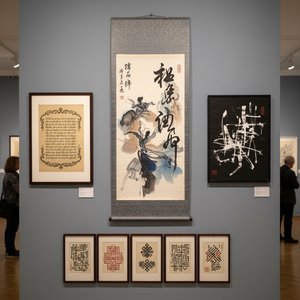
Wang Xizhi: Timely Clearing After Snowfall – A Masterpiece of Tranquility
This exquisite album leaf by Wang Xizhi (王羲之), dating back to the Jin Dynasty (265–420), embodies the pinnacle of Chinese calligraphy and represents a cornerstone of East Asian artistic heritage. Produced in Sanin, Japan, during his travels with fellow scholars, this piece transcends mere visual representation; it’s an embodiment of philosophical contemplation and serene beauty—a sentiment powerfully conveyed through its masterful execution. The artwork itself is a simple yet profound letter penned in running script (行書), addressed to Zhang Hou, capturing the fleeting moment after snowfall – a scene imbued with symbolic significance reflecting the artist's deep connection to nature and his yearning for companionship.
- Artist: Wang Xizhi (王羲之)
- Style Name: I-sao (逸少)
- Medium: Ink on Paper
- Dimensions: 23 x 14.8 cm
- Provenance: National Palace Museum, Taipei
The Technique of Perfection – Embracing the Essence of Qin and Han Styles
Wang Xizhi’s genius lay in his ability to synthesize disparate calligraphy styles—primarily Qin Dynasty (221–206 BC) seal script (篆書) and Han Dynasty (206 BC–220 AD) clerical script (楷書)—into a unified, harmonious form. This innovative approach wasn't merely stylistic; it represented a deliberate effort to distill the very best qualities of past masters into a single, timeless expression. The brushwork is characterized by remarkable fluidity and balance, achieved through careful control of pressure and stroke placement. Notably, the artist eschewed ostentation, favoring instead a deliberately understated elegance—a technique that reflects the contemplative spirit of the era and anticipates the stylistic developments of later dynasties like Tang (618–907). The dots and hooked strokes are notably absent, highlighting the brush’s natural movement and conveying a sense of effortless grace.
Symbolism Rooted in Nature – Reflecting Harmony and Loneliness
The choice of subject matter—a snowfall scene—holds considerable symbolic weight within Chinese culture. Snow represents purity, renewal, and transcendence, mirroring Wang Xizhi's desire for spiritual clarity amidst the complexities of life. The letter itself speaks to themes of friendship, longing, and acceptance – emotions powerfully conveyed through the restrained beauty of the calligraphy. As Chan Ching-feng eloquently observed, this piece influenced Chao Mengfu’s running script style, demonstrating Wang Xizhi’s enduring legacy as a formative figure in Chinese artistic tradition. The Emperor Qianlong's praise—"The one and only; a masterpiece for all time"—underscores the artwork’s unparalleled significance within its historical context.
A Legacy Enduring Through Time – Recognized as “The Sage Calligrapher”
Wang Xizhi’s reputation as "The Sage Calligrapher" (聖書王羲之) stems from his profound understanding of calligraphy and his unwavering commitment to artistic excellence. He wasn't merely copying existing styles; he was actively shaping them, elevating them to new heights of sophistication and conveying a deep appreciation for the natural world. His work continues to inspire artists and collectors alike—a testament to its enduring beauty and intellectual depth. The National Palace Museum’s acquisition of this treasured album leaf ensures that Wang Xizhi's masterpiece will continue to captivate audiences for generations to come.



 Vezi în context
 Comandă pictură realizată manual
 Trimite
 Distribuie
 Detalii
 Ghidul

 Descarcă
 Produse similare
 Radiografie
 Diaporama
 Statistici


 Citește mai mult






































 Opțiunea cu sticlă este disponibilă doar pentru dimensiuni de sub 110 cm